


Casino Guichard-Perrachon SA has agreed to sell Vietnam’s Big C grocery chain to Central Group at an enterprise value of 1 billion euros (US$1.1 billion), extending an Asian divestment program aimed at reducing the French retailer’s debt.
Casino is to receive 920 million euros in proceeds, the St Etienne, France-based company said in a statement yesterday. The disposal would bring its total divestments to 4.2 billion euros, it said.
The deal follows Casino’s agreement earlier this year to sell control of Thai supermarket chain Big C Supercenter Pcl to billionaire Charoen Sirivadhanabhakdi’s TCC Holding Co for 3.1 billion euros.
“This is another piece of good news for Casino,” Sanford C. Bernstein analyst Bruno Monteyne said.
“We expect the high valuation to act as a catalyst for the stock. This comes as welcome news after some were suggesting the sale wouldn’t go through after Lotte had pulled out,” Monteyne said.
South Korea’s Lotte Group said on Friday last week that it would not pursue the asset, without giving a reason.
Casino is selling assets in Asia and Latin America to cut debt, while focusing on price and convenience in its largest market, France, as it competes for growth amid weak consumer spending.
Rising retail sales and booming foreign investment are helping the Vietnamese economy expand.
Achieving the government’s growth forecast of about 6.7 percent this year would make the Southeast Asian nation one of the fastest-growing markets in the world.
“The retail market is booming here,” said Ralf Matthaes, managing director of consultancy Infocus Mekong Research in Ho Chi Minh City. “The bottom line is every Tom, Dick and Harry is trying to come in here. You’ve got a young population. They like to go shopping, they like the convenience of it all and they can afford mid-level range products now.”
Vingroup Joint Stock Co, Vietnam’s biggest listed property developer, planned last year for its Vinmart unit to open 100 supermarkets and 1,000 convenience stores by next year, according to state media Vietnam News.
Matthaes said it’s a crowded field and many supermarkets and convenience stores are not profitable.
“The Vietnamese guys are opening left and right. They’re not making money, but they’re looking to sell,” he said.
Lotte Group said last year that it plans to open 60 supermarkets in Vietnam by 2020. The South Korean retail giant also runs Lotteria fast-food chains, shopping malls, hotels and cinemas in the country.
TCC in January completed the purchase of Metro AG’s Cash & Carry wholesale business in Vietnam for 655 million euros.
“Vietnam’s retail market is still in its infancy,” Bloomberg Intelligence analyst Thomas Jastrzab said. “This makes it attractive to retailers looking for fast growth potential.”

Cairo’s new monorail slices across the city skyline, running above the familiar chaos of blaring horns and aging buses’ exhaust fumes that mark rush hour below. The US$4.5 billion monorail, opened this month, is among Egypt’s most prominent new transport projects, part of a debt-funded infrastructure drive criticized for sapping state finances while bringing limited benefits to most of the country’s 109 million people. “It feels like you’re in a different country,” said Ramy Sayed, a restaurant manager, aboard a driverless Innovia 300 train. “No noise, no traffic, we’re not used to this.” The eastern line runs 56km from the bustling middle-class
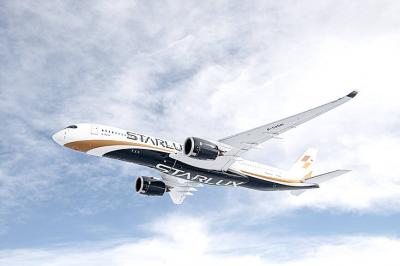
Starlux Airlines Co (星宇航空) today unveiled a long-haul network expansion plan at a shareholders’ meeting in Taipei, including direct flights to Barcelona, Spain, and Zurich, Switzerland, as well as a service connecting Taipei, Sydney and New Zealand. Starlux is to become the first Taiwanese carrier to offer non-stop services to the two European cities, while the inaugural oceanic route is expected to expand transit opportunities within the Australia-New Zealand market, Starlux said. Flight services to Chicago, Dallas, Washington and New York are under evaluation, the airline added. Prior to the shareholders’ meeting, the airline earlier this year announced that it would be

Taiwanese prosecutors suspect that three people successfully smuggled at least one shipment of Nvidia Corp artificial intelligence (AI) chips to China after first exporting them to Japan, people familiar with the matter said. The trio was detained last week by the Keelung District Prosecutors’ Office for allegedly falsifying documents related to exports of Super Micro Computer Inc servers containing advanced Nvidia chips, which the US has barred from sale to China without a license from Washington. The move marked Taiwan’s first public crackdown on AI chip diversion after years of pressure from the US to take a more active role in curtailing
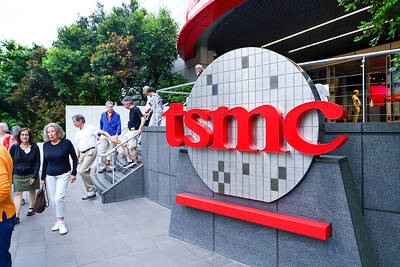
Taiwan Semiconductor Manufacturing Co (TSMC, 台積電) employee bonuses are likely to grow more than 30 percent this year, in line with the past few years as the company’s profits continue to set new records, an anonymous source cited TSMC chairman C.C. Wei (魏哲家) as saying yesterday. TSMC, the world’s largest contract chipmaker, is committed to taking care of its workers, the source said, citing Wei’s meeting with employees yesterday morning. Wei also expressed gratitude to employees for their contribution to the company’s improving bottom line, the source added. Since 2023, TSMC’s employee bonuses have grown at an annual rate of


 RSS
RSS