


Local semiconductor firm GCS Holdings Inc (環宇通訊) yesterday said it has signed a letter of intent with Chinese LED giant Sanan Optoelectronics Co (三安光電) to discuss a merger worth US$226 million in the latest merger-and-acquisition deal across the Taiwan Strait.
GCS, a compound semiconductor foundry service provider, said its board has agreed to consider Sanan’s proposal to buy all GCS shares, including restricted shares for employees and corporate bonds, a company filing with the Taiwan Stock Exchange said.
The companies are scheduled to sign a formal agreement on March 31 after completing further detailed assessment, the filing said.
GCS has total capital shares of 58 million and issued unspecified corporate bonds and restricted shares.
Trading on the local over-the-counter bourse, GCS shares are likely to be delisted from the Taipei Exchange after the transaction is completed.
The deal would require approval from Taiwan’s Investment Commission and the US authorities because some GCS products with military purposes are shipped to clients there, local media reported yesterday.
The planned merger came after China’s Tsinghua Unigroup Ltd (清華紫光) demonstrated its ambition to build its own semiconductor supply chain by investing in global chip companies, including those from Taiwan.
Tsinghua Unigroup has inked agreements with three local chip testers and packagers — Siliconware Precision Industries Inc (SPIL, 矽品精密), ChipMOS Technologies Inc (南茂) and Powertech Technology Inc (力成科技) — to buy a 25 percent stake in each for a total of NT$88.1 billion (US$26.7 billion).
GCS, registered in the Cayman Islands, offers foundry services for gallium arsenide-based and gallium nitride-based radio frequency ICs, wireless devices, power electronics and optoelectronics in addition to gallium arsenide-based optical wafers and chips.
The company’s net profit soared 65 percent, from NT$167 million in 2014 to NT$276 million last year. That translated into earnings per share of NT$4.95, up from NT$3.32 a share a year earlier.
“Sanan is diversifying to new-generation semiconductor industry by using gallium arsenide, or other new materials [to replace silicon], as its core LED business is facing challenges of slow growth and persistent oversupply,” said Figo Wang (王飛), a senior analyst for LEDinside, which is a division of TrendForce Corp (集邦科技).
“It is convenient for the company to cut into the new business through mergers and acquisitions to shorten learning curve,” Wang said. “And Taiwanese companies are usually good targets, given their good technologies and relatively cheap cost.”
Wang said Sanan has invested substantial funds to enter the semiconductor industry in recent years. He estimated that more than 70 percent of the company’s revenue at about 5 billion yuan (US$768 million) came from its core LED business, while new semiconductor business only contributed 1 or 2 percent.
Sanan is no stranger to Taiwanese investors as the company holds about a 3 percent stake in the nation’s largest LED chipmaker, Epistar Corp (晶電), by swapping its holding of local LED chipmaker Formosa Epitaxy Inc (ForEpi, 璨圓光電) with Epistar shares in a merger in 2014.
Shares of GCS plummeted 5.37 percent to NT$97 yesterday, underperforming the TPEX’s 0.81 percent gain.

The Eurovision Song Contest has seen a surge in punter interest at the bookmakers, becoming a major betting event, experts said ahead of last night’s giant glamfest in Basel. “Eurovision has quietly become one of the biggest betting events of the year,” said Tomi Huttunen, senior manager of the Online Computer Finland (OCS) betting and casino platform. Betting sites have long been used to gauge which way voters might be leaning ahead of the world’s biggest televised live music event. However, bookmakers highlight a huge increase in engagement in recent years — and this year in particular. “We’ve already passed 2023’s total activity and

Nvidia Corp CEO Jensen Huang (黃仁勳) today announced that his company has selected "Beitou Shilin" in Taipei for its new Taiwan office, called Nvidia Constellation, putting an end to months of speculation. Industry sources have said that the tech giant has been eyeing the Beitou Shilin Science Park as the site of its new overseas headquarters, and speculated that the new headquarters would be built on two plots of land designated as "T17" and "T18," which span 3.89 hectares in the park. "I think it's time for us to reveal one of the largest products we've ever built," Huang said near the
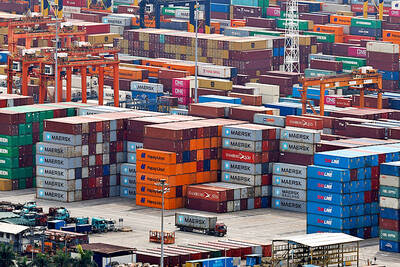
China yesterday announced anti-dumping duties as high as 74.9 percent on imports of polyoxymethylene (POM) copolymers, a type of engineering plastic, from Taiwan, the US, the EU and Japan. The Chinese Ministry of Commerce’s findings conclude a probe launched in May last year, shortly after the US sharply increased tariffs on Chinese electric vehicles, computer chips and other imports. POM copolymers can partially replace metals such as copper and zinc, and have various applications, including in auto parts, electronics and medical equipment, the Chinese ministry has said. In January, it said initial investigations had determined that dumping was taking place, and implemented preliminary
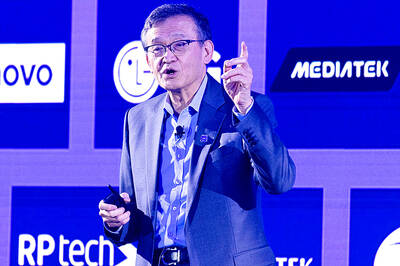
Intel Corp yesterday reinforced its determination to strengthen its partnerships with Taiwan’s ecosystem partners including original-electronic-manufacturing (OEM) companies such as Hon Hai Precision Industry Co (鴻海精密) and chipmaker United Microelectronics Corp (UMC, 聯電). “Tonight marks a new beginning. We renew our new partnership with Taiwan ecosystem,” Intel new chief executive officer Tan Lip-bu (陳立武) said at a dinner with representatives from the company’s local partners, celebrating the 40th anniversary of the US chip giant’s presence in Taiwan. Tan took the reins at Intel six weeks ago aiming to reform the chipmaker and revive its past glory. This is the first time Tan


 RSS
RSS