


Mark Zuckerberg wants to add a little more “book” to Facebook.
The Facebook founder and CEO announced on his page recently that he has vowed to read a book every other week this year, with an emphasis on learning about different beliefs, cultures and technologies.
Zuckerberg created a page called “A Year of Books” and urged his friends to join him in the project. As of late Sunday afternoon, it had more than 100,000 likes.
“I’m excited for my reading challenge,” Zuckerberg wrote. “I’ve found reading books very intellectually fulfilling. Books allow you to fully explore a topic and immerse yourself in a deeper way than most media today. I’m looking forward to shifting more of my media diet towards reading books.”
The first book in his program, Moises Naim’s The End of Power: From Boardrooms to Battlefields and Churches to States, Why Being in Charge Isn’t What it Used to Be, was out of stock on Sunday on Amazon.com and had a sales ranking of No. 138.
The End of Power was listed among Amazon’s “movers & shakers” on Sunday for books making the biggest gains on the best-seller list.
The Venezuelan-born Naim is an award-winning columnist, author and television host, a former trade minister in his native country and currently a distinguished fellow in the International Economics Program at the Carnegie Endowment for International Peace.
“It’s a book that explores how the world is shifting to give individual people more power that was traditionally only held by large governments, militaries and other organizations,” Zuckerberg wrote. “The trend toward giving people more power is one I believe in deeply.”
Zuckerberg’s literary tastes include classics from ancient Greece and Rome, biographies, celebrity memoirs and science and science fiction. He has called Virgil’s The Aeneid his favorite book and has quoted from it during interviews. His “likes” range from Plato to Orson Scott Card’s novel Ender’s Game. According to his Facebook page, books he has read include Jay-Z’s Decoded, Walter Isaacson’s best-selling biography of Albert Einstein and science writer’s James Gleick’s The Information.
TV talk show host Oprah Winfrey remains the gold standard for choosing books, though clubs have been started by Good Morning America and the Today show, among others.
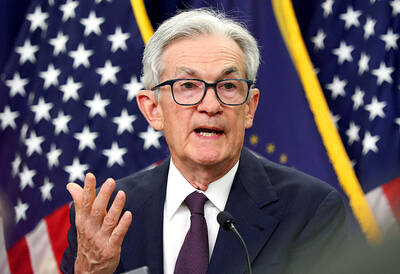
DIVIDED VIEWS: Although the Fed agreed on holding rates steady, some officials see no rate cuts for this year, while 10 policymakers foresee two or more cuts There are a lot of unknowns about the outlook for the economy and interest rates, but US Federal Reserve Chair Jerome Powell signaled at least one thing seems certain: Higher prices are coming. Fed policymakers voted unanimously to hold interest rates steady at a range of 4.25 percent to 4.50 percent for a fourth straight meeting on Wednesday, as they await clarity on whether tariffs would leave a one-time or more lasting mark on inflation. Powell said it is still unclear how much of the bill would fall on the shoulders of consumers, but he expects to learn more about tariffs

NOT JUSTIFIED: The bank’s governor said there would only be a rate cut if inflation falls below 1.5% and economic conditions deteriorate, which have not been detected The central bank yesterday kept its key interest rates unchanged for a fifth consecutive quarter, aligning with market expectations, while slightly lowering its inflation outlook amid signs of cooling price pressures. The move came after the US Federal Reserve held rates steady overnight, despite pressure from US President Donald Trump to cut borrowing costs. Central bank board members unanimously voted to maintain the discount rate at 2 percent, the secured loan rate at 2.375 percent and the overnight lending rate at 4.25 percent. “We consider the policy decision appropriate, although it suggests tightening leaning after factoring in slackening inflation and stable GDP growth,”
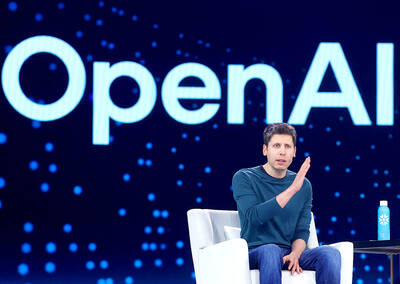
Meta Platforms Inc offered US$100 million bonuses to OpenAI employees in an unsuccessful bid to poach the ChatGPT maker’s talent and strengthen its own generative artificial intelligence (AI) teams, OpenAI CEO Sam Altman has said. Facebook’s parent company — a competitor of OpenAI — also offered “giant” annual salaries exceeding US$100 million to OpenAI staffers, Altman said in an interview on the Uncapped with Jack Altman podcast released on Tuesday. “It is crazy,” Sam Altman told his brother Jack in the interview. “I’m really happy that at least so far none of our best people have decided to take them
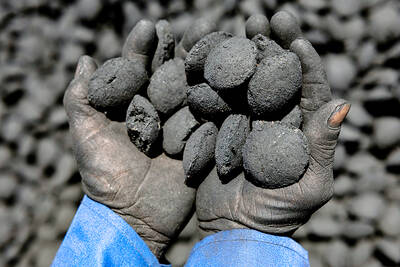
As they zigzagged from one machine to another in the searing African sun, the workers were covered in black soot. However, the charcoal they were making is known as “green,” and backers hope it can save impoverished Chad from rampant deforestation. Chad, a vast, landlocked country of 19 million people perched at the crossroads of north and central Africa, is steadily turning to desert. It has lost more than 90 percent of its forest cover since the 1970s, hit by climate change and overexploitation of trees for household uses such as cooking, officials say. “Green charcoal” aims to protect what


 RSS
RSS