

Cosmed (康是美) and Watsons (屈臣氏), the nation’s two largest drugstore chain operators, are initiating large-scale renovations and offering more diversified products to counter growing competition from newcomers in the market.
Cosmed last week unveiled a NT$700 million (US$23.22 million) plan to gradually upgrade all of its outlets to “second-generation” stores over the next three to five years. President Drugstore Business Corp (統一生活事業), a subsidiary of President Chain Store Corp (PCSC, 統一超商), owns Cosmed, the nation’s second-largest drugstore chain.
President Drugstore operates 364 Cosmed stores nationwide, with the total number of outlets expected to reach 370 by the end of the year.
Cosmed’s second-generation stores are to have up to three times the floor space of existing stores. New stores would be about 60 ping to 90 ping (198m2 to 297m2), it said.
CUSTOMER EXPERIENCE
Cosmed plans to enhance the customer experience by offering more space for prospective buyers to try new skincare and cosmetic products, the company said.
The drugstore chain also plans to add more beauty consultants to help boost the quality of its service.
“The second-generation stores should help boost company sales and profitability,” President Drugstore president Martin Chang (張聰本) said.
President Drugstore, one of PCSC’s profitable subsidiaries, generated NT$113.67 million in net income in the first half of this year. Last year, sales stood at NT$8.4 billion, data provided by PCSC showed.
The company has already upgraded two outlets, one in Banciao District (板橋), New Taipei City, and another in Hsinchu City. The three-floor store in Banciao saw sales double in the first two weeks after it reopened in the middle of last month, Chang said.
Chang said the company has concentrated on sales of cosmeceutical skincare products for 12 years, and accounts for about 50 percent of the sector’s annual sales in Taiwan, which stood at about NT$2 billion last year.
Following the launch of new drugstore brands over the past few years, such as Tomod’s Health Solutions and Japan Medicine Shop (日藥本舖), the original drugstore chains are also focusing on increasing brand diversity to create a niche market.
Watson’s Personal Care Stores (Taiwan) Co Ltd (台灣屈臣氏), the nation’s largest cosmetics and drugstore operator, has also renovated a flagship store on Zhongxiao E Road in Taipei.
The outlet reopened in May and sales have risen, the company said, but did not provide specific figures.
FASHIONABLE LOOK
The renovated Watsons outlet also focuses on enhancing the customer experience by offering a more fashionable interior for buyers to try out different cosmetic and skincare products.
While Cosmed focuses on cosmeceutical skincare products, Watsons is banking more on sales of natural and organic skincare products and has set up a special sales area for these products at most of its outlets.
The company might further raise the total number of its outlets to 500 by the end of this year, from the current 480.

Bankers in Hong Kong skipped the summer break as an artificial intelligence (AI)-fueled rush for capital sent share sales to a record, defying a bruising selloff in the city’s stocks. Initial public offerings (IPOs), placements and block trades raised US$47.5 billion in July to last month, the biggest haul ever for the period, data compiled by Bloomberg showed. That pushed fundraising this year above US$92 billion and within reach of the US$112.5 billion record set in 2021. AI has been at the heart of Hong Kong’s deal revival, but this summer brought a new level of intensity. Chinese companies raised ever-larger sums

BOOMING BUSINESS: Memory supply constraints would be even more severe in 2027 and 2028, prompting customers to sign long-term supply agreements, Micron said Micron Memory Taiwan Co (台灣美光) yesterday said it is accelerating memorychip capacity expansion amid growing artificial intelligence (AI)-driven demand, with its accumulated investment in Taiwan reaching NT$1.6 trillion (US$50.2 billion) as of June. The company’s investment in Taiwan has surged over the past four years, with recent spending equaling the total invested over the past 25 years, Micron Taiwan chairman Donghui Lu (盧東暉) told a media briefing in Taipei. “The launch of ChatGPT and the outbreak of COVID triggered increasing demand for memory chips. Since then, demand has gathered pace rapidly, with only a brief pause in 2023 when a major downturn”
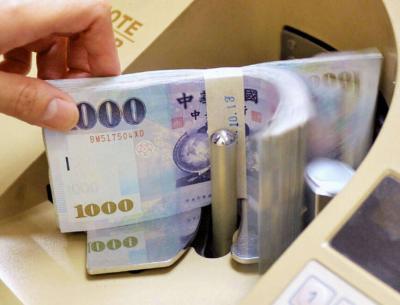
Taiwan ranked fifth worldwide in net financial assets per capita at the end of last year, averaging 164,470 euros (US$186,219), a report released this week by Germany-based Allianz Research said. Taiwan's ranking remained unchanged from the previous year, trailing only the US, Switzerland, Denmark and Singapore, Allianz’s Global Wealth Report said. In the report, Allianz assessed household assets and liabilities in nearly 60 countries, finding that global household wealth reached a record high last year, while the rise of artificial intelligence and market gains made asset ownership increasingly important in determining who benefits from wealth creation. Global financial assets reached a record 268.4

Apple Inc is set to sell about 6 million units of the iPhone Duo this year, Counterpoint Research said, offering the first estimate for how the company’s inaugural foldable device would fare. The figure, more typical of the niche foldable segment than Apple’s usual smartphone sales, is contingent on how well the company ramps up production of the new hardware, Counterpoint senior analyst Ivan Lam (林科宇) said. Priced at US$1,999 and set for a release this month, the iPhone Duo sits atop the Apple lineup and carries industry wide hopes for stoking greater interest and sales of foldables. Market researcher IDC Corp


 RSS
RSS