


Taiwan is hoping to expand its exports of green soybeans to the US because its main market — Japan — seems to be saturated, according to a local researcher.
Taiwan harvests about 42,000 tonnes of saleable green soybean products, such as edamame, each year, with the majority of the products exported to 19 countries around the world, said Chou Kuo-lung (周國隆), an associate researcher at the Kaohsiung District Agricultural Research and Extension Station.
Japan is Taiwan’s largest export destination for the product, buying about 30,000 tonnes a year, while the US is second at around 2,000 tonnes a year, Chou said.
JAPANESE SATURATION
“The Japanese market has grown saturated over the past two years,” Chou said, adding that export volume was down slightly last year after rising in previous years.
Exports of green soybeans, both shelled and in a shell, to Japan in the first 11 months of last year fell 2.18 percent from a year earlier, pointing to the need for Taiwan to think about diversifying its markets.
“We aim to expand exports to other countries, especially to the US,” Chou said, hoping to see exports to the US double this year to about 4,000 tonnes.
TARO FLAVOR
An aromatic variety developed recently has great market potential and could help Taiwan hit the target, he said.
Dubbed Kaohsiung No. 11, the edible young soybeans are infused with the aroma of taro roots and have a 25 percent higher yield than other varieties, Chou said.
Though the volume of soybean exports to Japan dropped last year, the value of the exports rose because of the development of several better-quality varieties.

With an approval rating of just two percent, Peruvian President Dina Boluarte might be the world’s most unpopular leader, according to pollsters. Protests greeted her rise to power 29 months ago, and have marked her entire term — joined by assorted scandals, investigations, controversies and a surge in gang violence. The 63-year-old is the target of a dozen probes, including for her alleged failure to declare gifts of luxury jewels and watches, a scandal inevitably dubbed “Rolexgate.” She is also under the microscope for a two-week undeclared absence for nose surgery — which she insists was medical, not cosmetic — and is
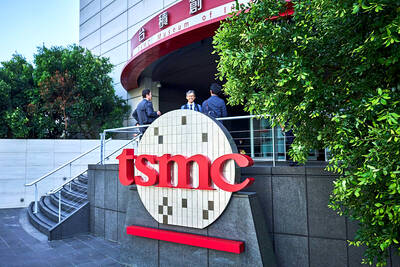
GROWING CONCERN: Some senior Trump administration officials opposed the UAE expansion over fears that another TSMC project could jeopardize its US investment Taiwan Semiconductor Manufacturing Co (TSMC, 台積電) is evaluating building an advanced production facility in the United Arab Emirates (UAE) and has discussed the possibility with officials in US President Donald Trump’s administration, people familiar with the matter said, in a potentially major bet on the Middle East that would only come to fruition with Washington’s approval. The company has had multiple meetings in the past few months with US Special Envoy to the Middle East Steve Witkoff and officials from MGX, an influential investment vehicle overseen by the UAE president’s brother, the people said. The conversations are a continuation of talks that

CAUTIOUS RECOVERY: While the manufacturing sector returned to growth amid the US-China trade truce, firms remain wary as uncertainty clouds the outlook, the CIER said The local manufacturing sector returned to expansion last month, as the official purchasing managers’ index (PMI) rose 2.1 points to 51.0, driven by a temporary easing in US-China trade tensions, the Chung-Hua Institution for Economic Research (CIER, 中華經濟研究院) said yesterday. The PMI gauges the health of the manufacturing industry, with readings above 50 indicating expansion and those below 50 signaling contraction. “Firms are not as pessimistic as they were in April, but they remain far from optimistic,” CIER president Lien Hsien-ming (連賢明) said at a news conference. The full impact of US tariff decisions is unlikely to become clear until later this month

Nintendo Co hopes to match the runaway success of the Switch when its leveled-up new console hits shelves on Thursday, with strong early sales expected despite the gadget’s high price. Featuring a bigger screen and more processing power, the Switch 2 is an upgrade to its predecessor, which has sold 152 million units since launching in 2017 — making it the third-best-selling video game console of all time. However, despite buzz among fans and robust demand for pre-orders, headwinds for Nintendo include uncertainty over US trade tariffs and whether enough people are willing to shell out. The Switch 2 “is priced relatively high”


 RSS
RSS