


Advanced Semiconductor Engineering Inc (ASE, 日月光半導體), the world’s largest integrated circuit packaging and testing services provider, yesterday declined to comment on media reports saying that the company is likely to take over Japan-based Panasonic Corp’s overseas production sites.
Market analysts said investors had high hopes that through the acquisition ASE would reinforce its lead in the global IC packaging and testing industry, in which the Taiwanese firm has a share of about 30 percent.
According to the reports, Panasonic, which is aiming to shed losses incurred by its semiconductor operations, is likely to downsize its semiconductor assets by disposing of its IC packaging and testing sites in China, Indonesia and Malaysia.
The reports said that as ASE has been Panasonic’s partner for several years, it is very likely the company will take over ownership of Panasonic’s overseas plants.
After dumping its IC packaging and testing business, Panasonic is expected to outsource its own requirements for such services, and ASE could win orders from the Japanese electronics maker in the future, the reports said.
Panasonic is also studying the feasibility of disposing of its overseas semiconductor foundry assets, the reports said, adding that the company is expected to cut the workforce in its semiconductor business by half to about 7,000 employees by the end of March 2015.
ASE shares rose 1.91 percent to close at NT$29.35 yesterday.
In recent sessions, the company’s shares have outperformed the broader market after the firm posted a record high level of consolidated sales for the third quarter earlier this month.
For the period from July to last month, ASE reported NT$56.75 billion in consolidated sales, up 11.8 percent from the second quarter.
As ASE has benefited from its efforts to expand its high-end technology capacity, it is expected to post about NT$1.8 in earnings per share this year, up from NT$1.71 last year, Hua Nan Securities Co (華南永昌證券) forecast.
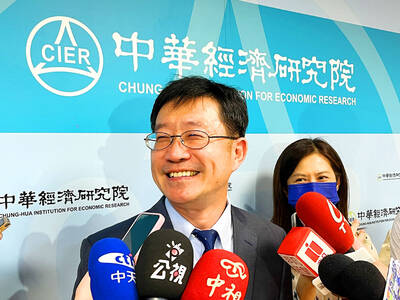
WEAKER ACTIVITY: The sharpest deterioration was seen in the electronics and optical components sector, with the production index falling 13.2 points to 44.5 Taiwan’s manufacturing sector last month contracted for a second consecutive month, with the purchasing managers’ index (PMI) slipping to 48, reflecting ongoing caution over trade uncertainties, the Chung-Hua Institution for Economic Research (CIER, 中華經濟研究院) said yesterday. The decline reflects growing caution among companies amid uncertainty surrounding US tariffs, semiconductor duties and automotive import levies, and it is also likely linked to fading front-loading activity, CIER president Lien Hsien-ming (連賢明) said. “Some clients have started shifting orders to Southeast Asian countries where tariff regimes are already clear,” Lien told a news conference. Firms across the supply chain are also lowering stock levels to mitigate

IN THE AIR: While most companies said they were committed to North American operations, some added that production and costs would depend on the outcome of a US trade probe Leading local contract electronics makers Wistron Corp (緯創), Quanta Computer Inc (廣達), Inventec Corp (英業達) and Compal Electronics Inc (仁寶) are to maintain their North American expansion plans, despite Washington’s 20 percent tariff on Taiwanese goods. Wistron said it has long maintained a presence in the US, while distributing production across Taiwan, North America, Southeast Asia and Europe. The company is in talks with customers to align capacity with their site preferences, a company official told the Taipei Times by telephone on Friday. The company is still in talks with clients over who would bear the tariff costs, with the outcome pending further
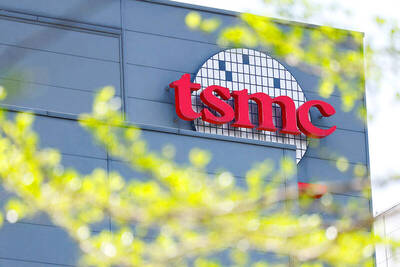
Six Taiwanese companies, including contract chipmaker Taiwan Semiconductor Manufacturing Co (TSMC, 台積電), made the 2025 Fortune Global 500 list of the world’s largest firms by revenue. In a report published by New York-based Fortune magazine on Tuesday, Hon Hai Precision Industry Co (鴻海精密), also known as Foxconn Technology Group (富士康科技集團), ranked highest among Taiwanese firms, placing 28th with revenue of US$213.69 billion. Up 60 spots from last year, TSMC rose to No. 126 with US$90.16 billion in revenue, followed by Quanta Computer Inc (廣達) at 348th, Pegatron Corp (和碩) at 461st, CPC Corp, Taiwan (台灣中油) at 494th and Wistron Corp (緯創) at
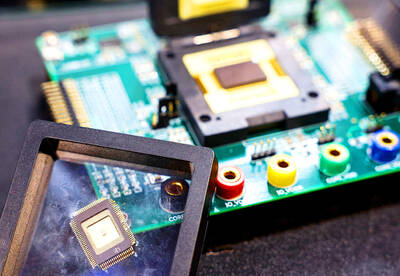
NEGOTIATIONS: Semiconductors play an outsized role in Taiwan’s industrial and economic development and are a major driver of the Taiwan-US trade imbalance With US President Donald Trump threatening to impose tariffs on semiconductors, Taiwan is expected to face a significant challenge, as information and communications technology (ICT) products account for more than 70 percent of its exports to the US, Chung-Hua Institution for Economic Research (CIER, 中華經濟研究院) president Lien Hsien-ming (連賢明) said on Friday. Compared with other countries, semiconductors play a disproportionately large role in Taiwan’s industrial and economic development, Lien said. As the sixth-largest contributor to the US trade deficit, Taiwan recorded a US$73.9 billion trade surplus with the US last year — up from US$47.8 billion in 2023 — driven by strong


 RSS
RSS