


Sri Lanka’s stock market, once a darling of investors, has seen its value plummet 26 percent in the past year and now faces a crisis of confidence after its regulator quit in a storm of controversy.
The tiny bourse became the world’s top gainer soon after the country ended decades of ethnic war, but three years later it has imploded amid allegations of corruption.
Market regulator Tilak Karunaratne quit on Aug. 17, saying he could no longer battle against a “mafia of crooks” preventing probes into insider trading and “pump-and-dump” scams in which investors drive up shares and then sell them.
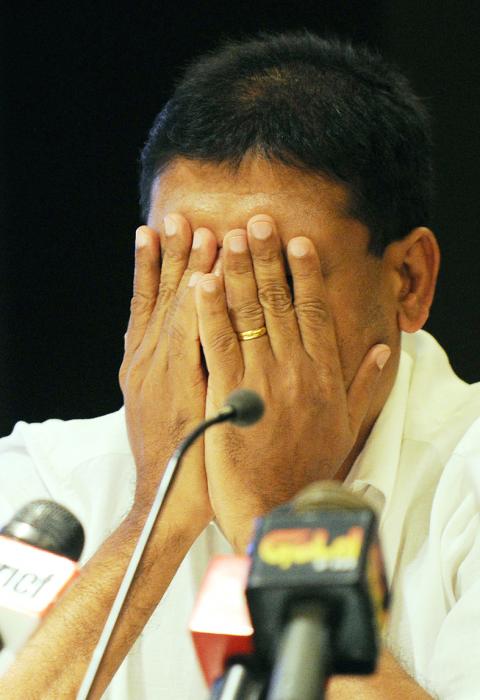
Photo: AFP
Allegations of corruption are not new at the US$14.5 billion exchange, but it is the first time the regulator had 17 high-profile cases of insider trading and other irregularities at the same time.
Karunaratne’s predecessor, Indrani Sugathadasa, also resigned last year, saying she was unwilling to compromise her “principles.”
The euphoria soon after troops crushed Tamil rebels in May 2009 sparked a bull run which has now been replaced by a search for scapegoats for the loss of more than US$5 billion in value at the Colombo Stock Exchange within six months.
The Colombo market’s slide has come on the back of impressive post-war growth. The economy expanded by more than 8 percent for two years in a row and this year’s growth is expected to be 7.2 percent.
Former Sri Lankan foreign minister Mangala Samaraweera has accused the authorities of blocking independent regulators and undermining the credibility of Sri Lanka’s capital markets.
“The sad truth today is that the Colombo Stock Exchange has become the premier center for money laundering east of the Suez Canal,” said Samaraweera, who is an opposition legislator.
The IMF, which has extended a US$2.6 billion bailout to Sri Lanka since the end of its nearly four-decade Tamil separatist war, has raised concerns over the crisis.
“From all credible accounts, Karunaratne [as the Securities and Exchange Commission chairman] and his team were taking exactly the right steps to ensure that stock market participants obey the rules,” said Koshy Mathai, the IMF’s representative in Colombo.
The government has not named a new regulator and has not yet commented on the crisis. However, Sri Lanakan Media Minister Keheliya Rambukwella said the government is considering tighter laws.
“There is a debate on this,” Rambukwella told reporters one week ago. “Different views have been expressed. We are ready to look at tighter laws if necessary.”
Mathi stressed that a firm set of regulations and an active regulator were necessary to instil confidence in foreign and domestic investors and demonstrate that the market was not designed for the benefit of a select few.
“This is an important issue for Sri Lanka as development of the capital markets is a key priority in ensuring the country’s continued rapid growth,” the IMF representative said.
No one has been jailed in Sri Lanka for securities fraud and previous cases of insider trading have been settled by the parties paying small fines without accepting guilt.
A major player in Colombo, Sri Lankan-born financier Raj Rajaratnam is currently serving an 11-year jail term in the US for the biggest hedge-fund insider trading case in US history.
His market activities ended with his arrest in October 2009 and his Galleon Management Fund pulled out of Sri Lanka and was wound up, but he never faced any allegations of wrongdoing in Colombo.
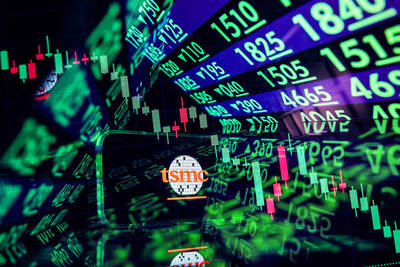
Taiwan Semiconductor Manufacturing Co (TSMC, 台積電) last week recorded an increase in the number of shareholders to the highest in almost eight months, despite its share price falling 3.38 percent from the previous week, Taiwan Stock Exchange data released on Saturday showed. As of Friday, TSMC had 1.88 million shareholders, the most since the week of April 25 and an increase of 31,870 from the previous week, the data showed. The number of shareholders jumped despite a drop of NT$50 (US$1.59), or 3.38 percent, in TSMC’s share price from a week earlier to NT$1,430, as investors took profits from their earlier gains

In a high-security Shenzhen laboratory, Chinese scientists have built what Washington has spent years trying to prevent: a prototype of a machine capable of producing the cutting-edge semiconductor chips that power artificial intelligence (AI), smartphones and weapons central to Western military dominance, Reuters has learned. Completed early this year and undergoing testing, the prototype fills nearly an entire factory floor. It was built by a team of former engineers from Dutch semiconductor giant ASML who reverse-engineered the company’s extreme ultraviolet lithography (EUV) machines, according to two people with knowledge of the project. EUV machines sit at the heart of a technological Cold
Taiwan’s long-term economic competitiveness will hinge not only on national champions like Taiwan Semiconductor Manufacturing Co. (TSMC, 台積電) but also on the widespread adoption of artificial intelligence (AI) and other emerging technologies, a US-based scholar has said. At a lecture in Taipei on Tuesday, Jeffrey Ding, assistant professor of political science at the George Washington University and author of "Technology and the Rise of Great Powers," argued that historical experience shows that general-purpose technologies (GPTs) — such as electricity, computers and now AI — shape long-term economic advantages through their diffusion across the broader economy. "What really matters is not who pioneers
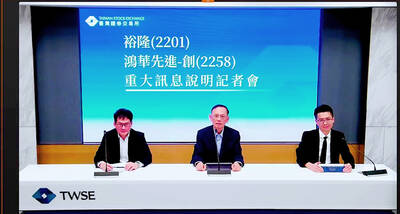
TAIWAN VALUE CHAIN: Foxtron is to fully own Luxgen following the transaction and it plans to launch a new electric model, the Foxtron Bria, in Taiwan next year Yulon Motor Co (裕隆汽車) yesterday said that its board of directors approved the disposal of its electric vehicle (EV) unit, Luxgen Motor Co (納智捷汽車), to Foxtron Vehicle Technologies Co (鴻華先進) for NT$787.6 million (US$24.98 million). Foxtron, a half-half joint venture between Yulon affiliate Hua-Chuang Automobile Information Technical Center Co (華創車電) and Hon Hai Precision Industry Co (鴻海精密), expects to wrap up the deal in the first quarter of next year. Foxtron would fully own Luxgen following the transaction, including five car distributing companies, outlets and all employees. The deal is subject to the approval of the Fair Trade Commission, Foxtron said. “Foxtron will be


 RSS
RSS