


Hsu Fu Chi International Ltd (徐福記國際集團), China’s biggest confectioner by market value, said Nestle SA is among the parties in acquisition talks for what would be the largest overseas purchase of a Chinese company.
Nestle, the world’s largest food maker, is assessing a potential bid for Hsu Fu Chi and the two companies have been in talks on a partnership for a few years, Christine Sun (孫天珍), spokeswoman for the Dongguan, Guangdong-based company, said by telephone yesterday. Trading of the Hsu Fu Chi stock was suspended in Singapore pending an announcement.
An acquisition would give Nestle access to nationwide distribution in China’s confectionary market, worth about US$6 billion last year, according to researcher Euromonitor International.
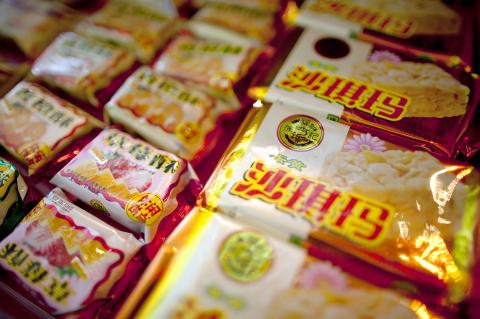
Photo: Bloomberg
A Nestle acquisition of all of Hsu Fu Chi at its US$2.6 billion market value would be the largest on record of a Chinese firm by a company based outside the country, according to Bloomberg data.
An overseas offer may -encounter regulatory scrutiny from the Chinese government, which blocked Coca-Cola Co’s bid for the Asian nation’s biggest domestic juice maker, China Huiyuan Juice Group Ltd (匯源果汁), in 2009 on concern the tie-up would have hurt competition.
Discussions between Nestle and Hsu Fu Chi have been on and off for about two years, according to three people, who declined to be identified because the talks are private. It is not clear whether Nestle will reach a deal, and other suitors have also been examining the Singapore-listed company, these people said.
Nina Caren Backes, a spokeswoman for Vevey, Switzerland- based Nestle, said the company does not comment on market speculation.
Hsu Fu Chi, which sold shares to the public in Singapore in December 2006, is also talking to companies in the US, Europe and Japan, Sun said.
“Hsu Fu Chi wants to find a partner that will help us to forge a long-lasting brand,” Sun said.
Potential buyers are from Japan, the US and Europe, Sun said.
Hsu Fu Chi reported profit rose 31 percent to 602.2 million yuan (US$93 million) last year as sales climbed 14 percent to 4.3 billion yuan, according to Bloomberg data. The shares have risen 72 percent in the past year, giving the company a market capitalization of S$3.18 billion (US$2.6 billion).
The company, founded in 1992 by four brothers from Taiwan, has 45 large-scale production plants and can make more than 700 different types of confectionery products, according to its Web site.
Hsu Fu Chi chairman and CEO Hsu Chen (徐鐠), the second-oldest of the brothers, is the 25th richest man in Taiwan, according to Forbes magazine.
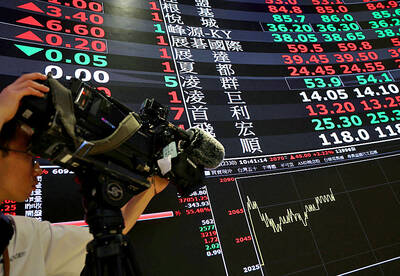
After several years flying high as Asia’s best Nvidia Corp proxy, Taiwan Semiconductor Manufacturing Co (TSMC, 台積電) is increasingly vying with other artificial intelligence (AI) stocks for investor attention. Stock traders are chasing a wider array of beneficiaries as mainstream usage of AI creates demand for hardware beyond the most-advanced chips TSMC makes for Nvidia. Subthemes from the deepening memory crunch to advances in robotics are also luring bids. At the same time, investment caps on single stocks are pushing funds to diversify, while retail investors long familiar with TSMC through its US depositary receipts are being offered a broader set of
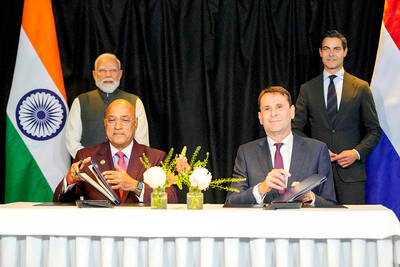
NEW MARKET: The partnership opens up India to the Dutch company, which already has a strong hold in the semiconductor market of South Korea, Taiwan and China ASML Holding NV entered into a partnership agreement with Tata Electronics Pvt Ltd aimed at ramping up India’s goal to develop domestic chip-manufacturing capabilities. The Dutch company’s technology would help power Tata Electronics’ planned 300 millimeter (mm) semiconductor foundry in Gujarat, according to a joint statement from the two companies on Saturday. The signing of a memorandum of understanding coincides with a visit by Indian Prime Minister Narendra Modi to the Netherlands, which is looking to deepen bilateral relations with New Delhi. ASML, whose top customers include Taiwan Semiconductor Manufacturing Co (台積電) and Samsung Electronics Co, makes lithography machines that can print
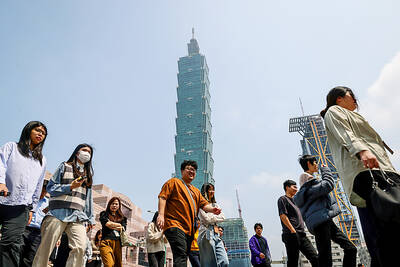
TECH RELIANCE: Growth is increasingly reflecting an unequal K-shaped distribution, where technology sectors outperform and other industries struggle, an expert said Standard Chartered Bank has significantly raised its forecast for Taiwan’s economic growth to 9.5 percent this year, up from 7.6 percent previously, citing surging artificial intelligence (AI) demand driving exports, semiconductor production and investment. The upgrade reflects a sustained AI supercycle that continues to fuel demand for advanced chips and technology infrastructure, which form the backbone of Taiwan’s exports, the bank said in a report this week. “We raise our 2026 growth forecast to reflect a much stronger-than-expected first-quarter GDP figure,” Standard Chartered senior economist for greater China and Asia Tommy Wu (胡東安) said in the report. Driven largely by a 35.3 percent
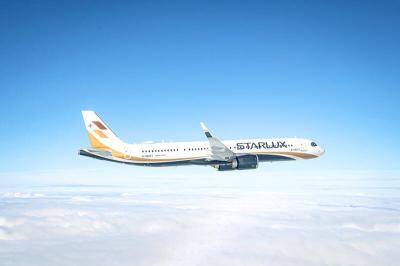
Two of Taiwan’s international carriers, Starlux Airlines Co (星宇航空) and EVA Airways Corp (長榮航空), have retained the five-star airline rating awarded by international airline review organization Skytrax. Starlux was awarded the distinction for a second consecutive year, while EVA Air received it for the 11th straight year, Skytrax said in statements released yesterday and on Thursday last week, respectively. The five-star rating is considered one of the airline industry's highest honors and is awarded following professional audits of airline product and frontline service standards, Skytrax said. The ratings are based on in-depth assessments using unified global quality standards rather than customer review scores


 RSS
RSS