


People holding co-branded EasyCards will soon be able to use them for travel on the high speed rail system, Taiwan High Speed Rail Corp (THSRC, 台灣高鐵) and EasyCard Corp (悠遊卡公司) announced yesterday.
The cards, issued by EasyCard and eight local banks for credit, debit and transportation payments, will be able to be used to purchase high speed rail non-reserved tickets by the end of the year, THSRC chairman Ou Chin-der (歐晉德) said.
TOUCH-AND-GO
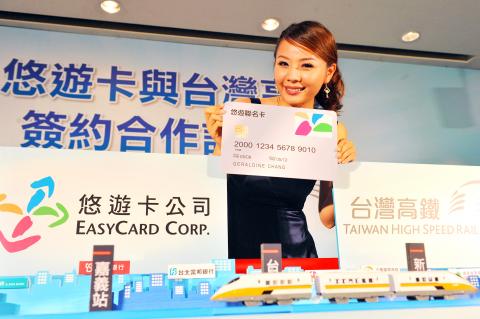
Photo: CNA
“The touch-and-go service will save passengers at least 20 minutes of waiting and ticket processing time,” he said.
According to THSRC estimates, half of the current buyers of non-reserved tickets will take advantage of the new service.
Ou said the service will also help THSRC to double or triple its transportation load in the long term from 110,000 passengers per day.
REGULAR USERS
However, the two companies said they are still considering whether regular EasyCard holders will be able to join the program.
EasyCard Corp has been expanding the use of the -contactless smart cards in recent years to include, among other functions, payments for purchases of up to NT$10,000 (US$348) at contracted stores.
On June 1, the cards were made valid for fare payments on most buses in Taichung and Changhua counties.
They have also been in use on trains and highway buses since the beginning of this year.

The Eurovision Song Contest has seen a surge in punter interest at the bookmakers, becoming a major betting event, experts said ahead of last night’s giant glamfest in Basel. “Eurovision has quietly become one of the biggest betting events of the year,” said Tomi Huttunen, senior manager of the Online Computer Finland (OCS) betting and casino platform. Betting sites have long been used to gauge which way voters might be leaning ahead of the world’s biggest televised live music event. However, bookmakers highlight a huge increase in engagement in recent years — and this year in particular. “We’ve already passed 2023’s total activity and
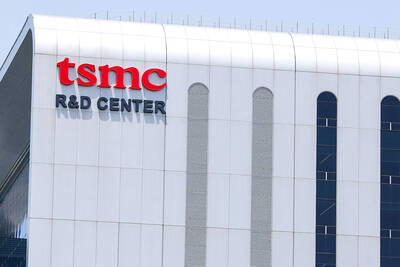
BIG BUCKS: Chairman Wei is expected to receive NT$34.12 million on a proposed NT$5 cash dividend plan, while the National Development Fund would get NT$8.27 billion Taiwan Semiconductor Manufacturing Co (TSMC, 台積電), the world’s largest contract chipmaker, yesterday announced that its board of directors approved US$15.25 billion in capital appropriations for long-term expansion to meet growing demand. The funds are to be used for installing advanced technology and packaging capacity, expanding mature and specialty technology, and constructing fabs with facility systems, TSMC said in a statement. The board also approved a proposal to distribute a NT$5 cash dividend per share, based on first-quarter earnings per share of NT$13.94, it said. That surpasses the NT$4.50 dividend for the fourth quarter of last year. TSMC has said that while it is eager
‘IMMENSE SWAY’: The top 50 companies, based on market cap, shape everything from technology to consumer trends, advisory firm Visual Capitalist said Taiwan Semiconductor Manufacturing Co (TSMC, 台積電) was ranked the 10th-most valuable company globally this year, market information advisory firm Visual Capitalist said. TSMC sat on a market cap of about US$915 billion as of Monday last week, making it the 10th-most valuable company in the world and No. 1 in Asia, the publisher said in its “50 Most Valuable Companies in the World” list. Visual Capitalist described TSMC as the world’s largest dedicated semiconductor foundry operator that rolls out chips for major tech names such as US consumer electronics brand Apple Inc, and artificial intelligence (AI) chip designers Nvidia Corp and Advanced
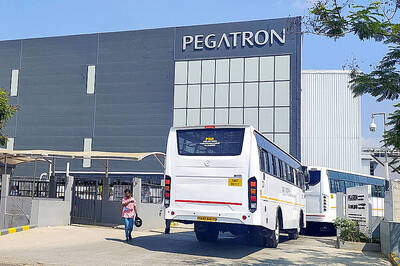
Pegatron Corp (和碩), an iPhone assembler for Apple Inc, is to spend NT$5.64 billion (US$186.82 million) to acquire HTC Corp’s (宏達電) factories in Taoyuan and invest NT$578.57 million in its India subsidiary to expand manufacturing capacity, after its board approved the plans on Wednesday. The Taoyuan factories would expand production of consumer electronics, and communication and computing devices, while the India investment would boost production of communications devices and possibly automotive electronics later, a Pegatron official told the Taipei Times by telephone yesterday. Pegatron expects to complete the Taoyuan factory transaction in the third quarter, said the official, who declined to be


 RSS
RSS