


Mobile game developer Joymaster Inc (極致行動科技) introduced its mahjong game “Joymaster” on Wednesday, marking yet another attempt by a Taiwanese firm to pursue the booming iPhone’s App Store market.
“The mahjong game has been in the development works for a year and is the result of the teamwork of some 15 developers,” company vice president Sky Lin (林亮宇) said.
Users can download the game through iPhone’s App Stores for free, then log into the application with their Facebook account.
They can then kick off their mahjong game by joining a table with three other online players.
Players will know who their opponents are through Facebook IDs and Facebook photos on the screen.
Each player will be given 3,200 virtual dollars a day to indulge in the adrenaline rush of mahjong — a popular gambling game that involves skills, luck and strategy, and uses a set of tiles.
If players are running out of credits, they can purchase more online.
Joymaster has over 10 iPhone games under its belt, spanning from mahjong to puzzles and poker game titles. Some of them are available for free, while some carry price tags from US$0.99 to US$4.99, Lin said.
“We have been keeping an eye on the iPhone craze since late 2008, and finally we launched our first game for the iPhone in March last year when we thought the time was ripe,” he said.
Currently, iPhone games account for 10 percent of Joymaster’s total gaming revenues, with the rest derived from titles for feature phones — or general phones that don’t support smartphone features.
The iPhone contribution could double by the end of the year, Lin said, foreseeing some momentum from Google Inc’s Android platform, as Joymaster has some Android games currently under development.
Joymaster is not the only mobile developer that is after App Store’s business opportunities, as Gamania Digital Entertainment Co (遊戲橘子), Taiwan’s leading online game developer and publisher, intends to come up with titles for iPhone as well.
“We are in the development phase for these games, but we have yet to launch one, as we have scrapped some games whose performance didn’t match the requirements,” said a company official who asked not to be named.
If everything goes smoothly, one of its major online game titles this year — Hero 108— could be its first mobile title supporting the iPhone platform and could be launched by the end of the year, she said.
Hero 108 is a joint animation production from Gamania, the Cartoon Network in the UK and Moon Scoop in France. The cartoon will be aired locally starting next month. Gamania developed a same-titled online game whose closed beta testing commenced last month in the US.
While many developers are channeling resources into apps development for Apple’s App Store, many are also showing interests in the new rising contender — Android.
According to a survey released by the US-based Appcelerator Inc on Wednesday, 90 percent of developers polled said they were very interested in developing applications for the iPhone while 81 percent were very interested in developing for Android phones.
Thirty-four percent were interested in the BlackBerry and 27 percent in Windows phones, according to the survey, which polled more than 2,700 developers among its 51,000 mobile developer community.
Shares of contract chipmaker Taiwan Semiconductor Manufacturing Co (TSMC, 台積電) came under pressure yesterday after a report that Apple Inc is looking to shift some orders from the Taiwanese company to Intel Corp. TSMC shares fell NT$55, or 2.4 percent, to close at NT$2,235 on the local main board, Taiwan Stock Exchange data showed. Despite the losses, TSMC is expected to continue to benefit from sound fundamentals, as it maintains a lead over its peers in high-end process development, analysts said. “The selling was a knee-jerk reaction to an Intel-Apple report over the weekend,” Mega International Investment Services Corp (兆豐國際投顧) analyst Alex Huang
Taiwan Semiconductor Manufacturing Co (TSMC, 台積電) is expected to remain Apple Inc’s primary chip manufacturing partner despite reports that Apple could shift some orders to Intel Corp, industry experts said yesterday. The comments came after The Wall Street Journal reported on Friday that Apple and Intel had reached a preliminary agreement following more than a year of negotiations for Intel to manufacture some chips for Apple devices. Taiwan Institute of Economic Research (台灣經濟研究院) economist Arisa Liu (劉佩真) said TSMC’s advanced packaging technologies, including integrated fan-out and chip-on-wafer-on-substrate, remain critical to the performance of Apple’s A-series and M-series chips. She said Intel and Samsung
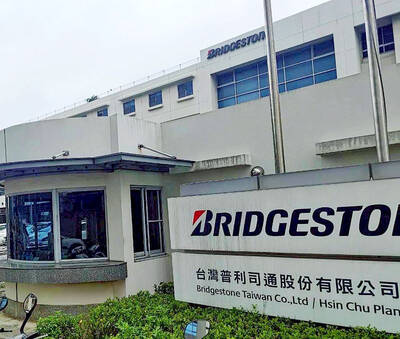
TRANSITION: With the closure, the company would reorganize its Taiwanese unit to a sales and service-focused model, Bridgestone said Bridgestone Corp yesterday announced it would cease manufacturing operations at its tire plant in Hsinchu County’s Hukou Township (湖口), affecting more than 500 workers. Bridgestone Taiwan Co (台灣普利司通) said in a statement that the decision was based on the Tokyo-based tire maker’s adjustments to its global operational strategy and long-term market development considerations. The Taiwanese unit would be reorganized as part of the closure, effective yesterday, and all related production activities would be concluded, the statement said. Under the plan, Bridgestone would continue to deepen its presence in the Taiwanese market, while transitioning to a sales and service-focused business model, it added. The Hsinchu
Taiwan Semiconductor Manufacturing Co (TSMC, 台積電) has approved a capital budget of US$31.28 billion for production expansion to meet long-term development needs during the artificial intelligence (AI) boom. The company’s board meeting yesterday approved the capital appropriation plan for purposes such as the installation of advanced technology capacity and fab construction, the world’s largest contract chipmaker said in a statement. At an earnings conference last month, TSMC forecast that its capital expenditure for this year would be at the higher end of the US$52 billion to US$56 billion range it forecast in January in response to robust demand for 5G, AI and


 RSS
RSS