


Shares of Far Eastern Department Stores (遠東百貨) tumbled by the daily limit in Taipei trading yesterday, as uncertainty hovered over its parent group’s control of Pacific Sogo Department Stores Co (太平洋崇光百貨), the nation’s second-largest department store chain after Shin Kong Mitsukoshi Department Store (新光三越).
Far Eastern Department Stores — a member of the Far Eastern Group (遠東集團), which controls Taiwan’s biggest textile company — closed nearly 7 percent lower to NT$35.05 (US$1.10) on the Taiwan Stock Exchange yesterday, compared with a decline of 1.13 percent on the benchmark TAIEX.
Far Eastern New Century Corp (遠東新世紀) — which changed its name from Far Eastern Textile Co (遠東紡織) on Oct. 13 last year — dropped 6.28 percent to NT$37.30, while Pacific Construction Co (太平洋建設), former owner of Sogo Department Stores, rose 7 percent to NT$5.81, its highest point over the last 12 months, stock exchange data showed.
Investors yesterday dumped shares of Far Eastern Group subsidiaries after the Ministry of Economic Affairs’ Commerce Department said on Wednesday it would launch a probe into the recapitalization of Pacific Distribution Investment Co (太平洋流通) by the Far Eastern Group dating back to 2002.
Pacific Distribution is a holding company that has control over Sogo Department Stores.
In September 2002, Far Eastern Group secured control over Pacific Distribution from Pacific Construction via recapitalization and thus seized ownership of Sogo.
However, a Taiwan High Court ruling in late October found that Pacific Distribution, which is now 56.6 percent owned by Far Eastern Group, “falsified facts” about the recapitalization and board member changes in a shareholder meeting at the time.
The court asked the commerce department to revoke Pacific Distribution’s recapitalization registration in 2002 and re-examine the firm’s registrations of board member changes and subsequent recapitalizations from 2003 to 2006.
Lee Mei (李鎂), deputy director of the commerce department, told a press briefing on Wednesday night that the result of the department’s investigation would be reached in two weeks. She declined to comment on the legality of Far Eastern Group’s ownership of Sogo prior to the disclosure of the investigation’s result.
Despite the controversy brewing over Sogo’s ownership, Citigroup said in a client note that there was minimal risk to Far Eastern Group from the lawsuits and the group should retain its management control of Sogo.
Citigroup said Far Eastern Group has provided up to NT$28.5 billion to Pacific Distribution since 2002.
If a court ruling requires Far Eastern Group to return Pacific Distribution back to Pacific Construction, the latter would have to spend at least NT$28.5 billion to reacquire the stake, which seems unlikely given its financial status.
“This is a non-issue for Far Eastern and management has assured investors that it is still in control of Sogo,” said Citigroup, retaining a “buy” rating on Far Eastern Department Stores with a target price of NT$47.30.
Far Eastern Group runs three major retail chains, namely Far Eastern Department Stores, Sogo Department Stores and Far Eastern Geant (愛買) hypermarket. The group has eight Far Eastern outlets, eight Sogo stores and 17 Geant hypermarkets in Taiwan, as well as 12 Pacific Department Stores in China.
However, the public image of the Far Eastern brand is not as high-end as that of Sogo, said Chiou Jyh-shen (邱志聖), an international business professor at National Chengchi University, adding that this may be why Far Eastern would not let go of the money-making Sogo.
“The drama will drag on,” said Chiou by telephone, referring to the ensuing lawsuits between Far Eastern and Pacific Construction, accusing each other of forgery and breach of trust since 2002.
Pacific Construction, a construction business that has suffered under a sagging economy, may consider taking control of Sogo as a viable business strategy, he said.
Pacific Construction saw its sales decline 6.7 percent to NT$2.2 billion last year.
“As long as the service standard and employee morale at Sogo are not affected, the public will still shop at the department stores,” Chiou said. “The public appeared undeterred by the management fight judging from the past few years’ experience.”
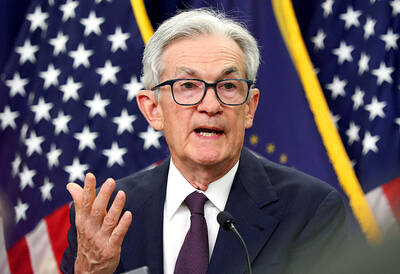
DIVIDED VIEWS: Although the Fed agreed on holding rates steady, some officials see no rate cuts for this year, while 10 policymakers foresee two or more cuts There are a lot of unknowns about the outlook for the economy and interest rates, but US Federal Reserve Chair Jerome Powell signaled at least one thing seems certain: Higher prices are coming. Fed policymakers voted unanimously to hold interest rates steady at a range of 4.25 percent to 4.50 percent for a fourth straight meeting on Wednesday, as they await clarity on whether tariffs would leave a one-time or more lasting mark on inflation. Powell said it is still unclear how much of the bill would fall on the shoulders of consumers, but he expects to learn more about tariffs
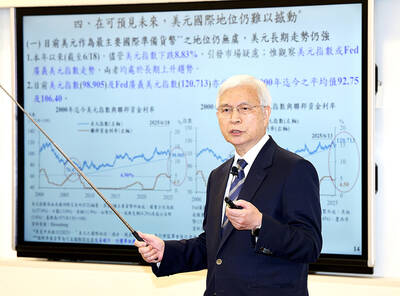
NOT JUSTIFIED: The bank’s governor said there would only be a rate cut if inflation falls below 1.5% and economic conditions deteriorate, which have not been detected The central bank yesterday kept its key interest rates unchanged for a fifth consecutive quarter, aligning with market expectations, while slightly lowering its inflation outlook amid signs of cooling price pressures. The move came after the US Federal Reserve held rates steady overnight, despite pressure from US President Donald Trump to cut borrowing costs. Central bank board members unanimously voted to maintain the discount rate at 2 percent, the secured loan rate at 2.375 percent and the overnight lending rate at 4.25 percent. “We consider the policy decision appropriate, although it suggests tightening leaning after factoring in slackening inflation and stable GDP growth,”
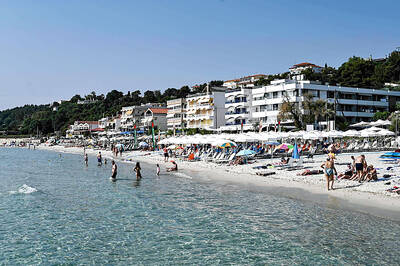
Greek tourism student Katerina quit within a month of starting work at a five-star hotel in Halkidiki, one of the country’s top destinations, because she said conditions were so dire. Beyond the bad pay, the 22-year-old said that her working and living conditions were “miserable and unacceptable.” Millions holiday in Greece every year, but its vital tourism industry is finding it harder and harder to recruit Greeks to look after them. “I was asked to work in any department of the hotel where there was a need, from service to cleaning,” said Katerina, a tourism and marketing student, who would
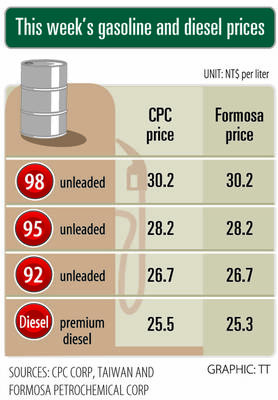
i Gasoline and diesel prices at fuel stations are this week to rise NT$0.1 per liter, as tensions in the Middle East pushed crude oil prices higher last week, CPC Corp, Taiwan (台灣中油) and Formosa Petrochemical Corp (台塑石化) said yesterday. International crude oil prices last week rose for the third consecutive week due to an escalating conflict between Israel and Iran, as the market is concerned that the situation in the Middle East might affect crude oil supply, CPC and Formosa said in separate statements. Front-month Brent crude oil futures — the international oil benchmark — rose 3.75 percent to settle at US$77.01


 RSS
RSS