


Spending on information technology (IT) worldwide will grow nearly 5 percent this year as an upturn in the global economy prompts companies to spend more, a consultancy said yesterday.
All major segments from computing hardware to telecom services are expected to grow as confidence returns and more credit is made available, research and advisory services provider Gartner said.
DOING BETTER
The 4.6 percent projected increase to US$3.4 trillion marks a “significant improvement” from last year, when worldwide IT spending declined by 4.6 percent, the global consultancy said in a note issued in Mumbai.
“Last quarter, we did not expect to see IT spending levels recover to 2008 levels until 2011,” said Richard Gordon, research vice president at Gartner.
But now, though recovery will be slow, GDP “is projected to increase, consumer confidence is expected to improve, and the availability of credit should increase,” Gordon said.
EMERGING MARKETS
“At the same time, pent-up demand for new technologies will be released as enterprises focus on new growth opportunities,” he said.
IT growth in emerging markets is expected to lead the way, with spending forecast to grow 9.3 percent in Latin America, 7.7 percent in the Middle East and Africa and 7 percent in the Asia-Pacific region. The forecast comes as India’s flagship software services companies Tata Consultancy Services, Infosys Technologies and Wipro announced forecast-beating quarterly earnings.

IN THE AIR: While most companies said they were committed to North American operations, some added that production and costs would depend on the outcome of a US trade probe Leading local contract electronics makers Wistron Corp (緯創), Quanta Computer Inc (廣達), Inventec Corp (英業達) and Compal Electronics Inc (仁寶) are to maintain their North American expansion plans, despite Washington’s 20 percent tariff on Taiwanese goods. Wistron said it has long maintained a presence in the US, while distributing production across Taiwan, North America, Southeast Asia and Europe. The company is in talks with customers to align capacity with their site preferences, a company official told the Taipei Times by telephone on Friday. The company is still in talks with clients over who would bear the tariff costs, with the outcome pending further
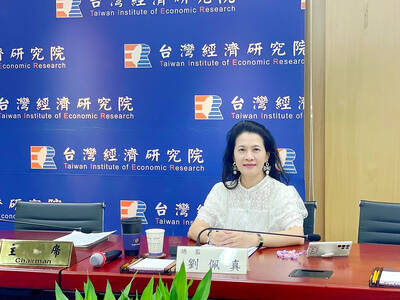
A proposed 100 percent tariff on chip imports announced by US President Donald Trump could shift more of Taiwan’s semiconductor production overseas, a Taiwan Institute of Economic Research (TIER) researcher said yesterday. Trump’s tariff policy will accelerate the global semiconductor industry’s pace to establish roots in the US, leading to higher supply chain costs and ultimately raising prices of consumer electronics and creating uncertainty for future market demand, Arisa Liu (劉佩真) at the institute’s Taiwan Industry Economics Database said in a telephone interview. Trump’s move signals his intention to "restore the glory of the US semiconductor industry," Liu noted, saying that
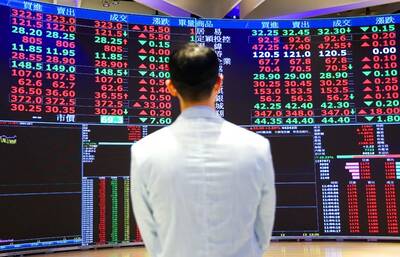
STILL UNCLEAR: Several aspects of the policy still need to be clarified, such as whether the exemptions would expand to related products, PwC Taiwan warned The TAIEX surged yesterday, led by gains in Taiwan Semiconductor Manufacturing Co (TSMC, 台積電), after US President Donald Trump announced a sweeping 100 percent tariff on imported semiconductors — while exempting companies operating or building plants in the US, which includes TSMC. The benchmark index jumped 556.41 points, or 2.37 percent, to close at 24,003.77, breaching the 24,000-point level and hitting its highest close this year, Taiwan Stock Exchange (TWSE) data showed. TSMC rose NT$55, or 4.89 percent, to close at a record NT$1,180, as the company is already investing heavily in a multibillion-dollar plant in Arizona that led investors to assume

AI: Softbank’s stake increases in Nvidia and TSMC reflect Masayoshi Son’s effort to gain a foothold in key nodes of the AI value chain, from chip design to data infrastructure Softbank Group Corp is building up stakes in Nvidia Corp and Taiwan Semiconductor Manufacturing Co (TSMC, 台積電), the latest reflection of founder Masayoshi Son’s focus on the tools and hardware underpinning artificial intelligence (AI). The Japanese technology investor raised its stake in Nvidia to about US$3 billion by the end of March, up from US$1 billion in the prior quarter, regulatory filings showed. It bought about US$330 million worth of TSMC shares and US$170 million in Oracle Corp, they showed. Softbank’s signature Vision Fund has also monetized almost US$2 billion of public and private assets in the first half of this year,


 RSS
RSS