


The world’s top two makers of flat-panel TVs are stressing the energy-saving virtues of different display technologies in their race to dominate a huge global market.
With liquid-crystal-display (LCD) models storming the world market, attention is focusing on developing a greener version that needs less power.
South Korea’s Samsung Electronics is talking up its LED (light emitting diode) backlit model.
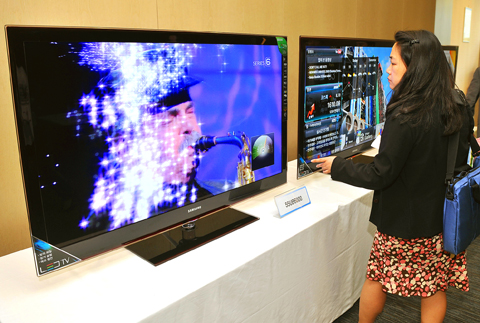
PHOTO: AFP
Rival LG Electronics hails what it calls next-generation technology using AM OLEDs (active matrix organic light emitting diodes).
Each firm is, however, developing both types of flat panel to meet ever-growing demand.
LCD TVs captured 67.3 percent of the world market in the second quarter to June, plasma display panels 6.9 percent and conventional cathode ray tube models 25.7 percent, US-based market researcher DisplaySearch says.
Samsung launched its new LED-backlit models in the middle of March and says it sold 600,000 of them as of June.
Yoon Boo-keun, president of its TV business, said the multinational aims to sell more than 2 million LED-backlit units this year — some 10 percent of its projected 22 million sales of all LCD units.
Yoon said LED TVs reduce energy consumption by up to 40 percent over traditional LCD screens.
“If every TV in the world switched to LED, we could save 13 million kilowatts of electricity — enough to supply all 39 million households in Germany,” he told a global electronics fair in Berlin on Friday.
“I’m sure Samsung will continue to lead the LED TV market,” Shim Sue, senior vice president of sales and marketing for the TV business, told a recent media briefing.
DisplaySearch figures show Samsung supplied 23 percent of all flat-panel models in the second quarter, LG Electronics 13.7 percent, Sony 11.8 percent, Panasonic 8.6 percent and Sharp 6.4 percent.
LCDs are power-greedy because they consist of two key units — a backlit unit which shines a constant white light and a screen unit that filters out some of the light to create colored images.
Samsung’s latest models change the backlit source from power-gulping cold compact fluorescents to energy-efficient LEDs.
Kim Hyun-suk, senior vice president of the firm’s research and development unit, said LED-backlit models could also save energy by arraying the diodes on the edges and not the back of the screen.
“The edge-type has significantly reduced the number of LEDs for the backlight unit and thus need less power and less cost,” Kim said.
“The Samsung Electronics LED-backlit model is just another type of LCD TV,” an LG Electronics official said on condition of anonymity. “They don’t deserve to be called LED TVs. It’s misleading.”
Britain’s Advertising Standards Authority agreed, telling Samsung last month to change its advertisement for the new model.
“We considered that the ad implied the TV displays were comprised totally of LEDs, similar to some outdoor displays, when that was not the case,” it said.
The LG official said the “real post-LCD TVs” should use AM OLEDs for the display panel.
This, he said, does not need a backlit unit and thus requires less power.
It can also guarantee a much thinner panel and a quicker response time for high definition.
LG engineers say an AM OLED TV consumes less than half the power of existing LCD sets and its response time is vastly quicker.
AM OLEDs are used in cellphones and other small displays. But high production costs and other technological challenges have restricted their wider use.
Japan’s Sony launched an 11-inch OLED TV in 2007 and last month LG Electronics launched a 15-inch model, which will be commercially produced from November.
“With the commercial production, we will lead the OLED TV market, the next-generation display market,” Kwon Hee-won, vice president of LG Electronics’ LCD TV business, said in a statement.
POWERING UP: PSUs for AI servers made up about 50% of Delta’s total server PSU revenue during the first three quarters of last year, the company said Power supply and electronic components maker Delta Electronics Inc (台達電) reported record-high revenue of NT$161.61 billion (US$5.11 billion) for last quarter and said it remains positive about this quarter. Last quarter’s figure was up 7.6 percent from the previous quarter and 41.51 percent higher than a year earlier, and largely in line with Yuanta Securities Investment Consulting Co’s (元大投顧) forecast of NT$160 billion. Delta’s annual revenue last year rose 31.76 percent year-on-year to NT$554.89 billion, also a record high for the company. Its strong performance reflected continued demand for high-performance power solutions and advanced liquid-cooling products used in artificial intelligence (AI) data centers,
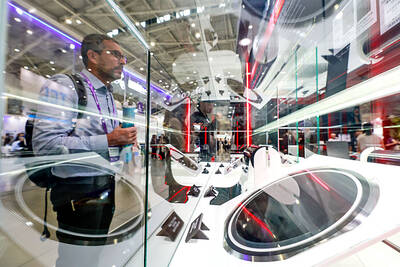
SIZE MATTERS: TSMC started phasing out 8-inch wafer production last year, while Samsung is more aggressively retiring 8-inch capacity, TrendForce said Chipmakers are expected to raise prices of 8-inch wafers by up to 20 percent this year on concern over supply constraints as major contract chipmakers Taiwan Semiconductor Manufacturing Co (TSMC, 台積電) and Samsung Electronics Co gradually retire less advanced wafer capacity, TrendForce Corp (集邦科技) said yesterday. It is the first significant across-the-board price hike since a global semiconductor correction in 2023, the Taipei-based market researcher said in a report. Global 8-inch wafer capacity slid 0.3 percent year-on-year last year, although 8-inch wafer prices still hovered at relatively stable levels throughout the year, TrendForce said. The downward trend is expected to continue this year,
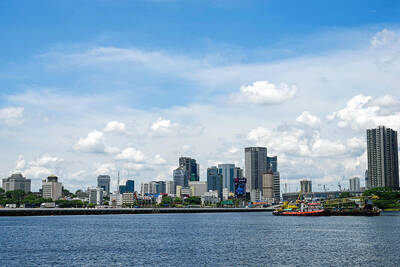
Vincent Wei led fellow Singaporean farmers around an empty Malaysian plot, laying out plans for a greenhouse and rows of leafy vegetables. What he pitched was not just space for crops, but a lifeline for growers struggling to make ends meet in a city-state with high prices and little vacant land. The future agriculture hub is part of a joint special economic zone launched last year by the two neighbors, expected to cost US$123 million and produce 10,000 tonnes of fresh produce annually. It is attracting Singaporean farmers with promises of cheaper land, labor and energy just over the border.

US actor Matthew McConaughey has filed recordings of his image and voice with US patent authorities to protect them from unauthorized usage by artificial intelligence (AI) platforms, a representative said earlier this week. Several video clips and audio recordings were registered by the commercial arm of the Just Keep Livin’ Foundation, a non-profit created by the Oscar-winning actor and his wife, Camila, according to the US Patent and Trademark Office database. Many artists are increasingly concerned about the uncontrolled use of their image via generative AI since the rollout of ChatGPT and other AI-powered tools. Several US states have adopted


 RSS
RSS