


China Mobile Ltd (
The company is going to invest more than 15 billion yuan (US$1.9 billion) to build TD-SCDMA networks in 2007, the Beijing-based Economic Observer reported, citing a plan by China Mobile.
TD-SCDMA, or Time Division-Synchronous Code Division Multiple Access, is a Beijing-backed standard for 3G telecoms services, technology that can transmit images and video at high speeds.
The company will finish the construction of 8,602 TD-SCDMA base stations in eight cities including Beijing, Shanghai and Shenzhen before October this year.
It will also complete the procurement of core equipment based on this standard before the end of May, it said.
Repeated delays following promises to grant all 3G platform licenses has sparked speculation that its home-grown standard is not yet up to snuff.
The government has promised it will issue 3G licenses in time for operations to be launched by the 2008 Olympics in Beijing.
The newspaper cited analysts as saying that China Mobile's large-scale commercial deployment for this technology indicates that the government has "indirectly" issued the TD-SCDMA license.
Li Yuan, an analyst with China International Capital Corp, said China Mobile is likely to mainly operate the networks based on the home-grown standard after the roll out.

The Eurovision Song Contest has seen a surge in punter interest at the bookmakers, becoming a major betting event, experts said ahead of last night’s giant glamfest in Basel. “Eurovision has quietly become one of the biggest betting events of the year,” said Tomi Huttunen, senior manager of the Online Computer Finland (OCS) betting and casino platform. Betting sites have long been used to gauge which way voters might be leaning ahead of the world’s biggest televised live music event. However, bookmakers highlight a huge increase in engagement in recent years — and this year in particular. “We’ve already passed 2023’s total activity and

Nvidia Corp CEO Jensen Huang (黃仁勳) today announced that his company has selected "Beitou Shilin" in Taipei for its new Taiwan office, called Nvidia Constellation, putting an end to months of speculation. Industry sources have said that the tech giant has been eyeing the Beitou Shilin Science Park as the site of its new overseas headquarters, and speculated that the new headquarters would be built on two plots of land designated as "T17" and "T18," which span 3.89 hectares in the park. "I think it's time for us to reveal one of the largest products we've ever built," Huang said near the
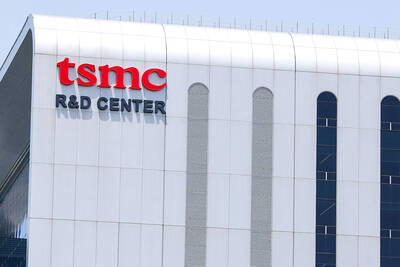
BIG BUCKS: Chairman Wei is expected to receive NT$34.12 million on a proposed NT$5 cash dividend plan, while the National Development Fund would get NT$8.27 billion Taiwan Semiconductor Manufacturing Co (TSMC, 台積電), the world’s largest contract chipmaker, yesterday announced that its board of directors approved US$15.25 billion in capital appropriations for long-term expansion to meet growing demand. The funds are to be used for installing advanced technology and packaging capacity, expanding mature and specialty technology, and constructing fabs with facility systems, TSMC said in a statement. The board also approved a proposal to distribute a NT$5 cash dividend per share, based on first-quarter earnings per share of NT$13.94, it said. That surpasses the NT$4.50 dividend for the fourth quarter of last year. TSMC has said that while it is eager
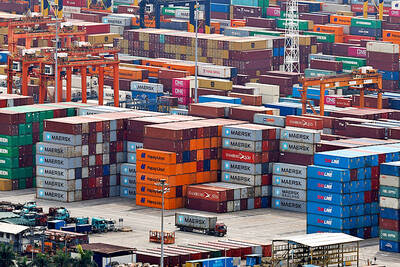
China yesterday announced anti-dumping duties as high as 74.9 percent on imports of polyoxymethylene (POM) copolymers, a type of engineering plastic, from Taiwan, the US, the EU and Japan. The Chinese Ministry of Commerce’s findings conclude a probe launched in May last year, shortly after the US sharply increased tariffs on Chinese electric vehicles, computer chips and other imports. POM copolymers can partially replace metals such as copper and zinc, and have various applications, including in auto parts, electronics and medical equipment, the Chinese ministry has said. In January, it said initial investigations had determined that dumping was taking place, and implemented preliminary


 RSS
RSS