


Shares of Asahi Glass Co, the world's third-largest glassmaker, soared yesterday after the Japanese firm said it would pull out of a joint venture in China making parts for traditional televisions, seeing the market's future in flat panel displays.
Asahi Glass said it would sell its entire 40 percent stake in the Chinese venture making glass for cathode-ray tubes for conventional television sets. It will sell the shares in Shanghai Asahi Electronic Glass Co to Chinese partner SVA Electron Co.
"The shift of TV and PC displays from cathode-ray tubes to flat-panel displays is accelerating and demand for cathode-ray tube glass is expected to continue to decrease," the company said in a statement late Thursday.
It did not disclose the terms of the sale but said the transaction would result in a loss of ?10 billion (US$84.5 million).
Due to the pullout and separate impairment losses in North America, Asahi Glass revised its net profit forecasts for this year to 41 billion yen from the earlier projection of ?76 billion.
But the company looked to the long-term benefits of exiting the unprofitable venture.
Asahi Glass shares gained 64 yen or 4.7 percent to close at 1,422 yesterday, far outpacing the 0.34 percent gains on the benchmark Nikkei-225 index.
Asahi Glass, under a plan launched last year, has stopped manufacturing glass for conventional television tubes in Japan, Indonesia and Taiwan and cut back in China, Singapore, South Korea and Thailand.
The market for flat-screen televisions is growing fast as customers demand higher image quality.
Electronics giant Matsushita Electric Industrial Co, announcing plans earlier this year to build the world's largest plasma panel plant, predicted the global flat-screen TV market would soar 60 percent this year to 45 million units.
Asahi Glass last year sold about ?455.9 billion of flat glass, used to make windows and windshields. The global market for so-called primary-manufactured flat glass is US$19 billion and for processed glass is US$56 billion, according to a presentation on the Web site of cross-town rival Nippon Sheet Glass Co.
The world's four-largest makers of flat glass -- Nippon Sheet Glass of Japan, Asahi Glass, Cie. de Saint-Gobain SA of France and Guardian Industries Corp of the US -- control more than 60 percent of the global market.
Taiwan Semiconductor Manufacturing Co (TSMC, 台積電) secured a record 70.2 percent share of the global foundry business in the second quarter, up from 67.6 percent the previous quarter, and continued widening its lead over second-placed Samsung Electronics Co, TrendForce Corp (集邦科技) said on Monday. TSMC posted US$30.24 billion in sales in the April-to-June period, up 18.5 percent from the previous quarter, driven by major smartphone customers entering their ramp-up cycle and robust demand for artificial intelligence chips, laptops and PCs, which boosted wafer shipments and average selling prices, TrendForce said in a report. Samsung’s sales also grew in the second quarter, up
On Tuesday, US President Donald Trump weighed in on a pressing national issue: The rebranding of a restaurant chain. Last week, Cracker Barrel, a Tennessee company whose nationwide locations lean heavily on a cozy, old-timey aesthetic — “rocking chairs on the porch, a warm fire in the hearth, peg games on the table” — announced it was updating its logo. Uncle Herschel, the man who once appeared next to the letters with a barrel, was gone. It sparked ire on the right, with Donald Trump Jr leading a charge against the rebranding: “WTF is wrong with Cracker Barrel?!” Later, Trump Sr weighed
HEADWINDS: Upfront investment is unavoidable in the merger, but cost savings would materialize over time, TS Financial Holding Co president Welch Lin said TS Financial Holding Co (台新新光金控) said it would take about two years before the benefits of its merger with Shin Kong Financial Holding Co (新光金控) become evident, as the group prioritizes the consolidation of its major subsidiaries. “The group’s priority is to complete the consolidation of different subsidiaries,” Welch Lin (林維俊), president of the nation’s fourth-largest financial conglomerate by assets, told reporters during its first earnings briefing since the merger took effect on July 24. The asset management units are scheduled to merge in November, followed by life insurance in January next year and securities operations in April, Lin said. Banking integration,
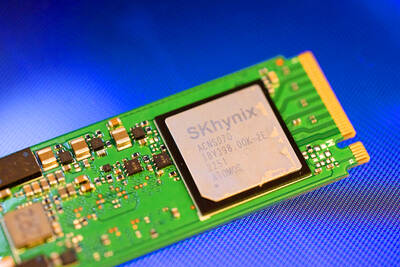
LOOPHOLES: The move is to end a break that was aiding foreign producers without any similar benefit for US manufacturers, the US Department of Commerce said US President Donald Trump’s administration would make it harder for Samsung Electronics Co and SK Hynix Inc to ship critical equipment to their chipmaking operations in China, dealing a potential blow to the companies’ production in the world’s largest semiconductor market. The US Department of Commerce in a notice published on Friday said that it was revoking waivers for Samsung and SK Hynix to use US technologies in their Chinese operations. The companies had been operating in China under regulations that allow them to import chipmaking equipment without applying for a new license each time. The move would revise what is known


 RSS
RSS