


An electronic book reader developed by a local company made its debut yesterday, with the aim of revolutionizing the way people read.
"This is technology that will radically change people's reading habits," Jack Tsai (蔡東機), chairman of eRead Technology Co (宜銳科技), told reporters yesterday.
With a year of research and development and funding of NT$200 million (US$6.2 million), the company yesterday introduced the STAReBOOK, a comic book-sized e-book reader.
Retailing at NT$12,900, the slim gadget weighs just 180g, is 0.8cm thick and has a 6-inch screen. It supports reading of pictures or documents in pdf, txt, doc and jpg formats, and doubles as a MP3 music player.
The battery lasts for 8,000 page views, or around 60 books.
Aspiring to become the largest digital reading solution provider in Asia, eRead hopes to emulate the success formula of Apple Computer Inc's iPod and iTunes.
It is now working with major publishing firms in the region to support downloads of novels, non-fiction works and comic books to readers.
The portal offers more than 3,000 titles for download, and more will become available in the near term, said Tom Tsai (
Users can download titles at up to 30 percent off the market price of books, and content providers are assured of copyright protection with the use of related technology, he added.
The company said that the first-batch of devices would include 2,000 units for sale in Asia, and total sales for next year would amount to 60,000 units.
The company is the latest to join the craze for e-book technology, along with Japan's Sony Corp, which recently launched a similar product priced at US$350 in the US.
STAReBOOK will see strong demand in Asia due to its support for both simplified and traditional Chinese, as well as its thin size, Tom Tsai said.
The company will launch 5-inch screen and WiFi-enabled models in the middle of next year to reach a wider user base, he said.
To fund the expansion, eRead is expected to rope in several venture capitalists from China and Hong Kong by the end of the month, Jack Tsai said.
The anticipated injection of US$20 million will pave the way for the
company's future listing on the NASDAQ exchange, he said.
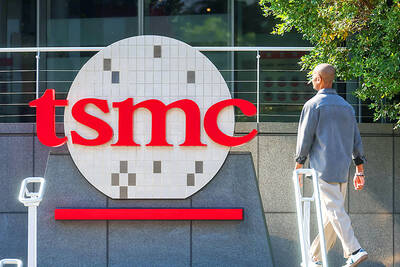
Shares of contract chipmaker Taiwan Semiconductor Manufacturing Co (TSMC, 台積電) came under pressure yesterday after a report that Apple Inc is looking to shift some orders from the Taiwanese company to Intel Corp. TSMC shares fell NT$55, or 2.4 percent, to close at NT$2,235 on the local main board, Taiwan Stock Exchange data showed. Despite the losses, TSMC is expected to continue to benefit from sound fundamentals, as it maintains a lead over its peers in high-end process development, analysts said. “The selling was a knee-jerk reaction to an Intel-Apple report over the weekend,” Mega International Investment Services Corp (兆豐國際投顧) analyst Alex Huang
Taiwan Semiconductor Manufacturing Co (TSMC, 台積電) is expected to remain Apple Inc’s primary chip manufacturing partner despite reports that Apple could shift some orders to Intel Corp, industry experts said yesterday. The comments came after The Wall Street Journal reported on Friday that Apple and Intel had reached a preliminary agreement following more than a year of negotiations for Intel to manufacture some chips for Apple devices. Taiwan Institute of Economic Research (台灣經濟研究院) economist Arisa Liu (劉佩真) said TSMC’s advanced packaging technologies, including integrated fan-out and chip-on-wafer-on-substrate, remain critical to the performance of Apple’s A-series and M-series chips. She said Intel and Samsung
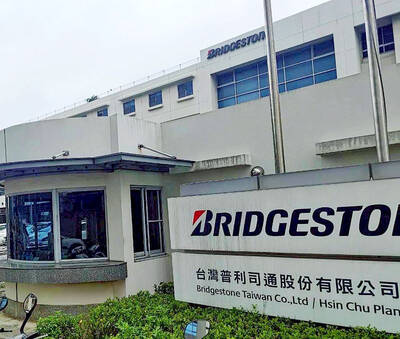
TRANSITION: With the closure, the company would reorganize its Taiwanese unit to a sales and service-focused model, Bridgestone said Bridgestone Corp yesterday announced it would cease manufacturing operations at its tire plant in Hsinchu County’s Hukou Township (湖口), affecting more than 500 workers. Bridgestone Taiwan Co (台灣普利司通) said in a statement that the decision was based on the Tokyo-based tire maker’s adjustments to its global operational strategy and long-term market development considerations. The Taiwanese unit would be reorganized as part of the closure, effective yesterday, and all related production activities would be concluded, the statement said. Under the plan, Bridgestone would continue to deepen its presence in the Taiwanese market, while transitioning to a sales and service-focused business model, it added. The Hsinchu
Taiwan Semiconductor Manufacturing Co (TSMC, 台積電) has approved a capital budget of US$31.28 billion for production expansion to meet long-term development needs during the artificial intelligence (AI) boom. The company’s board meeting yesterday approved the capital appropriation plan for purposes such as the installation of advanced technology capacity and fab construction, the world’s largest contract chipmaker said in a statement. At an earnings conference last month, TSMC forecast that its capital expenditure for this year would be at the higher end of the US$52 billion to US$56 billion range it forecast in January in response to robust demand for 5G, AI and


 RSS
RSS