


Coca-Cola Co said laboratory tests conducted by an independent research firm detected no traces of pesticides in the soft drinks it sells in India, where some states have curbed the sale of sodas made by it and PepsiCo Inc.
The tests, conducted by London-based Central Science Laboratory, found less than 0.1 part per billion of any pesticide in 26 samples of Coca-Cola, Thums Up, Sprite, Fanta and Limca soft drinks, Atlanta-based Coca-Cola said on Friday in a statement. That meets the EU standard of less than one part per billion for any individual pesticide.
Kerala, a province in India's south, imposed a complete ban on the sale of Coca-Cola Co and PepsiCo drinks this week, while Madhya Pradesh, Gujarat, Rajasthan and Karnataka states disallowed sales in government offices and near schools.
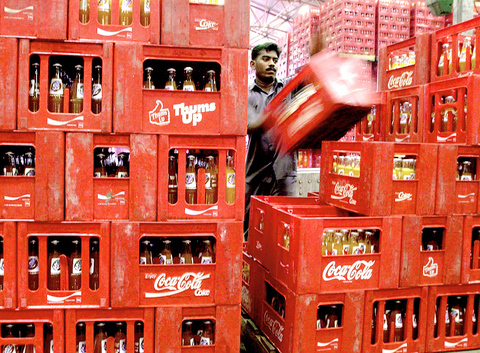
PHOTO: AFP
Curbs on sodas made by the world's two biggest soft-drink makers followed the findings of a local pressure group. The New Delhi-based Center for Science and Environment said last week it found residues of pesticides in 57 samples of 11 brands of drinks made by the two companies. The organization in 2003 had brought similar charges against the soft-drink makers.
"There is no issue with the quality and purity of our products," said Rick Frazier, vice president of technical stewardship for Coca-Cola.
The company said 441 different quality control tests are routinely performed at Coca-Cola plants.
John Faucher, an analyst with J.P. Morgan Securities Inc in New York, said on Friday in a research note that the latest CSE study was "more a headline than a business concern" for Coca-Cola and PepsiCo.
Coca-Cola gets about 1.3 percent of its total sales in India, Bjorhus said. Indians consume an average of eight servings of soda per year, compared with an average of 837 for Americans, according to data by industry journal Beverage Digest.
It may be "inevitable" that the bans and the Indian study will hurt sales at Coca-Cola and PepsiCo, Faucher said.
An Indian parliamentary panel, which was set up in 2003 after lawmakers sought a ban on the drinks, upheld the Indian study's first report.
The 15-member panel said in February 2004 that it wants new health standards set for beverages, including fruit juices.
Federal Health Minister Anbumani Ramadoss told the Indian parliament on Aug. 8 that the study's findings are being examined.
Shares of Coca-Cola fell US$0.14 to close at US$43.76 on New York Stock Exchange. Shares of PepsiCo rose 13 cents to US$63.33.
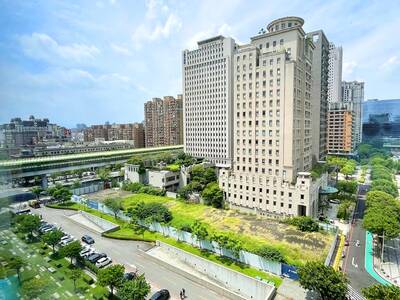
Taichung reported the steepest fall in completed home prices among the six special municipalities in the first quarter of this year, data compiled by Taiwan Realty Co (台灣房屋) showed yesterday. From January through last month, the average transaction price for completed homes in Taichung fell 8 percent from a year earlier to NT$299,000 (US$9,483) per ping (3.3m²), said Taiwan Realty, which compiled the data based on the government’s price registration platform. The decline could be attributed to many home buyers choosing relatively affordable used homes to live in themselves, instead of newly built homes in the city’s prime property market, Taiwan Realty
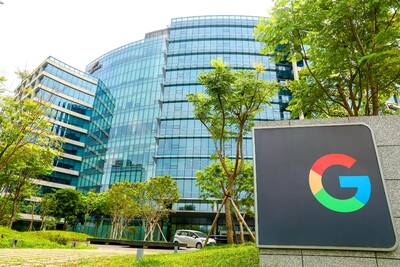
The government yesterday approved applications by Alphabet Inc’s Google to invest NT$27.08 billion (US$859.98 million) in Taiwan, the Ministry of Economic Affairs said in a statement. The Department of Investment Review approved two investments proposed by Google, with much of the funds to be used for data processing and electronic information supply services, as well as inventory procurement businesses in the semiconductor field, the ministry said. It marks the second consecutive year that Google has applied to increase its investment in Taiwan. Google plans to infuse NT$25.34 billion into Charter Investments Ltd (特許投資顧問) through its Singapore-based subsidiary Fructan Holdings Singapore Pte Ltd, and
Micron Technology Inc is a driving force pushing the US Congress to pass legislation that would put new export restrictions on equipment its Chinese competitors use to make their chips, according to people familiar with the matter. A US House of Representatives panel yesterday was to vote on the “MATCH Act,” a bill designed to close gaps in restrictions on chipmaking equipment. It would also pressure foreign companies that sell equipment to Chinese chipmaking facilities to align with export curbs on US companies like Lam Research Corp and Applied Materials Inc. The bill targets facilities operated by China’s ChangXin Memory Technologies Inc
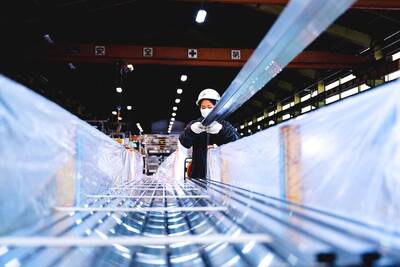
Japan’s reliance on the Middle East for aluminum is forcing companies to cut back on production and scramble for alternative supply sources after key shipping routes were severed due to the Iran conflict. Among the most exposed are auto and parts makers such as Toyota Motor Corp and Denso Corp. Domestic automakers get about 70 percent of their aluminum imports from the Middle East, the nation’s top auto lobby said. The price of the lightweight alloy — used in everything from engine parts to wheels — has jumped about 13 percent since hostilities started in late February. “It’s only been a month, but it’s


 RSS
RSS