


An appeals court in France on Friday upheld a ruling that Morgan Stanley harmed LVMH Moet Hennessy Louis Vuitton while it was trying to take over the rival Gucci Group, but it reversed a finding that the firm's research was at fault.
The case, which has been in litigation for several years, has been closely watched in Europe because it pits a well-respected analyst who wrote a critical research report against one of the largest companies she covers.
LVMH first sued Morgan Stanley in 2002, contending the bank had a conflict because one of its analysts, Claire Kent, wrote a negative report about LVMH when Morgan Stanley was advising Gucci. LVMH failed in its effort to buy Gucci after more than two years of negotiations, and the company was eventually acquired by Pinault Printemps Redoute instead.
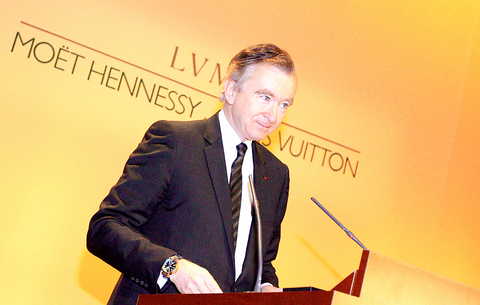
PHOTO: AFP
Morgan Stanley and LVMH have engaged in an escalating battle in the courts and the news media since then.
In 2004, the Commercial Court of Paris ordered Morgan Stanley to pay LVMH 30 million euros (US$38.3) million for what were deemed moral damages the firm caused to the image of LVMH. The bank intended to do this damage, the court said.
On Friday, the Paris Court of Appeals said Morgan Stanley's behavior toward LVMH had been faulty on two counts: The bank had incorrectly stated its relationship with the company in its disclosure statements, and an investment banker had incorrectly stated LVMH's debt levels in a printed interview. But it rejected the contention that Kent's work was intentionally biased.
In addition to the fine of 30 million euros, an outside expert has been assigned to assess material damages, which includes an estimate of the amount LVMH had to pay for advertising and other costs to counteract the criticism from Morgan Stanley.
LVMH said it was now seeking more than 100 million euros in material damages.
Both sides claimed victory on Friday. Morgan Stanley's chairman in France, Patrick Ponsolle, said the bank was "delighted that the Paris Court of Appeal has dismissed the core of LVMH's claims." The analyst's reputation has been "completely vindicated," he said. Morgan Stanley no longer covers LVMH, but Kent still covers other retail companies for the bank.
LVMH, meanwhile, said in a statement that the Paris court "decided against Morgan Stanley and upheld the position of LVMH Group."
Research experts at other banks in Europe have been closely following the case, and were particularly concerned after the 2004 decision about its effect on analysts.
"I was worried that that was going to have banks rethinking whether they would cover French companies," said Rick Levitt, research manager for Dresdner Kleinwort.
Since the 2004 decision, Dresdner's response has been to "be that much more diligent" about checking negative analyst reports on French companies, including a triple review process.
With Friday's decision, which seems to let Morgan Stanley's analyst off the hook, "maybe we can go back to a double check," Levitt said.
Levitt added that he "doesn't think it pays" for a company to go after an analyst that has issued a negative report. A smarter strategy would be to show the market that the company is not performing in the way that has drawn criticism, he said.

Vincent Wei led fellow Singaporean farmers around an empty Malaysian plot, laying out plans for a greenhouse and rows of leafy vegetables. What he pitched was not just space for crops, but a lifeline for growers struggling to make ends meet in a city-state with high prices and little vacant land. The future agriculture hub is part of a joint special economic zone launched last year by the two neighbors, expected to cost US$123 million and produce 10,000 tonnes of fresh produce annually. It is attracting Singaporean farmers with promises of cheaper land, labor and energy just over the border.
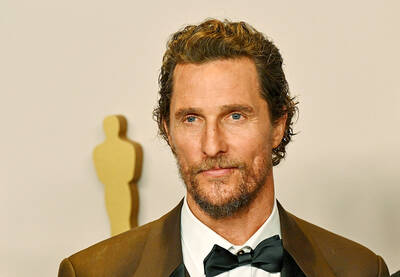
US actor Matthew McConaughey has filed recordings of his image and voice with US patent authorities to protect them from unauthorized usage by artificial intelligence (AI) platforms, a representative said earlier this week. Several video clips and audio recordings were registered by the commercial arm of the Just Keep Livin’ Foundation, a non-profit created by the Oscar-winning actor and his wife, Camila, according to the US Patent and Trademark Office database. Many artists are increasingly concerned about the uncontrolled use of their image via generative AI since the rollout of ChatGPT and other AI-powered tools. Several US states have adopted

A proposed billionaires’ tax in California has ignited a political uproar in Silicon Valley, with tech titans threatening to leave the state while California Governor Gavin Newsom of the Democratic Party maneuvers to defeat a levy that he fears would lead to an exodus of wealth. A technology mecca, California has more billionaires than any other US state — a few hundred, by some estimates. About half its personal income tax revenue, a financial backbone in the nearly US$350 billion budget, comes from the top 1 percent of earners. A large healthcare union is attempting to place a proposal before

KEEPING UP: The acquisition of a cleanroom in Taiwan would enable Micron to increase production in a market where demand continues to outpace supply, a Micron official said Micron Technology Inc has signed a letter of intent to buy a fabrication site in Taiwan from Powerchip Semiconductor Manufacturing Corp (力積電) for US$1.8 billion to expand its production of memory chips. Micron would take control of the P5 site in Miaoli County’s Tongluo Township (銅鑼) and plans to ramp up DRAM production in phases after the transaction closes in the second quarter, the company said in a statement on Saturday. The acquisition includes an existing 12 inch fab cleanroom of 27,871m2 and would further position Micron to address growing global demand for memory solutions, the company said. Micron expects the transaction to


 RSS
RSS