


More than two weeks of rioting by youths in France have left a mark on the country's less than shining economy.
The direct losses -- despite spectacular pictures of buses and carpet warehouses ablaze -- are small. It is France's image that has suffered the greatest damage.
Though it markets itself worldwide as a land of luxury, culture and savoir-vivre, France has now been seen pocked with poverty and violence. The French tourist industry fears that business may fall off during the important Christmas season as a result.
Meanwhile, France is having increasing trouble getting its budget deficit below 3 percent of GDP, as required by the EU's Stability and Growth Pact.
As befits his position, French Economics Minister Thierry Breton exudes optimism. The riots would not slow economic growth, he said.
Independent economic experts are not so sure, however. Analysts at Credit Agricole, France's largest bank, figure that the government will have to boost expenditures by 2 billion euros (US$2.334 billion). Simply fulfilling its promise to hike spending on urban renewal by 25 percent would cost a billion euros, they say.
On top of that come 5,000 more teachers and 100 million euros for organizations in the troubled neighborhoods, 70,000 additional scholarships, vocational advancement programs, five new tax-free zones for investors, and so forth.
Paying for all that probably means borrowing. So hopes of bringing the budget deficit under 3 percent again next year are shaky.
The direct losses due to the riots -- several hundred million euros -- are considerable but no greater than those caused by a serious storm. And there was no looting as in New Orleans after Hurricane Katrina.
Consequently, the French Federation of Insurance Companies (FFSA) is unruffled. It estimates 20 million euros in claims for the 6,600 cars that were torched, and puts total insurance claims -- including damage to sport facilities, schools and businesses -- at 200 million euros.
The sum is not peanuts for an industry that pays out 7 million euros in fire damage claims each year in France. It is no cause for concern either.
That leaves the collateral damage done to tourism. Companies offering city tours are especially worried, though they do not want to say so loudly.
It is hardly an invitation for a romantic honeymoon on the Seine when British correspondents on the Champs-Elysees write "Paris is burning," or when American TV reporters in France are seen wearing helmets and bulletproof vests.
According to French reports, up to 30 percent of the trips booked to Paris at travel agencies in the US have been cancelled since the riots.
It does not matter that most French people also experienced them only via the media -- or that no on ghetto for a holiday anyway. It is hard to assess security risks from afar.
So if France stays "hot," a lot of foreigners could decide to skip Paris at the turn of the year.

Taiwanese firms have increased investment in the Philippines in recent years as Manila’s ties with Washington deepen and global supply chains continue to shift away from China, an expert at the Chung-Hua Institution for Economic Research (CIER, 中華經濟研究院) said yesterday. The Philippines had not been among Taiwanese investors’ top choices in Southeast Asia, CIER Taiwan ASEAN Studies Center director Kristy Hsu (徐遵慈) said at a seminar in Taipei. However, Taiwan’s investment in the country has grown significantly since the COVID-19 pandemic, reaching US $257 million last year, a high in recent years, she said. Although Taiwan’s total investment in the Philippines still lags

Intel Corp regards Taiwan Semiconductor Manufacturing Co (TSMC, 台積電) as a longstanding partner, as the US chipmaker would continue outsourcing production of advanced chips to TSMC, Intel chief executive officer Lip-Bu Tan (陳立武) said yesterday. “I don’t look at people as competitors. I look at the collaboration... Nvidia is also, you know, a good friend,” Tan told a news conference following his keynote speech at the Computex trade show in Taipei. “It’s a very trusted partnership for us... We are a big, top customer for them, and we’re going to continue doing that,” he said, referring to TSMC, the world’s largest foundry

Artificial intelligence (AI) agents would supplant smartphones as the center of people’s digital lives, fundamentally reshaping personal devices and driving a major computing upgrade cycle, Qualcomm Inc CEO Cristiano Amon said yesterday. In his keynote speech for this year’s Computex trade show in Taipei, Amon said that the rise of "agentic AI" — AI systems capable of reasoning, planning and carrying out tasks autonomously — would transform how people interact with technology across phones, PCs, vehicles and wearable devices. Describing the technology as the next major evolution in computing, Amon said that "2026 is the year of agents.” For decades, smartphones have sat
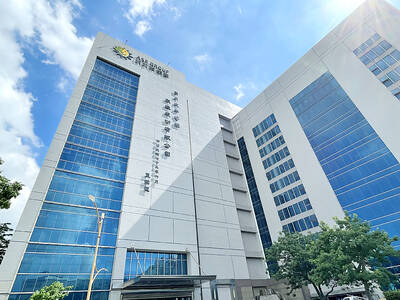
The average pay to employees by ASE Technology Holding Co (日月光投控) was the highest among the companies listed on the local main board last year, while contract chipmaker Taiwan Semiconductor Manufacturing Co (TSMC, 台積電) ranked seventh, the Taiwan Stock Exchange (TWSE) said on Monday. Data compiled by the exchange showed ASE Technology, the world’s largest chip packaging and testing services provider, paid its employees an average of NT$6.28 million (US$199,746) last year, up 40 percent from a year earlier. TSMC, the world’s largest contract chipmaker and the most profitable company in Taiwan, paid its employees NT$4.09 million on average, up


 RSS
RSS