


In light of expected weakness in the consumer market this year, Hewlett-Packard (HP) Taiwan, the nation's third largest laptop vendor, plans to strengthen its foothold in the commercial segment to sustain growth this year, a company official said yesterday.
"The commercial market is our main target this year, in view of slower demand for laptops in the retail segment," said Dennis Chen (
The commercial market is expected to grow 10 percent to 15 percent this year, driven by the replacement demand, Chen said.
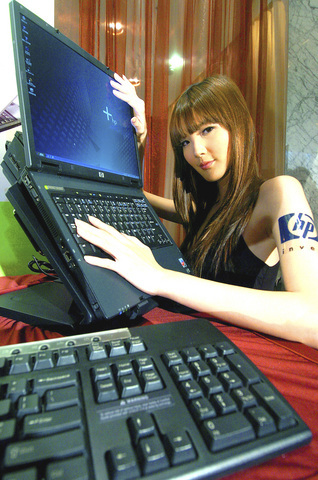
PHOTO: SEAN CHAO, TAIPEI TIMES
The nation's commercial segment, which consists of government and corporate clients, is estimated to account for around half of Taiwan's notebook market, with over 500,000 units last year, according to HP Taiwan.
Chen also acknowledged the company has sensed some concerns from some corporate clients over rival IBM Corp's sale of its PC unit to Lenovo Group (聯想), which will provide an opportunity for HP to expand its commercial laptop business.
The company yesterday unveiled several new notebook computer models with Intel Corp's latest Sonoma platform, an upgraded Centrino mobile technology central processing unit, and enhanced security functions. The units cost between NT$43,900 and NT$71,900.
HP Taiwan outperformed Acer Inc and IBM Taiwan last year, taking first place in the nation's commercial PC market. The company had a 12.6 percent share of the commercial market in the fourth quarter of last year, up from 11.3 percent in the previous quarter, according to International Data Corp.
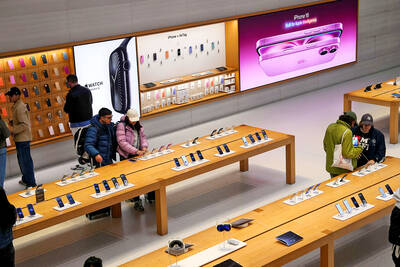
BYPASSING CHINA TARIFFS: In the first five months of this year, Foxconn sent US$4.4bn of iPhones to the US from India, compared with US$3.7bn in the whole of last year Nearly all the iPhones exported by Foxconn Technology Group (富士康科技集團) from India went to the US between March and last month, customs data showed, far above last year’s average of 50 percent and a clear sign of Apple Inc’s efforts to bypass high US tariffs imposed on China. The numbers, being reported by Reuters for the first time, show that Apple has realigned its India exports to almost exclusively serve the US market, when previously the devices were more widely distributed to nations including the Netherlands and the Czech Republic. During March to last month, Foxconn, known as Hon Hai Precision Industry

Taiwan Semiconductor Manufacturing Co (TSMC, 台積電) and the University of Tokyo (UTokyo) yesterday announced the launch of the TSMC-UTokyo Lab to promote advanced semiconductor research, education and talent development. The lab is TSMC’s first laboratory collaboration with a university outside Taiwan, the company said in a statement. The lab would leverage “the extensive knowledge, experience, and creativity” of both institutions, the company said. It is located in the Asano Section of UTokyo’s Hongo, Tokyo, campus and would be managed by UTokyo faculty, guided by directors from UTokyo and TSMC, the company said. TSMC began working with UTokyo in 2019, resulting in 21 research projects,

Ashton Hall’s morning routine involves dunking his head in iced Saratoga Spring Water. For the company that sells the bottled water — Hall’s brand of choice for drinking, brushing his teeth and submerging himself — that is fantastic news. “We’re so thankful to this incredible fitness influencer called Ashton Hall,” Saratoga owner Primo Brands Corp’s CEO Robbert Rietbroek said on an earnings call after Hall’s morning routine video went viral. “He really helped put our brand on the map.” Primo Brands, which was not affiliated with Hall when he made his video, is among the increasing number of companies benefiting from influencer
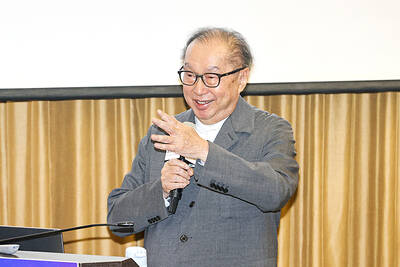
Quanta Computer Inc (廣達) chairman Barry Lam (林百里) yesterday expressed a downbeat view about the prospects of humanoid robots, given high manufacturing costs and a lack of target customers. Despite rising demand and high expectations for humanoid robots, high research-and-development costs and uncertain profitability remain major concerns, Lam told reporters following the company’s annual shareholders’ meeting in Taoyuan. “Since it seems a bit unworthy to use such high-cost robots to do household chores, I believe robots designed for specific purposes would be more valuable and present a better business opportunity,” Lam said Instead of investing in humanoid robots, Quanta has opted to invest


 RSS
RSS