


Teco Electric & Machinery Co (東元電機), a leading Taiwanese television vendor, yesterday said Sharp Corp's latest patent infringement charges will not have a substantial impact on its sales in Japan.
Teco's remarks came after the Japanese consumer electronics giant filed a lawsuit against Teco's Japanese unit, Sankyo Co, at Tokyo District Court in the middle of last month, claiming the company infringed on its liquid-crystal-display (LCD) patents.
Previous charges
Earlier this year, the court threw out patent infringement charges filed by Sharp against Teco.
"We are confident that the ruling will not be different, as the charge is almost the same as the previous one," Teco chairman Theodor Huang (黃茂雄) said.
The new lawsuit filed by Sharp seeks damages and asks Sankyo to stop production, sales and import of 20-inch LCD-TVs, said Yukiyasu Uno, a spokesman for Osaka-based Sharp.
"We don't expect Sharp's new action to negatively impact Teco's business in Japan," Huang said.
Teco has been barred from selling its brand-name 20-inch TV models to Japan for the past eight months.
Temporary injunction
Last June, Sharp filed a temporary injunction against Teco, claiming panels used in the company's LCD televisions, purchased from Taiwan-based AU Optronics, infringe on a Sharp technology that fixes faulty pixels during production.
To fill the supply gap, Teco has been exporting 27-inch and 30-inch LCD-TVs, according to a company statement.
As the Japanese firm dropped the injunction on Tuesday, Teco yesterday said it will be able to resume exports of its 20-inch LCD-TV sets using "problematic" flat panels made by AU Optronics Corp (
Sankyo is also considering filing a lawsuit seeking damages against Sharp for making "groundless" claims that led to lost sales and hurt its business reputation, according to a faxed statement from the company.

The Eurovision Song Contest has seen a surge in punter interest at the bookmakers, becoming a major betting event, experts said ahead of last night’s giant glamfest in Basel. “Eurovision has quietly become one of the biggest betting events of the year,” said Tomi Huttunen, senior manager of the Online Computer Finland (OCS) betting and casino platform. Betting sites have long been used to gauge which way voters might be leaning ahead of the world’s biggest televised live music event. However, bookmakers highlight a huge increase in engagement in recent years — and this year in particular. “We’ve already passed 2023’s total activity and

Nvidia Corp CEO Jensen Huang (黃仁勳) today announced that his company has selected "Beitou Shilin" in Taipei for its new Taiwan office, called Nvidia Constellation, putting an end to months of speculation. Industry sources have said that the tech giant has been eyeing the Beitou Shilin Science Park as the site of its new overseas headquarters, and speculated that the new headquarters would be built on two plots of land designated as "T17" and "T18," which span 3.89 hectares in the park. "I think it's time for us to reveal one of the largest products we've ever built," Huang said near the

China yesterday announced anti-dumping duties as high as 74.9 percent on imports of polyoxymethylene (POM) copolymers, a type of engineering plastic, from Taiwan, the US, the EU and Japan. The Chinese Ministry of Commerce’s findings conclude a probe launched in May last year, shortly after the US sharply increased tariffs on Chinese electric vehicles, computer chips and other imports. POM copolymers can partially replace metals such as copper and zinc, and have various applications, including in auto parts, electronics and medical equipment, the Chinese ministry has said. In January, it said initial investigations had determined that dumping was taking place, and implemented preliminary
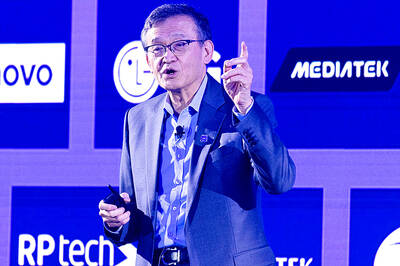
Intel Corp yesterday reinforced its determination to strengthen its partnerships with Taiwan’s ecosystem partners including original-electronic-manufacturing (OEM) companies such as Hon Hai Precision Industry Co (鴻海精密) and chipmaker United Microelectronics Corp (UMC, 聯電). “Tonight marks a new beginning. We renew our new partnership with Taiwan ecosystem,” Intel new chief executive officer Tan Lip-bu (陳立武) said at a dinner with representatives from the company’s local partners, celebrating the 40th anniversary of the US chip giant’s presence in Taiwan. Tan took the reins at Intel six weeks ago aiming to reform the chipmaker and revive its past glory. This is the first time Tan


 RSS
RSS