


Google Inc co-founders Larry Page and Sergey Brin each plan to sell up to 7.2 million shares of their stock in the online search engine leader during the next 18 months -- divestitures that would generate windfalls of more than US$1 billion apiece at current market prices.
Mountain View-based Google disclosed the intentions of Page and Brin, both 31, late Friday in documents filed with the US Securities and Exchange Commission. In the same filing, Google also revealed that its chief executive, Eric Schmidt, plans to sell 2.2 million shares of his holdings to cash in on the company's stock price, which has nearly doubled since an August initial public offering.
Google's shares gained US$1.86, or 1.1 percent, to close at US$169.40 on Friday on the NASDAQ Stock Market. Based on that price, Page and Brin would each pocket US$1.2 billion from their planned stock sales while Schmidt, 49, would collect US$373 million. The stock's trading price has ranged from US$95.96 to US$201.60 per share since the IPO was completed on Aug. 19 at US$85 per share.
Page, Brin and Schmidt, who say they run Google collectively, will retain most of their company stock. If the planned sales are completed, Page and Brin will still own about 31 million shares apiece -- stakes worth more than US$5 billion as of Friday. Schmidt would still own 12.2 million shares -- currently worth more than US$2 billion.
Page, Brin and Schmidt plan to dispose of their stock through automated trading programs -- a common tactic that corporate executives use so investors don't question the timing of their divestitures. The trio adopted the plans in mid-September, but Google didn't reveal the details until Friday.
Google disclosed the planned stock sales amid rising investor anxiety about possible sharp decline in the share price if hundreds of insiders began to cash out the holdings that they have accumulated since the popular search engine's Internet debut in 1998.
The selling restrictions on 39.1 million shares held by Google insiders were lifted Tuesday, contributing to a one-day decline of nearly 7 percent in the company's stock. Another 227 million shares will become eligible for trading between from Dec. 16 through Feb. 14.
Google also raised investor worries earlier this week by warning that its recent rapid rate of revenue growth might not continue during the current quarter.
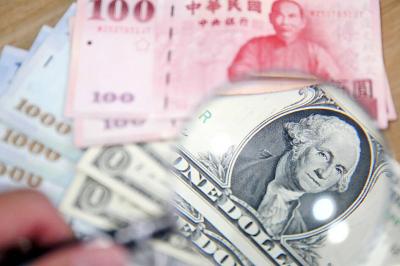
The US dollar was trading at NT$29.7 at 10am today on the Taipei Foreign Exchange, as the New Taiwan dollar gained NT$1.364 from the previous close last week. The NT dollar continued to rise today, after surging 3.07 percent on Friday. After opening at NT$30.91, the NT dollar gained more than NT$1 in just 15 minutes, briefly passing the NT$30 mark. Before the US Department of the Treasury's semi-annual currency report came out, expectations that the NT dollar would keep rising were already building. The NT dollar on Friday closed at NT$31.064, up by NT$0.953 — a 3.07 percent single-day gain. Today,
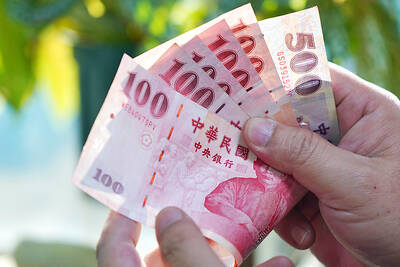
‘SHORT TERM’: The local currency would likely remain strong in the near term, driven by anticipated US trade pressure, capital inflows and expectations of a US Fed rate cut The US dollar is expected to fall below NT$30 in the near term, as traders anticipate increased pressure from Washington for Taiwan to allow the New Taiwan dollar to appreciate, Cathay United Bank (國泰世華銀行) chief economist Lin Chi-chao (林啟超) said. Following a sharp drop in the greenback against the NT dollar on Friday, Lin told the Central News Agency that the local currency is likely to remain strong in the short term, driven in part by market psychology surrounding anticipated US policy pressure. On Friday, the US dollar fell NT$0.953, or 3.07 percent, closing at NT$31.064 — its lowest level since Jan.
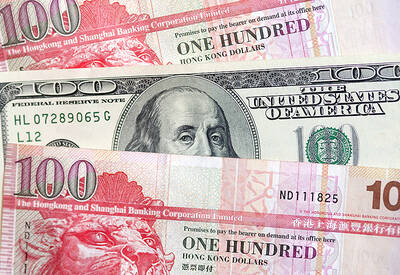
Hong Kong authorities ramped up sales of the local dollar as the greenback’s slide threatened the foreign-exchange peg. The Hong Kong Monetary Authority (HKMA) sold a record HK$60.5 billion (US$7.8 billion) of the city’s currency, according to an alert sent on its Bloomberg page yesterday in Asia, after it tested the upper end of its trading band. That added to the HK$56.1 billion of sales versus the greenback since Friday. The rapid intervention signals efforts from the city’s authorities to limit the local currency’s moves within its HK$7.75 to HK$7.85 per US dollar trading band. Heavy sales of the local dollar by
The Financial Supervisory Commission (FSC) yesterday met with some of the nation’s largest insurance companies as a skyrocketing New Taiwan dollar piles pressure on their hundreds of billions of dollars in US bond investments. The commission has asked some life insurance firms, among the biggest Asian holders of US debt, to discuss how the rapidly strengthening NT dollar has impacted their operations, people familiar with the matter said. The meeting took place as the NT dollar jumped as much as 5 percent yesterday, its biggest intraday gain in more than three decades. The local currency surged as exporters rushed to


 RSS
RSS