


Dopod International Corp (多普達), a new player in Taiwan's 6 million mobile-handset market, yesterday unveiled its second Windows-based smartphone, after debuting its first model, the Dopod565, two months ago.
"As our first model jumped to be the second-highest seller on online handset trading site Wantgo.com.tw (網購) soon after the August launch, ? we believe Dopod is well on the way to become a top smartphone brand," chief executive Jack Tong (董良俊) said yesterday.
Dopod has every reason to be optimistic, as the vendor sold over 4,000 Dopod565 models in the first 40 days after its rollout, Tong said.
Consumers still have to queue up for the phone, which includes Internet access, a work planner and entertainment functions, he added.
Dopod launched its first smartphone on the domestic market this year after operating in China for two years. Although a latecomer to this line of business compared to local rival Mitac International Corp (神達電腦), an industry watcher said that Dopod holds the upper hand in having grabbed a slice of the thriving smartphone domestic market.
"Dopod has strong technology and manufacturing support from High Tech Computer Corp (
High Tech Computer is the nation's top smartphone contract maker for global brands such as T-Mobile International and Orange SA, a handset arm of France Telecom SA. Wang, a daughter of business tycoon Wang Yung-ching (
In contrast, Mitac, a local pioneer in the smartphone segment, is struggling to stay in the market.
Early this year, Mitac decided to slow its expansion, citing limited acceptance of high-end mobile phones. The move came after Mitac's launch of two clamshell models under the Mio brand in the past 18 months.
As part of its restructuring plan, Mitac spun off its own-brand business and became a smartphone and PDA contract maker. Mio Technology Ltd (
"We don't have any plan to unveil new models soon until [we outline] new strategies," said an official who requested anonymity.
BenQ Corp (
The company said earlier that it wanted to unveil its first smartphone by the end of the year. Analysts said the postponement may be due to a weakness in developing new products.
Smartphones are expected to account for 4 percent of the 600 million cellphones sold worldwide this year, up significantly from less than 2 percent -- or 9 million out of 520 million total handsets sold last year, Chang said.
"We believe the strong growth will be sustained through the next few years, to 2008," Chang said.
Despite an ambition to become the nation's top maker of high-end cellphones, Dopod faces fierce competition from bigger rivals, including Sony Ericsson Mobile Communications AG, for the top position.
Sony Ericsson's P900 Symbian-based model became a hit shortly after its rollout at the beginning of the year.
The Japanese-Swedish company plans to unveil an enhanced model, the P910i, next month.
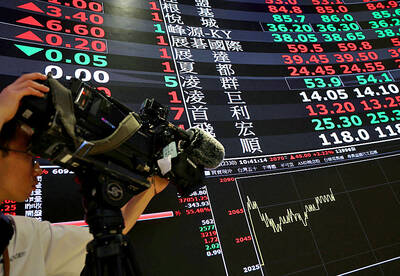
After several years flying high as Asia’s best Nvidia Corp proxy, Taiwan Semiconductor Manufacturing Co (TSMC, 台積電) is increasingly vying with other artificial intelligence (AI) stocks for investor attention. Stock traders are chasing a wider array of beneficiaries as mainstream usage of AI creates demand for hardware beyond the most-advanced chips TSMC makes for Nvidia. Subthemes from the deepening memory crunch to advances in robotics are also luring bids. At the same time, investment caps on single stocks are pushing funds to diversify, while retail investors long familiar with TSMC through its US depositary receipts are being offered a broader set of

Netherlands-based semiconductor equipment supplier ASML Holding NV yesterday said that it is planning to hire an additional 1,000 people in Taiwan this year in response to growing demand from clients. ASML had previously planned to recruit 600 people this year, but that the plan has been adjusted upward, ASML vice president and ASML Taiwan general manager Grace Wang (汪佳慧) told reporters. ASML has a workforce of more than 4,500 in Taiwan, accounting for about 10 percent of its global total, Wang said. This year’s recruitment campaign would focus on adding people in the customer support, manufacturing and supply chain domains to assist ASML
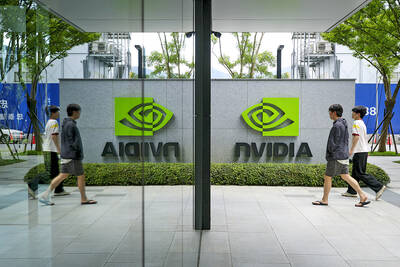
UNDER MICROSCOPE: Taiwan detained three people who allegedly conspired to buy servers in Taiwan and export them using fraudulent documentation, prosecutors said Nvidia Corp chief executive officer Jensen Huang (黃仁勳) on Saturday urged Super Micro Computer Inc to tighten up on compliance after Taiwan detained three people this week for allegedly making fraudulent declarations about artificial intelligence (AI) servers made by its US partner. The development marked the nation’s first crackdown on semiconductor smuggling, which grew after the US slapped restrictions on exports of high-end chips such as Nvidia AI accelerators to China. Nvidia is “rigorous” in explaining regulations to all of its partners, Huang told reporters after arriving in Taipei. “Ultimately Super Micro has to run their own company,” he said in response to

Nvidia Corp yesterday announced that CEO Jensen Huang (黃仁勳) would attend an employee meeting in Taipei tomorrow to celebrate the launch of the company’s Taiwan headquarters project. Huang would attend a gathering at the site of Nvidia’s planned headquarters in Beitou Shilin Technology Park (北投士林科技園區), the company said in a statement. After arriving in Taiwan on Saturday last week, Huang told reporters that he plans to meet with Quanta Computer Inc (廣達) chairman Barry Lam (林百里) and Taiwan Semiconductor Manufacturing Co (TSMC, 台積電) chairman C.C. Wei (魏哲家), and would attend the groundbreaking ceremony for Nvidia’s Taiwan headquarters tomorrow. Nvidia has not yet applied


 RSS
RSS