


China's central bank is quietly moving ahead with a plan to peg the yuan to a basket of 10 currencies, instead of the US dollar alone, the state press reported Monday.
The prospective 10 currencies would represent the bulk of China's trade with the rest of the world as well as its main sources of investment, the China Business Post reported, citing sources with the People's Bank of China.
At a later phase China could eventually allow a "managed float" that would permit the currency to move within a set range.
The report gave no timetable for implementation of either phase and stressed that the potential policy change was still being studied.
It comes as a group of US government experts prepares to visit Beijing next month to discuss possible changes to the existing foreign exchange rate structure.
China has effectively pegged the yuan at about 8.3 yuan to US$1 since 1994 but it has come under increasing pressure, particularly from the US, to revalue.
China has publicly maintained that the problem is structural, reflecting its much lower labor costs, but has signalled a certain willingness to investigate a more flexible currency structure.
China has been studying a peg of the yuan to a basket of currencies since the beginning of the year in order to allow the exchange rate to appropriately reflect the country's trade performance and avoid short-term foreign exchange rate fluctuations, the China Business Post said.
According to local statistics, China's major trade partners in 2002 were the US, Japan, Hong Kong, and the Euro zone countries, followed by Indonesia, Malaysia, Singapore, Thailand, South Korea and Taiwan.
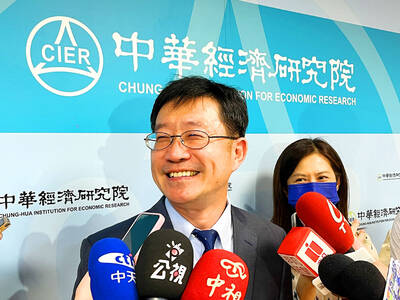
WEAKER ACTIVITY: The sharpest deterioration was seen in the electronics and optical components sector, with the production index falling 13.2 points to 44.5 Taiwan’s manufacturing sector last month contracted for a second consecutive month, with the purchasing managers’ index (PMI) slipping to 48, reflecting ongoing caution over trade uncertainties, the Chung-Hua Institution for Economic Research (CIER, 中華經濟研究院) said yesterday. The decline reflects growing caution among companies amid uncertainty surrounding US tariffs, semiconductor duties and automotive import levies, and it is also likely linked to fading front-loading activity, CIER president Lien Hsien-ming (連賢明) said. “Some clients have started shifting orders to Southeast Asian countries where tariff regimes are already clear,” Lien told a news conference. Firms across the supply chain are also lowering stock levels to mitigate
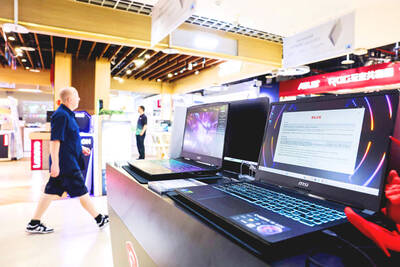
IN THE AIR: While most companies said they were committed to North American operations, some added that production and costs would depend on the outcome of a US trade probe Leading local contract electronics makers Wistron Corp (緯創), Quanta Computer Inc (廣達), Inventec Corp (英業達) and Compal Electronics Inc (仁寶) are to maintain their North American expansion plans, despite Washington’s 20 percent tariff on Taiwanese goods. Wistron said it has long maintained a presence in the US, while distributing production across Taiwan, North America, Southeast Asia and Europe. The company is in talks with customers to align capacity with their site preferences, a company official told the Taipei Times by telephone on Friday. The company is still in talks with clients over who would bear the tariff costs, with the outcome pending further
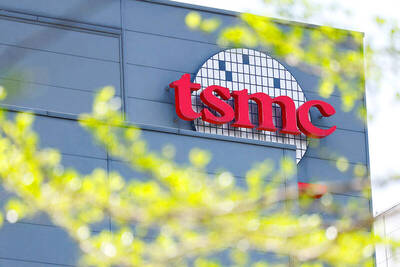
Six Taiwanese companies, including contract chipmaker Taiwan Semiconductor Manufacturing Co (TSMC, 台積電), made the 2025 Fortune Global 500 list of the world’s largest firms by revenue. In a report published by New York-based Fortune magazine on Tuesday, Hon Hai Precision Industry Co (鴻海精密), also known as Foxconn Technology Group (富士康科技集團), ranked highest among Taiwanese firms, placing 28th with revenue of US$213.69 billion. Up 60 spots from last year, TSMC rose to No. 126 with US$90.16 billion in revenue, followed by Quanta Computer Inc (廣達) at 348th, Pegatron Corp (和碩) at 461st, CPC Corp, Taiwan (台灣中油) at 494th and Wistron Corp (緯創) at
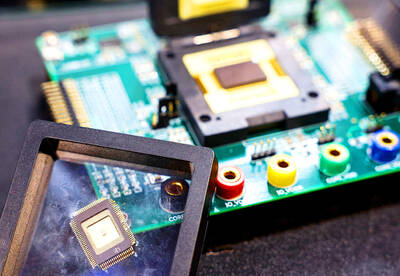
NEGOTIATIONS: Semiconductors play an outsized role in Taiwan’s industrial and economic development and are a major driver of the Taiwan-US trade imbalance With US President Donald Trump threatening to impose tariffs on semiconductors, Taiwan is expected to face a significant challenge, as information and communications technology (ICT) products account for more than 70 percent of its exports to the US, Chung-Hua Institution for Economic Research (CIER, 中華經濟研究院) president Lien Hsien-ming (連賢明) said on Friday. Compared with other countries, semiconductors play a disproportionately large role in Taiwan’s industrial and economic development, Lien said. As the sixth-largest contributor to the US trade deficit, Taiwan recorded a US$73.9 billion trade surplus with the US last year — up from US$47.8 billion in 2023 — driven by strong


 RSS
RSS