


Taipei Rapid Transit Corp (TRTC,
"The City Government is suggesting we offer a rent reduction to businesses in the underground malls [retroactive to] March and through June," TRTC public relations manager Ling Chi-yao (凌啟堯) said yesterday.
Last month, representatives from the two malls that rent space from TRTC -- Eastern Metro Mall (捷運東區地下街) and Easy Mall (台北捷運大街) -- appealed to both the company and the Taipei City Council for help after the SARS panic slowed passenger traffic.
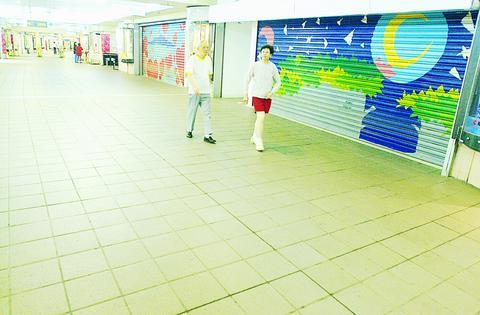
PHOTO: GEORGE TSORNG, TAIPEI TIMES
"We jointly asked for the TRTC to reduce our rents, but we haven't heard any response from the company yet," Wang Wan-chun (王婉君), chairman of the Eastern Metro Mall store association said yesterday.
"We're working on measures concerning the appeal," Ling said, but refused to elaborate on a timetable.
Shopkeepers say the appeal is not without merit.
"Many stores in Eastern Metro suffered over a 50 percent drop in business," Wang said.
In March, an average 936,000 passengers rode the MRT per day. That number fell by 7 percent to 870,000 last month, and slid another 29 percent to 600,000 early this month after the Taipei City Government required all MRT passengers to wear masks on the trains.
For some businesses in the Eastern Metro Mall, the news of a rent reduction has come too late to save their enterprises.
One cosmetics shop in the mall, Yu Store (
Down the corridor at PaiLin (
Meanwhile, stores in Easy Mall may get a helping hand soon.
"We will reduce commissions on stores before the TRTC grants the rental cut," said Linda Cheng (
Underground stores in Easy Mall saw a 30 percent to 40 percent drop in sales during this month and last, Cheng said.
"We deserve rental discounts similar to airport stores also hard-hit by SARS," Cheng said.
In addition to cut in rents, some shop owners are waiting for the mask requirement to be removed.
"Besides concern over bad air circulation down here that may increase the risk of SARS infection, the uncomfortableness of wearing masks has made people rush out of the station," said Paul Liu (劉金龍), owner of Taipei Aiwa Audio City (台北愛華館).
However, for one consumer, the empty mall is a plus.
"It's safer down here since people are not coming, which reduces the possibility of exposing to SARS virus," said Reiko Huang (黃麗鳳), a Taipei hospital nurse who was among the few people reading books in Eastern Metro Mall's Eslite Bookstore (誠品書店) yesterday.
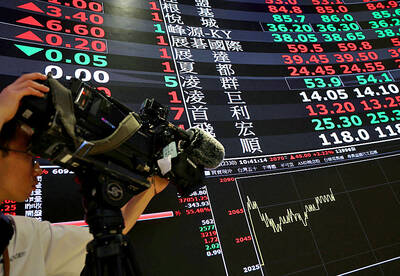
After several years flying high as Asia’s best Nvidia Corp proxy, Taiwan Semiconductor Manufacturing Co (TSMC, 台積電) is increasingly vying with other artificial intelligence (AI) stocks for investor attention. Stock traders are chasing a wider array of beneficiaries as mainstream usage of AI creates demand for hardware beyond the most-advanced chips TSMC makes for Nvidia. Subthemes from the deepening memory crunch to advances in robotics are also luring bids. At the same time, investment caps on single stocks are pushing funds to diversify, while retail investors long familiar with TSMC through its US depositary receipts are being offered a broader set of
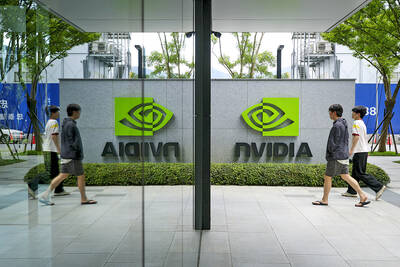
UNDER MICROSCOPE: Taiwan detained three people who allegedly conspired to buy servers in Taiwan and export them using fraudulent documentation, prosecutors said Nvidia Corp chief executive officer Jensen Huang (黃仁勳) on Saturday urged Super Micro Computer Inc to tighten up on compliance after Taiwan detained three people this week for allegedly making fraudulent declarations about artificial intelligence (AI) servers made by its US partner. The development marked the nation’s first crackdown on semiconductor smuggling, which grew after the US slapped restrictions on exports of high-end chips such as Nvidia AI accelerators to China. Nvidia is “rigorous” in explaining regulations to all of its partners, Huang told reporters after arriving in Taipei. “Ultimately Super Micro has to run their own company,” he said in response to
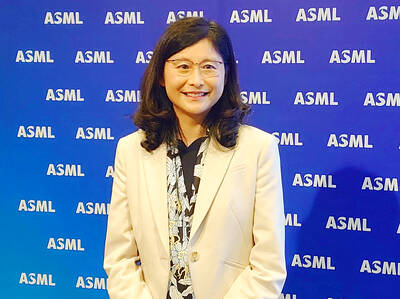
Netherlands-based semiconductor equipment supplier ASML Holding NV yesterday said that it is planning to hire an additional 1,000 people in Taiwan this year in response to growing demand from clients. ASML had previously planned to recruit 600 people this year, but that the plan has been adjusted upward, ASML vice president and ASML Taiwan general manager Grace Wang (汪佳慧) told reporters. ASML has a workforce of more than 4,500 in Taiwan, accounting for about 10 percent of its global total, Wang said. This year’s recruitment campaign would focus on adding people in the customer support, manufacturing and supply chain domains to assist ASML
TECH RELIANCE: Growth is increasingly reflecting an unequal K-shaped distribution, where technology sectors outperform and other industries struggle, an expert said Standard Chartered Bank has significantly raised its forecast for Taiwan’s economic growth to 9.5 percent this year, up from 7.6 percent previously, citing surging artificial intelligence (AI) demand driving exports, semiconductor production and investment. The upgrade reflects a sustained AI supercycle that continues to fuel demand for advanced chips and technology infrastructure, which form the backbone of Taiwan’s exports, the bank said in a report this week. “We raise our 2026 growth forecast to reflect a much stronger-than-expected first-quarter GDP figure,” Standard Chartered senior economist for greater China and Asia Tommy Wu (胡東安) said in the report. Driven largely by a 35.3 percent


 RSS
RSS