


A new category of alcoholic beverages is starting to show signs it is a fad rather than a trend, jeopardizing the advertising spending windfall expected by Madison Avenue.
Sales in the category, composed of malt beverages that are 5 percent alcohol and are known variously as malternatives, flavored malts, alcopops or clear malts, peaked earlier this summer, analysts say.
And two of the recent entrants have already scaled back their national advertising budgets.
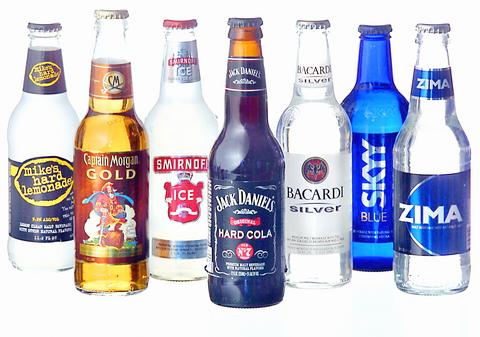
PHOTO: NY TIMES
The malt beverages were once sold only under stand-alone brand names like Zima and Mike's Hard Lemonade. But the introduction of Smirnoff Ice by the liquor marketer that owns Smirnoff vodka, Diageo, set off a stampede by others to incorporate the brand names of distilled spirits in malternatives.
In the last 18 months, Smirnoff Ice was joined by a half-dozen drink-alikes, bearing names like Bacardi Silver, Captain Morgan Gold, Sauza Diablo, Skyy Blue and Stolichnaya Citrona. Another, Jack Daniel's Original Hard Cola, began its national advertising campaign only last week.
The piling on is typical in American marketing, particularly in fields with little or no sales growth like beer and distilled spirits. Advertising agencies had welcomed the newcomers because it was estimated that brewers and distillers would spend as much as $350 million this year to generate brand awareness and stimulate trial of the malternatives.
Indeed, as the new entrants poured into the category, ad spending by beer makers in major media rose 11.5 percent in the first half of this year, compared with the first half of last year. By contrast, ad spending by all marketers in major media in the first half fell 0.2 percent from the corresponding period last year, according to CMR, a division of Taylor Nelson Sofres.
In the first six months of this year, Anheuser-Busch spent US$25.6 million to advertise Bacardi Silver, which it sells with Bacardi. Diageo spent US$9.4 million on Captain Morgan Gold and US$26 million on Smirnoff Ice. The Miller Brewing Co division of SABMiller spent US$24.4 million on Skyy Blue, sold with the Skyy Spirits division of Campari, along with Sauza Diablo and Stolichnaya Citrona, which are sold with Allied Domecq.
But the indications are that a shakeout is already taking place.
Brief climax
In a report issued Monday, William Pecoriello, the beverage analyst at Morgan Stanley in New York, estimated that sales of malternatives "peaked in July" at just a little more than 3.5 percent of total beer industry volume. He bluntly described many of the new products as "nonstarters," citing by name Captain Morgan Gold, which he called "a huge disappointment"; Sauzo Diablo; and Stolichnaya Citrona.
Executives of Anheuser-Busch, whose Bacardi Silver is neck-and-neck in the category with Miller's Skyy Blue for second place behind Smirnoff Ice, agreed that the market might have topped out.
Dave Peacock, vice president for high-end brands at Anheuser-Busch in St. Louis, pointed out that "everything else that came out since" Smirnoff Ice, Bacardi Silver and Skyy Blue "hasn't performed really well."
But Anheuser-Busch remains committed to the category. "Even if it's peaked, we feel there's opportunity to grow our share," Peacock said, adding that the company is pleased with its product's performance. "There will be national advertising this fall for Bacardi Silver and national television next year." The agency for Bacardi Silver is Momentum in St. Louis, part of the McCann-Erickson World Group division of the Interpublic Group of Companies.
However, two other flavored malts, Sauza Diablo and Stolichnaya Citrona, will, for the time being, end their national campaigns.
"Before we return to national advertising, we're focusing on retail initiatives and trade promotion," said Molly Reilly, a spokeswoman for Miller in Milwaukee, Wisconsin.
"We're looking on gaining distribution," she added, "blocking and tackling to get more space at retail" for the two brands. The Sauza Diablo ads had been created by dRush in New York, a joint venture of the Deutsch division of Interpublic and the musical impresario Russell Simmons, which last week announced its closing. The agency for Stolichnaya Citrona is the Chicago office of BBDO Worldwide, part of the Omnicom Group.
As for labeling the products flops as Pecoriello did, Reilly said: "It's very early days to count on the success of brands that were launched just this summer. What we do know is that Stolichnaya Citrona and Sauza Diablo showed great promise in consumer taste tests."
Jack ads
Ads for the Jack Daniel's malternative, which Miller sells with the Brown-Forman Corp, will continue as scheduled. They are being created by the St. Louis office of Arnold Worldwide, part of the Arnold Worldwide Partners division of Havas, which also creates campaigns for the Jack Daniel's liquor brand.
Miller is planning additional commercials, print ads and outdoor advertising for Skyy Blue, Reilly said, which "is doing tremendously." The agency for Skyy Blue is Lambesis in Carlsbad, California, which is also the agency for Skyy vodka.
Gary Galanis, a spokesman for Diageo North America in Stamford, Conn., said the company planned no advertising changes for Smirnoff Ice, which set the malternative market in motion.
As for the castigation of how Captain Morgan Gold is faring, Galanis said: "I think a lot of people looked at the launch of Captain Morgan Gold as if it would be exactly like the launch of Smirnoff Ice, which was a phenomenal launch. People may have had similar expectations, and maybe we did as well."
The agency for Smirnoff Ice is the New York office of J. Walter Thompson, part of the WPP Group, and the agency for Captain Morgan Gold is Grey Worldwide in New York, part of the Grey Global Group.
One reason companies like Diageo like the category is because it affords entry into the malt-beverage market with liquor-brand names like Captain Morgan and Smirnoff. Rules for advertising beer and other malt beverages are not as strict as those for distilled spirits; for instance, national broadcast TV networks will accept commercials for malternatives but not for liquor.
Kentucky and Tennessee, under their regulation of alcoholic beverages, are considering whether alcopops ought to be classified along with distilled spirits. That would limit where they could be sold and how they could be advertised.


The domestic unit of the Chinese-owned, Dutch-headquartered chipmaker Nexperia BV will soon be able to produce semiconductors locally within China, according to two company sources. Nexperia is at the center of a global tug-of-war over critical semiconductor technology, with a Dutch court in February ordering a probe into alleged mismanagement at the company. The geopolitical tussle has disrupted supply chains, with some carmakers reportedly forced to cut production due to chip shortages. Local production would allow Nexperia’s domestic arm, Nexperia Semiconductors (China) Ltd (安世半導體中國), to bypass restrictions in place since October on the supply of silicon wafers — etched with tiny components to
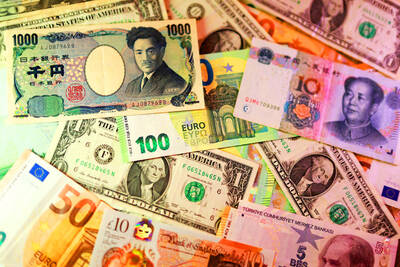
Taiwan’s foreign exchange reserves fell below the US$600 billion mark at the end of last month, with the central bank reporting a total of US$596.89 billion — a decline of US$8.6 billion from February — ending a three-month streak of increases. The central bank attributed the drop to a combination of factors such as outflows by foreign institutional investors, currency fluctuations and its own market interventions. “The large-scale outflows disrupted the balance of supply and demand in the foreign exchange market, prompting the central bank to intervene repeatedly by selling US dollars to stabilize the local currency,” Department of Foreign

Taiwan is open to joining a global liquefied natural gas (LNG) program if one is created, but on the condition that countries provide delivery even in a scenario where there is a conflict with China, an energy department official said yesterday. While Taiwan’s priority is to have enough LNG at home, the nation is open to exploring potential strategic reserves in other countries such as Japan or South Korea, Energy Administration Deputy Director-General Chen Chung-hsien (陳崇憲) said. While the LNG market does not have a global reserve for emergencies like that of oil, the concept has been raised a few times —
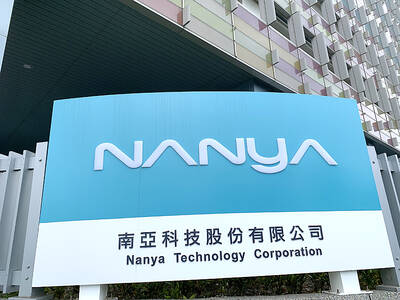
AI-FUELED DEMAND: The company has been benefiting from the skyrocketing prices for DRAM chips amid the AI frenzy, especially its core product — DDR4 DRAM chips DRAM chipmaker Nanya Technology Corp (南亞科技) yesterday reported that its revenue for the first quarter surged 582.91 percent to NT$49.09 billion (US$1.54 billion) from NT$7.19 billion a year earlier, as the supply crunch caused chip price spikes. Last quarter’s figure is the highest on record. On a quarterly basis, revenue jumped 63.14 percent from NT$30.09 billion, the company said. In January, Nanya Technology expected global DRAM supply scarcity to continue through the first half of 2028, thanks to strong demand for artificial intelligence (AI) applications. Market researcher TrendForce Corp (集邦科技) forecast prices of standard DRAM chips would rise between 58 percent and 63


 RSS
RSS