


Palm Inc and Dell Computer Corp, the world's largest sellers of personal digital assistants (PDA) and PCs, respectively, are turning to Taiwanese manufacturers to produce their PDAs in an effort to reduce production costs, sources said yesterday.
Palm is in talks with a host of companies including Asustek Computer Inc (
Dell, which plans to enter the PDA market before the Christmas buying season, will source up to 1.5 million PDAs from one or more Taiwanese companies, which could include Compal Electronics Inc (

PHOTO: GEORGE TSORNG, TAIPEI TIMES
Dataquest predicted that PDA sales will rise 18 percent over last year to 15.5 million units. Manufacturers predict that consumers will want to upgrade to new color models with added telephone functions. Spending on the devices is expected to rise by more than 20 percent to US$4.6 billion.
World pda manufacturing leader
Orders from Palm and Dell would solidify Taiwan's place as the lead manufacturing center in the PDA sector. Production of Internet appliances, including PDAs and game consoles, is expected to grow 140 percent this year in Taiwan, according to the Market Intelligence Center, the research arm of the Institute for Information Industry.
Interest on the part of foreign companies in finding PDA manufacturing partners in Taiwan has risen recently, the center said.
It predicts that production will growth of 209 percent in the second half of this year, compared to just 61.4 percent in the first half of the year.
First International Computer Inc (
Most of the parts needed to build a PDA are already made in Taiwan, Japan and China.
Profit margins on PDAs have already slipped to 15 percent from over 20 percent earlier this year, officials from Compal Electronics said.
The company believes that moving production to China will help to reduce its production costs.
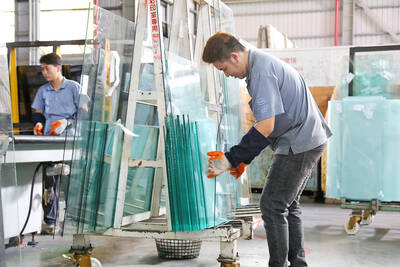
CAUTIOUS RECOVERY: While the manufacturing sector returned to growth amid the US-China trade truce, firms remain wary as uncertainty clouds the outlook, the CIER said The local manufacturing sector returned to expansion last month, as the official purchasing managers’ index (PMI) rose 2.1 points to 51.0, driven by a temporary easing in US-China trade tensions, the Chung-Hua Institution for Economic Research (CIER, 中華經濟研究院) said yesterday. The PMI gauges the health of the manufacturing industry, with readings above 50 indicating expansion and those below 50 signaling contraction. “Firms are not as pessimistic as they were in April, but they remain far from optimistic,” CIER president Lien Hsien-ming (連賢明) said at a news conference. The full impact of US tariff decisions is unlikely to become clear until later this month

Popular vape brands such as Geek Bar might get more expensive in the US — if you can find them at all. Shipments of vapes from China to the US ground to a near halt last month from a year ago, official data showed, hit by US President Donald Trump’s tariffs and a crackdown on unauthorized e-cigarettes in the world’s biggest market for smoking alternatives. That includes Geek Bar, a brand of flavored vapes that is not authorized to sell in the US, but which had been widely available due to porous import controls. One retailer, who asked not to be named, because
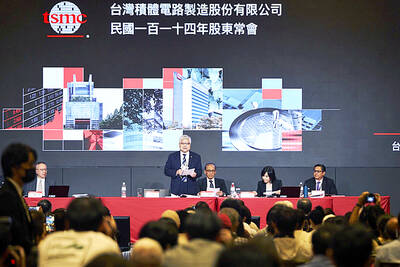
CHIP DUTIES: TSMC said it voiced its concerns to Washington about tariffs, telling the US commerce department that it wants ‘fair treatment’ to protect its competitiveness Taiwan Semiconductor Manufacturing Co (TSMC, 台積電) yesterday reiterated robust business prospects for this year as strong artificial intelligence (AI) chip demand from Nvidia Corp and other customers would absorb the impacts of US tariffs. “The impact of tariffs would be indirect, as the custom tax is the importers’ responsibility, not the exporters,” TSMC chairman and chief executive officer C.C. Wei (魏哲家) said at the chipmaker’s annual shareholders’ meeting in Hsinchu City. TSMC’s business could be affected if people become reluctant to buy electronics due to inflated prices, Wei said. In addition, the chipmaker has voiced its concern to the US Department of Commerce
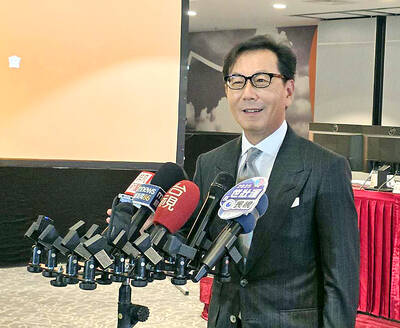
STILL LOADED: Last year’s richest person, Quanta Computer Inc chairman Barry Lam, dropped to second place despite an 8 percent increase in his wealth to US$12.6 billion Staff writer, with CNA Daniel Tsai (蔡明忠) and Richard Tsai (蔡明興), the brothers who run Fubon Group (富邦集團), topped the Forbes list of Taiwan’s 50 richest people this year, released on Wednesday in New York. The magazine said that a stronger New Taiwan dollar pushed the combined wealth of Taiwan’s 50 richest people up 13 percent, from US$174 billion to US$197 billion, with 36 of the people on the list seeing their wealth increase. That came as Taiwan’s economy grew 4.6 percent last year, its fastest pace in three years, driven by the strong performance of the semiconductor industry, the magazine said. The Tsai


 RSS
RSS