


US Securities and Exchange Commission Chairman Harvey Pitt, who promised a "kinder and gentler" agency, is developing an increasingly tough regulatory agenda as fallout from Enron Corp's bankruptcy spreads, many investors and former regulators say.
Pitt, who yesterday said the SEC would investigate conflicts of interest by Wall Strchairman of the eet stock analysts, responded to the energy giant's collapse by proposing rules aimed at accounting fraud. The SEC also more than doubled its inquiries into accounting irregularities at companies.
Those actions, taken amid criminal investigations and Congressional calls for reform, reveal a different SEC from the vision Pitt articulated after taking office in August, many investors say.
PHOTO: NY TIMES
"To look at Pitt in 2001 was probably to assume he was not going to be a reformer," said Peter Clapman, chief counsel for corporate governance at TIAA-CREF, the biggest teachers pension fund in the US "Enron forced an agenda of corporate responsibility on the chairman." Some say Pitt, who spent two decades as a private lawyer for accounting and securities firms, still hasn't gone far enough.
They cite, for example, his opposition to banning accounting firms from earning consulting fees from companies they audit.
"He is not the kind of chairman of the SEC that recognizes the critical import of the SEC's responsibility to society for the highest standards of corporate governance," said Abraham Briloff, emeritus professor of accounting at Baruch College in Manhattan who has testified before Congress on accounting issues. "His proposals have been reactive, instead of proactive."
Pitt has proposed creating a new oversight body for accountants, requiring shareholder approval for executive stock options, empowering audit committees to hire and fire auditors, and mandating that companies report insider stock sales within two days. He has also called for the immediate reporting of many events, such as the loss of an important customer and waivers of corporate ethics rules, and for speeding changes in accounting standards.
As questions about corporate accounting proliferated after Enron's bankruptcy, the SEC began probes at companies including Global Crossing Ltd, Qwest Communications International Inc and WorldCom Inc., boosting the number to 49 in the first two months of the year. On April 11, the commission fined Xerox Corp a record US$10 million for inflating revenue by US$3 billion over four years. The company didn't admit or deny wrongdoing. Yesterday, Dynegy Inc said the SEC is examining its books.
The SEC's investigation of analysts will probe whether their firms committed fraud by recommending to the public stocks that they didn't believe in to attract or retain companies as investment banking clients. Pitt ordered the investigation after New York State Attorney General Eliot Spitzer targeted brokerage houses in his own investigation and discovered e-mails in which Merrill Lynch & Co analysts disparaged stocks they were touting to the public.
Pitt "has a very broad agenda because of Enron and the accounting issues coming out of Enron," said Ira Sorkin, former head of the SEC's New York office and now an attorney at Carter Ledyard & Milburn. "It's also because he has to deal with a Congress that wants to be reelected."
In an appearance on public television's Charlie Rose program yesterday, Pitt said Enron's bankruptcy brought pressure for reform. "Enron has sort of become a poster child for change and it's accelerated our timetable," said Pitt, who declined to be interviewed for this article.
Regulation doesn't come naturally to Pitt. "One of the terrible aspects of the job I hold is that some very firmly held principles are being severely tested," Pitt told members of the Bond Market Association, when asked if he intended to regulate bond rating firms. "I do not believe that regulation is the answer to every problem. But I am determined to regulate where it's critically necessary."
Pitt's proposal for policing the accounting profession -- drafted with the Big Five accounting firms -- calls for a five- member panel that could include two representatives of the accounting industry. The board, operating under the authority of the SEC, would review auditors' work and punish those who violated ethics. The panel would not have independent power to subpoena or fine accountants.
In February, House Energy and Commerce Committee Chairman Billy Tauzin, a Louisiana Republican, said Pitt's plan was "a continuance of the status quo in which oversight is conducted by the accounting trade."
The House on Wednesday approved a Republican-sponsored bill that tracks Pitt's proposal.
"We would like to see Pitt push harder on this," said Ken Bertsch, a director in corporate governance for TIAA-CREF.
Pitt on Charlie Rose said that the accounting industry "would not have the ability to control or influence" his proposed panel. It's "private sector regulation, not self- regulation," he said.
Pitt is at odds with lawmakers -- including Democratic Senators Barbara Boxer of California, Christopher Dodd of Connecticut and Richard Durbin of Illinois -- who favor barring accountants from providing auditing and consulting to a client.
Former Federal Reserve Chairman Paul Volcker also supports such a ban. Volcker is heading an effort to rescue Arthur Andersen LLP after the firm's indictment on a charge that it obstructed justice by destroying documents related to its audits of Enron.
Pitt has advocated waiting to gauge the effect of rules enacted in November 2000 limiting the consulting services auditors may provide. He also says barring auditors from all consulting may result in inferior audits.
"If you strip the firm out of all of [a client's] tax work, you would have a significant question about whether they were competent to perform a good audit,'' Pitt told Rose. He also said audit-only firms would become overly dependent on clients, weakening their objectivity.
Pitt faced skeptics almost immediately after President George W. Bush nominated him in May. Some investors and shareholder advocates questioned whether he would be an aggressive chairman because Pitt had represented many clients who were regulated by the commission. The roster included the Big Five accounting firms.
In 2000, Pitt helped those firms curtail an SEC effort to limit the consulting services an accountant was permitted to provide to an audit client. The commissioners at the time argued that dependence on consulting fees could make auditors less willing to challenge a company's accounting.
Initially, Pitt was perceived as "as being deregulatory and accommodative of vested interests," said David Martin, a former SEC head of corporation finance who left the agency this year.
Pitt reinforced concerns in an address to the American Institute of Certified Public Accountants in October. The new chairman, who said the SEC had "not, of late, always been a kinder and gentler place for accountants," spoke of a "new era of respect and cooperation" and "working together with [the SEC] to find solutions, without fear of recrimination."
Pitt said he wanted to build a bridge to the accounting profession, whose relationship with the SEC had deteriorated under his predecessor.
"That first speech was worrisome," said Ann Yerger, research director of the Council of Institutional Investors, which represents 120 pension funds. "We are not looking for a `kinder and gentler' SEC. We are looking for a commission that will vigorously enforce the laws."
Then Enron filed the biggest bankruptcy reorganization ever after disclosing that the company had overstated earnings by at least US$1 billion since 1997 and had used affiliated partnerships to hide debt. The collapse wiped out US$27.6 billion in market value, 5,000 jobs and US$850 million of Enron employees' retirement investments.
The Justice Department and SEC began investigations of Enron and Andersen, the company's auditor. Andersen was subsequently indicted on an obstruction of justice charge because employees of its Houston office destroyed records related to Enron audits. A dozen congressional committees also began hearings on Enron's collapse.
"Harvey came in thinking that too much bad had happened to the accounting profession," said Roderick Hills, an SEC chairman in the 1970s. Post Enron, "it became quite clear that the agenda was going to call for far more stringent rules. He is now proposing a lot of things he never would have proposed."
Many of Pitt's proposals are still in the debate stage. Some of the ideas "are very good but they haven't happened yet," said TIAA-CREF's Bertsch. "It's still too early to make definitive judgments about how effective he will be in reforming the system in response to Enron."

Vincent Wei led fellow Singaporean farmers around an empty Malaysian plot, laying out plans for a greenhouse and rows of leafy vegetables. What he pitched was not just space for crops, but a lifeline for growers struggling to make ends meet in a city-state with high prices and little vacant land. The future agriculture hub is part of a joint special economic zone launched last year by the two neighbors, expected to cost US$123 million and produce 10,000 tonnes of fresh produce annually. It is attracting Singaporean farmers with promises of cheaper land, labor and energy just over the border.
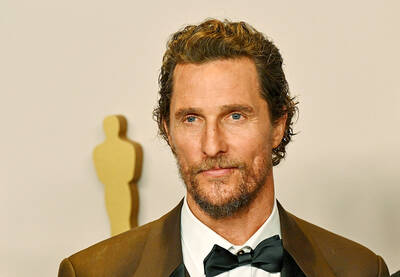
US actor Matthew McConaughey has filed recordings of his image and voice with US patent authorities to protect them from unauthorized usage by artificial intelligence (AI) platforms, a representative said earlier this week. Several video clips and audio recordings were registered by the commercial arm of the Just Keep Livin’ Foundation, a non-profit created by the Oscar-winning actor and his wife, Camila, according to the US Patent and Trademark Office database. Many artists are increasingly concerned about the uncontrolled use of their image via generative AI since the rollout of ChatGPT and other AI-powered tools. Several US states have adopted

A proposed billionaires’ tax in California has ignited a political uproar in Silicon Valley, with tech titans threatening to leave the state while California Governor Gavin Newsom of the Democratic Party maneuvers to defeat a levy that he fears would lead to an exodus of wealth. A technology mecca, California has more billionaires than any other US state — a few hundred, by some estimates. About half its personal income tax revenue, a financial backbone in the nearly US$350 billion budget, comes from the top 1 percent of earners. A large healthcare union is attempting to place a proposal before

KEEPING UP: The acquisition of a cleanroom in Taiwan would enable Micron to increase production in a market where demand continues to outpace supply, a Micron official said Micron Technology Inc has signed a letter of intent to buy a fabrication site in Taiwan from Powerchip Semiconductor Manufacturing Corp (力積電) for US$1.8 billion to expand its production of memory chips. Micron would take control of the P5 site in Miaoli County’s Tongluo Township (銅鑼) and plans to ramp up DRAM production in phases after the transaction closes in the second quarter, the company said in a statement on Saturday. The acquisition includes an existing 12 inch fab cleanroom of 27,871m2 and would further position Micron to address growing global demand for memory solutions, the company said. Micron expects the transaction to


 RSS
RSS