


The world’s biggest flower auction was abuzz this week as hardnosed buyers vied in the Dutch town of Aalsmeer more than 150 million blooms destined to warm lovers’ hearts worldwide this Valentine’s Day.
“Alongside Mother’s Day, the week of Valentine’s Day is the most important week of the year for us,” commercial director Albert Haasnoot of Aalsmeer, dubbed the “Wall Street of Roses,” said amid the hubbub leading up to Feb. 14.
Around him, hundreds of traders were doing brisk business in the million-square-meter auction building, taking their eyes off their computers only to glance up at the giant trading screens.
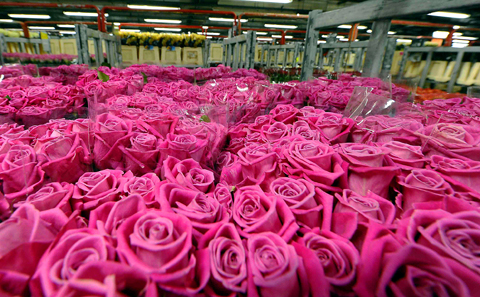
PHOTO: REUTERS
A flood of information flashes past the screens like on any trading floor: variety, quality, price per stem — while roses, tulips and chrysanthemums in a dazzling array of colors await transportation in vast, cooled storerooms.
Aalsmeer, south of the capital Amsterdam, has more than 800 varieties of roses alone. The flowers sold here are grown mainly in the Netherlands, but also imported from Kenya, Ethiopia and Israel.
“Our sales have risen to 35 million euros [US$48 million] for the week, about 50 to 60 percent higher than normal,” Haasnoot said, as rising demand in the days leading up to Valentine’s caused prices to soar.
A batch of Red Naomi — large, red roses — had just sold on the floor for 1.70 euros per stem.
“Red roses can be two or three times more expensive” at this time of year, said exporter Alexander Brussee, who comes to Aalsmeer to buy flowers for resale to florists and wholesalers, mostly around Paris.
Following on a tough year on account of the global economic crisis, Valentine’s Day couldn’t have come at a better time for the flower sector.
“People are a lot more careful with their money,” Brussee said.
About 80 percent of the flowers at Aalsmeer, of which red and pink varieties are the most popular at the moment, are destined for abroad, mainly for Germany, Britain and France.
However, local flower sellers are clients, too. Aalsmeer florist Michelle van der Linden has just bought 600 red roses.
“Everyone wants red roses for Valentine’s Day,” she said. “It is the color of love, of passion.”
During the course of the week, more than 50,000 trucks will depart from Aalsmeer with their precious cargo. The Netherlands is the world’s biggest flower exporter, with sales of flowers, bulbs and trees contributing about 35 percent to its trade surplus in 2008.
Greenhouses cover an area of more than 60km² in the Netherlands, and more than 1 billion tulip bulbs are exported each year.
The Dutch tulip mania of the early 1600s is often said to have been the world’s first recorded speculative economic bubble.
A total of 300 million flowers are expected to be sold in the week leading up to Valentine’s Day in the six centers of the FloraHolland auction company, of which Aalsmeer is one.
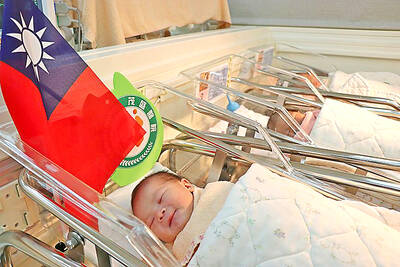
AGING: As of last month, people aged 65 or older accounted for 20.06 percent of the total population and the number of couples who got married fell by 18,685 from 2024 Taiwan has surpassed South Korea as the country least willing to have children, with an annual crude birthrate of 4.62 per 1,000 people, Ministry of the Interior data showed yesterday. The nation was previously ranked the second-lowest country in terms of total fertility rate, or the average number of children a woman has in her lifetime. However, South Korea’s fertility rate began to recover from 2023, with total fertility rate rising from 0.72 and estimated to reach 0.82 to 0.85 by last year, and the crude birthrate projected at 6.7 per 1,000 people. Japan’s crude birthrate was projected to fall below six,
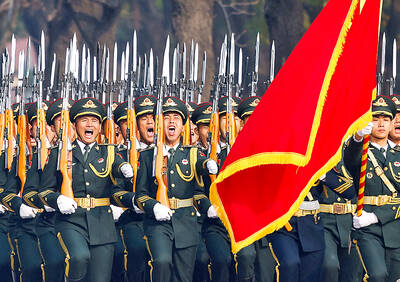
Conflict with Taiwan could leave China with “massive economic disruption, catastrophic military losses, significant social unrest, and devastating sanctions,” a US think tank said in a report released on Monday. The German Marshall Fund released a report titled If China Attacks Taiwan: The Consequences for China of “Minor Conflict” and “Major War” Scenarios. The report details the “massive” economic, military, social and international costs to China in the event of a minor conflict or major war with Taiwan, estimating that the Chinese People’s Liberation Army (PLA) could sustain losses of more than half of its active-duty ground forces, including 100,000 troops. Understanding Chinese
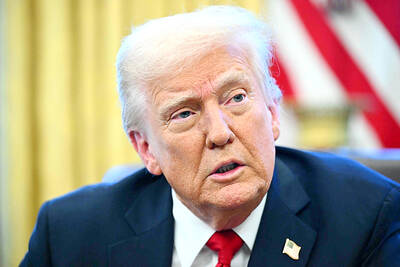
US President Donald Trump in an interview with the New York Times published on Thursday said that “it’s up to” Chinese President Xi Jinping (習近平) what China does on Taiwan, but that he would be “very unhappy” with a change in the “status quo.” “He [Xi] considers it to be a part of China, and that’s up to him what he’s going to be doing, but I’ve expressed to him that I would be very unhappy if he did that, and I don’t think he’ll do that. I hope he doesn’t do that,” Trump said. Trump made the comments in the context
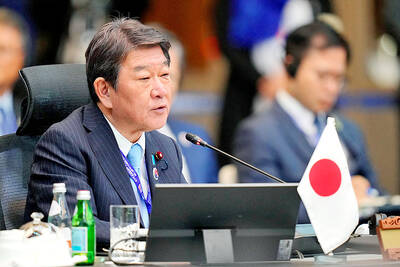
SELF-DEFENSE: Tokyo has accelerated its spending goal and its defense minister said the nation needs to discuss whether it should develop nuclear-powered submarines China is ramping up objections to what it sees as Japan’s desire to acquire nuclear weapons, despite Tokyo’s longstanding renunciation of such arms, deepening another fissure in the two neighbors’ increasingly tense ties. In what appears to be a concerted effort, China’s foreign and defense ministries issued statements on Thursday condemning alleged remilitarism efforts by Tokyo. The remarks came as two of the country’s top think tanks jointly issued a 29-page report framing actions by “right-wing forces” in Japan as posing a “serious threat” to world peace. While that report did not define “right-wing forces,” the Chinese Ministry of Foreign Affairs was


 RSS
RSS