


Asia-Pacific finance ministers endorsed “market-oriented” exchange rates yesterday and said they would stick with economic stimulus plans until a sustained economic recovery was under way.
US Treasury Secretary Timothy Geithner said the timing of stimulus exit policies would vary between countries, but business confidence and the financial system must be restored first.
“The challenge is growth. First growth, but make sure we have business confidence restored, investments expanding again, unemployment coming down, financial sector definitively repaired — that’s our basic challenge,” Geithner said in Singapore after a meeting of Pacific rim finance ministers.
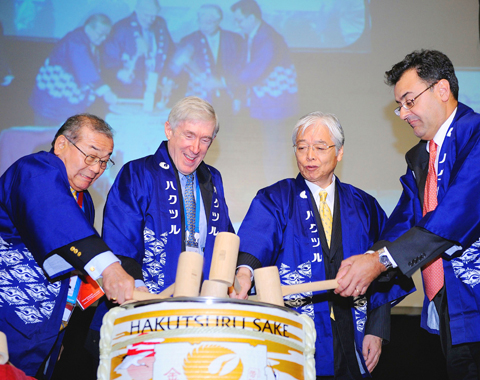
PHOTO: AFP WARNING: EXCESSIVE CONSUMPTION OF ALCOHOL CAN DAMAGE
The ministers of the 21-member APEC discussed strengthening the post-crisis global economy to prevent asset bubbles and excess leverage with prudent macroeconomic and regulatory policies.
In a statement they agreed to “undertake monetary policies consistent with price stability in the context of market-oriented exchange rates that reflect underlying economic fundamentals”.
The group includes China, which has effectively pegged its currency against the dollar since the middle of last year to help fend off the global downturn.
However, export-reliant Asian nations are crying foul over the yuan’s state-sanctioned rigidity, which makes them less competitive, and the issue has been a hot topic at the APEC talks this week.
Singaporean Finance Minister Tharman Shanmugaratnam sidestepped a question over the level of the yuan, which China has been accused of keeping artificially low in order to boost its exports.
In a veiled reference to the Chinese currency, he said that APEC finance ministers did not advocate any sudden shift in its value.
“None of us around the table were calling for, or thought it advisable to have, any sudden significant realignment of exchange rates,” he said at a joint press conference after the ministerial talks.
“It’s not a silver bullet for solving either the question of domestic demand or towards achieving balanced and sustainable growth,” he said.
“But we do see flexible exchange rates as being part of the overall milieu of options that all our economies must use, together with structural reforms, together with other economic reforms.”
Other APEC economies aside from China manage their currencies to some degree, including Singapore, Malaysia and Vietnam.
US President Barack Obama said in an interview this week that he would raise the currency issue on a visit to China next week. His administration says an undervalued yuan is one factor contributing to economic imbalances between the first and third-biggest economies in the world.
China’s central bank said on Wednesday it would consider major currencies in guiding the yuan, suggesting a departure from the effective dollar peg.
“I’d say that ... is the most significant news we’ve had on the yuan for months, and that APEC is more of a formal reminder from China’s closest neighbors, not just the US and Europe, that forex rigidity in a huge trading economy is not a domestic issue,” Westpac Banking Corp strategist Sean Callow said.
Emergency measures put in place by APEC member governments, including some US$1 trillion in Asia alone and US$787 billion in the US, prevented a deeper recession, Geithner said.
However, Australian Treasurer Wayne Swan told reporters before going into the APEC meeting: “What we have to do is to make sure that we don’t withdraw global support too early.”
“In Australia’s case, our economic stimulus peaked in the middle of this year and is being gradually withdrawn as we go through the rest of the year,” Swan said.
WTO Director General Pascal Lamy cautioned of a false dawn in the recovery.
“There’s certainly a recovery happening, certainly in this region, which has suffered less from the crisis than from other regions of the planet,” he told CNBC in an interview on the APEC sidelines. “But I would be prudent whether or not this would be sustainable six months or a year from now.”
He said rising unemployment was the main threat to free trade and could spark greater protectionist policies around the globe.
APEC’s trade and foreign ministers pledged to refrain from raising new barriers to trade and investment, and said a review of measures taken by member economies that began last July to ensure they were not protectionist would continue into next year.

The Legislative Yuan’s Finance Committee yesterday approved proposed amendments to the Amusement Tax Act (娛樂稅法) that would abolish taxes on films, cultural activities and competitive sporting events, retaining the fee only for dance halls and golf courses. The proposed changes would set the maximum tax rate for dance halls and golf courses at 50 and 20 percent respectively, with local governments authorized to suspend the levies. Article 2 of the act says that “amusement tax shall be levied on tickets sold or fees charged by amusement places, facilities or activities” in six categories: “Cinema; professional singing, story-telling, dancing, circus, magic show, acrobatics

Tainan, Taipei and New Taipei City recorded the highest fines nationwide for illegal accommodations in the first quarter of this year, with fines issued in the three cities each exceeding NT$7 million (US$220,639), Tourism Administration data showed. Among them, Taipei had the highest number of illegal short-term rental units, with 410. There were 3,280 legally registered hotels nationwide in the first quarter, down by 14 properties, or 0.43 percent, from a year earlier, likely indicating operators exiting the market, the agency said. However, the number of unregistered properties rose to 1,174, including 314 illegal hotels and 860 illegal short-term rental
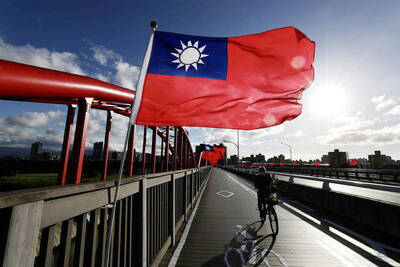
INFLATION UP? The IMF said CPI would increase to 1.5 percent this year, while the DGBAS projected it would rise to 1.68 percent, with GDP per capita of US$44,181 The IMF projected Taiwan’s real GDP would grow 5.2 percent this year, up from its 2.1 percent outlook in January, despite fears of global economic disruptions sparked by the US-Iran conflict. Taiwan’s consumer price index (CPI) is projected to increase to 1.5 percent, while unemployment would be 3.4 percent, roughly in line with estimates for Asia as a whole, the international body wrote in its Global Economic Outlook Report published in the US on Monday. The figures are comparatively better than the IMF outlook for the rest of the world, which pegged real GDP growth at 3.1 percent, down from 3.3 percent
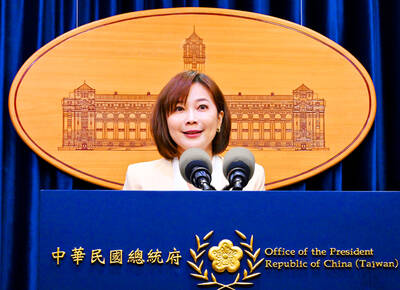
ECONOMIC COERCION: Such actions are often inconsistently applied, sometimes resumed, and sometimes just halted, the Presidential Office spokeswoman said The government backs healthy and orderly cross-strait exchanges, but such arrangements should not be made with political conditions attached and never be used as leverage for political maneuvering or partisan agendas, Presidential Office spokeswoman Karen Kuo (郭雅慧) said yesterday. Kuo made the remarks after China earlier in the day announced 10 new “incentive measures” for Taiwan, following a landmark meeting between Chinese President Xi Jinping (習近平) and Chinese Nationalist Party (KMT) Chairwoman Cheng Li-wun (鄭麗文) in Beijing on Friday. The measures, unveiled by China’s Xinhua news agency, include plans to resume individual travel by residents of Shanghai and China’s Fujian


 RSS
RSS