


Starbucks Corp has laid off about 220 support staff who worked at the coffee retailer's headquarters and in field operations and plans to leave about 380 open jobs unfilled.
Chairman and chief executive Howard Schultz announced the 600 job cuts on Thursday in an e-mail to Starbucks' more than 170,000 employees, calling it a difficult decision aimed at sharpening the company's focus on its customers.
"We realize that we are operating in an intensely challenging environment, one in which our customers and [employees] have extremely high expectations of Starbucks," Schultz wrote.
"And we have to step up to the challenge of being strategic as well as nimble as our business evolves. Unfortunately, we have not been organized in a manner that allowed us to have a laser focus on the customer," he wrote.
The vast majority of laid-off employees worked in the US -- about one-third at the company's Seattle headquarters and the rest in regional field offices.
None of the cuts include baristas or store managers and none of the jobs being left open include store employees or district managers who oversee store operations, the company said.
Starbucks, which has been struggling as the US economy slows and amid its own rapid growth and increased competition from cheaper rivals, also said it will replace its East and West divisions with four new ones: Western/Pacific, Northwest/Mountain, Southeast/Plains and Northeast/Atlantic.
The moves are the latest in a series of changes Starbucks has made since it fired its previous chief executive officer, Jim Donald, and gave the job back to Schultz last month.
Starbucks will open hundreds fewer US stores this year than initially planned, is closing about 100 poorly performing domestic stores and ramping up its expansion overseas.
David Palmer, an analyst with UBS Equity Research, called the layoffs a visible step toward removing bureaucracy and lowering costs.
"We believe that Starbucks margins are set to expand as it slows unit growth and minimizes overhead," Palmer wrote in a research note on Thursday.
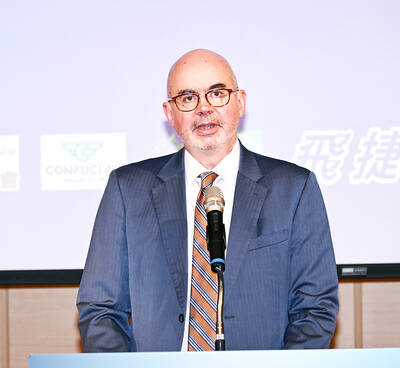
RESILIENCE: Deepening bilateral cooperation would extend the peace sustained over the 45 years since the Taiwan Relations Act, Greene said Taiwan-US relations are built on deep economic ties and shared values, American Institute in Taiwan (AIT) Director Raymond Greene said yesterday, adding that strengthening supply chain security in critical industries, enhancing societal resilience through cooperation and deepening partnerships are key to ensuring peace and stability for Taiwan in the years ahead. Greene made the remarks at the National Security Youth Forum, organized by National Taiwan University’s National Security and Strategy Studies Institution in Taipei. In his address in Mandarin Chinese, Greene said the Taiwan-US relationship is built on deep economic ties and shared interests, and grows stronger through the enduring friendship between
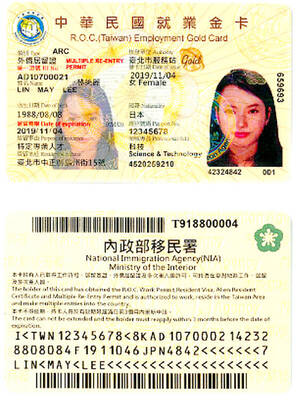
GAINING STEAM: The scheme initially failed to gather much attention, with only 188 cards issued in its first year, but gained popularity amid the COVID-19 pandemic Applications for the Employment Gold Card have increased in the past few years, with the card having been issued to a total of 13,191 people from 101 countries since its introduction in 2018, the National Development Council (NDC) said yesterday. Those who have received the card have included celebrities, such as former NBA star Dwight Howard and Australian-South Korean cheerleader Dahye Lee, the NDC said. The four-in-one Employment Gold Card combines a work permit, resident visa, Alien Resident Certificate (ARC) and re-entry permit. It was first introduced in February 2018 through the Act Governing Recruitment and Employment of Foreign Professionals (外國專業人才延攬及雇用法),
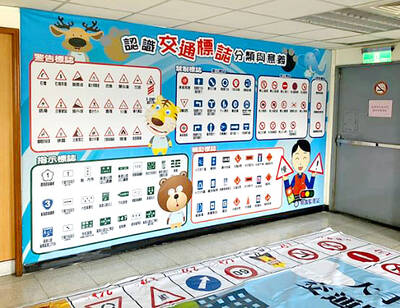
The Ministry of Transportation and Communications yesterday said that it would redesign the written portion of the driver’s license exam to make it more rigorous. “We hope that the exam can assess drivers’ understanding of traffic rules, particularly those who take the driver’s license test for the first time. In the past, drivers only needed to cram a book of test questions to pass the written exam,” Minister of Transportation and Communications Chen Shih-kai (陳世凱) told a news conference at the Taoyuan Motor Vehicle Office. “In the future, they would not be able to pass the test unless they study traffic regulations
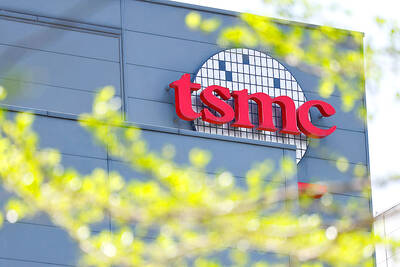
EUROPEAN TARGETS: The planned Munich center would support TSMC’s European customers to design high-performance, energy-efficient chips, an executive said Taiwan Semiconductor Manufacturing Co (TSMC, 台積電), the world’s largest contract chipmaker, yesterday said that it plans to launch a new research-and-development (R&D) center in Munich, Germany, next quarter to assist customers with chip design. TSMC Europe president Paul de Bot made the announcement during a technology symposium in Amsterdam on Tuesday, the chipmaker said. The new Munich center would be the firm’s first chip designing center in Europe, it said. The chipmaker has set up a major R&D center at its base of operations in Hsinchu and plans to create a new one in the US to provide services for major US customers,


 RSS
RSS