


US President George W. Bush urged China's consumers yesterday to buy more to reduce a yawning trade gap with the US, as he looked forward to talks with Chinese counterpart Hu Jintao (胡錦濤).
While trade could top the two leaders' agenda today they are expected to touch on a broad range of issues, such as reported Chinese cyber-attacks on the Pentagon, reflecting what Bush called a "complex" relationship.
"We certainly hope that China changes from a saving society to a consuming society," Bush told reporters ahead of the APEC summit in Sydney.
"We want the [Chinese] middle class to feel comfortable coming into the marketplace, the global marketplace, so that our producers can see the benefits directly with trade with China," he said.
China's enormous trade surplus with the US is a regular bone of contention in bilateral relations. The gap with China, which has the lion's share of imports into the US, expanded to a record US$21.16 billion in June from US$20.02 billion in May, US official data shows.
Bush said it would help to balance trade if China floated its currency, which has been allowed to appreciate in the past two years but remains tightly managed.
"We still have got a huge trade deficit with China, which then causes us to want to work with them to let their currency float. I think that would be helpful in terms of adjusting trade balances," he said.
Economists have argued that a more expensive Chinese currency would not do much to shrink the overall US deficit as US importers would just move to other low-cost suppliers elsewhere.
They have argued that core issues include the unwillingness of the Chinese people to spend more on consumer goods, and conversely, an unwillingness on the part of many Americans to save.
"I will sit down with [Hu] and have a good honest, candid discussion, and he's going to tell me what's on his mind and I'm darned sure going to tell him what's on my mind," Bush said.
He suggested that he would address concerns the Chinese military might have penetrated the Pentagon's computer systems.
"In terms of whether or not I will bring this up to countries ... from which there may have been an attack, I may," Bush said.
"Whether it be this issue, or issues like intellectual property rights, I mean, if you have a relationship with a country, then you've got to respect the country's systems and knowledge base. And that's what we expect from people with whom we trade," he said.
The Pentagon said on Tuesday that several nations and groups were trying to break into its system after London's Financial Times reported China's military had hacked into the network in June.
Meanwhile, Japan pressed China yesterday for a "full explanation" on measures to improve the safety of its products following a spate of recalls. Japanese Minister for Economy, Trade and Industry Akira Amari told Chinese Commerce Minister Bo Xilai (
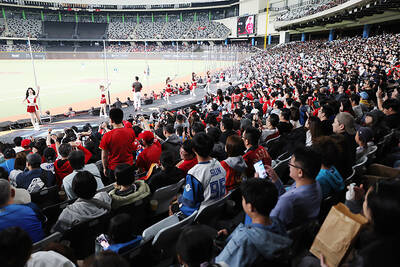
The Legislative Yuan’s Finance Committee yesterday approved proposed amendments to the Amusement Tax Act (娛樂稅法) that would abolish taxes on films, cultural activities and competitive sporting events, retaining the fee only for dance halls and golf courses. The proposed changes would set the maximum tax rate for dance halls and golf courses at 50 and 20 percent respectively, with local governments authorized to suspend the levies. Article 2 of the act says that “amusement tax shall be levied on tickets sold or fees charged by amusement places, facilities or activities” in six categories: “Cinema; professional singing, story-telling, dancing, circus, magic show, acrobatics

Tainan, Taipei and New Taipei City recorded the highest fines nationwide for illegal accommodations in the first quarter of this year, with fines issued in the three cities each exceeding NT$7 million (US$220,639), Tourism Administration data showed. Among them, Taipei had the highest number of illegal short-term rental units, with 410. There were 3,280 legally registered hotels nationwide in the first quarter, down by 14 properties, or 0.43 percent, from a year earlier, likely indicating operators exiting the market, the agency said. However, the number of unregistered properties rose to 1,174, including 314 illegal hotels and 860 illegal short-term rental
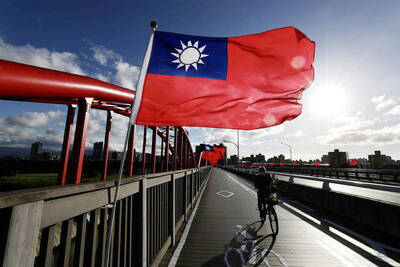
INFLATION UP? The IMF said CPI would increase to 1.5 percent this year, while the DGBAS projected it would rise to 1.68 percent, with GDP per capita of US$44,181 The IMF projected Taiwan’s real GDP would grow 5.2 percent this year, up from its 2.1 percent outlook in January, despite fears of global economic disruptions sparked by the US-Iran conflict. Taiwan’s consumer price index (CPI) is projected to increase to 1.5 percent, while unemployment would be 3.4 percent, roughly in line with estimates for Asia as a whole, the international body wrote in its Global Economic Outlook Report published in the US on Monday. The figures are comparatively better than the IMF outlook for the rest of the world, which pegged real GDP growth at 3.1 percent, down from 3.3 percent
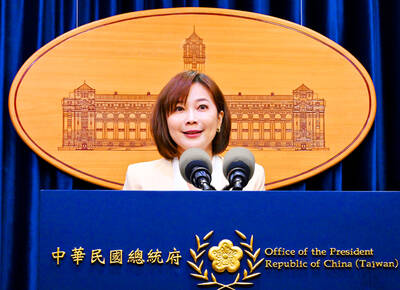
ECONOMIC COERCION: Such actions are often inconsistently applied, sometimes resumed, and sometimes just halted, the Presidential Office spokeswoman said The government backs healthy and orderly cross-strait exchanges, but such arrangements should not be made with political conditions attached and never be used as leverage for political maneuvering or partisan agendas, Presidential Office spokeswoman Karen Kuo (郭雅慧) said yesterday. Kuo made the remarks after China earlier in the day announced 10 new “incentive measures” for Taiwan, following a landmark meeting between Chinese President Xi Jinping (習近平) and Chinese Nationalist Party (KMT) Chairwoman Cheng Li-wun (鄭麗文) in Beijing on Friday. The measures, unveiled by China’s Xinhua news agency, include plans to resume individual travel by residents of Shanghai and China’s Fujian


 RSS
RSS