


Eleven music companies, including Warner Music Group Corp and Sony BMG, filed a lawsuit against Yahoo China for alleged copyright infringement by providing links to unlicensed music, an industry group said.
The suit, filed in January, was accepted by Beijing's Number 2 Intermediate Court on Tuesday, Leong May-seey, Asia-Pacific regional director for the International Federation of the Phonographic Industry, said by telephone from Hong Kong yesterday. The IFPI represents companies such as Warner, Sony BMG, EMI Group PLC and Universal Music Group.
The case against Yahoo China comes about four months after Baidu.com Inc, operator of China's largest search engine, won a suit brought by music companies claiming the company allowed illegal song downloads on its Web site. About 85 percent of recordings in China are illegal, with sales of pirated music worth US$410 million in 2005, according to the federation.
"Yahoo China respects intellectual property rights and supports the fight against music piracy," Porter Erisman, a Hong Kong-based spokesman for Alibaba.com Corp, which operates the Yahoo China site, wrote in an e-mail.
"The courts have clearly established the precedent that search-engine operators are not liable for content posted on third-party Web sites," Erisman said.
Lachie Rutherford, president of Warner Music Asia Pacific, estimates that digital music, which includes music sold online and through mobile phones, accounts for 50 percent of China's music market.
"There are problems with the laws, and there needs to be progress before content businesses can be adequately compensated [in China]," Rutherford said by telephone from Hong Kong. "For Yahoo and all major brands operating in China, the rules you should apply in China are the rules you should apply anywhere else."

The Tourism Administration yesterday announced that it would reward repeat international visitors with incentives of up to NT$8,000 to boost inbound tourism. The incentives are available to all international tourists, it said, adding that repeat visitors would be rewarded with NT$5,000 and would receive an additional NT$3,000 if they bring travel companions. The nation received 2,990,657 inbound visitors during the first quarter, marking a 3.8 percent increase from the same period last year, agency data showed. Japanese nationals are among groups visiting Taiwan the most. About 1.48 million Japanese tourists arrived last year, a year-on-year increase of more than 12
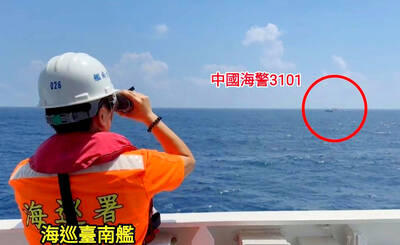
‘BRAZEN’: The holiday did not stop China from activities that infringe on Taiwan’s maritime jurisdiction, but the CGA is ready to defend the nation, Kuan Bi-ling said Beijing is intensifying maritime pressure on Taiwan, but the nation will never yield, Ocean Affairs Council Deputy Minister Sung Chen-en (宋承恩) said. The Coast Guard Administration (CGA) has adopted a “shadowing and monitoring” approach to avoid falling into a Chinese trap to escalate tensions and deepen the conflict, Sung said in an interview published yesterday in the Chinese-language Liberty Times (the Taipei Times’ sister newspaper). China Coast Guard formations patrolling waters east of Taiwan, as well as official Chinese vessels entering areas around Itu Aba Island (Taiping Island, 太平島) and Pratas Islands (Dongsha Islands, 東沙群島) show Beijing’s attempts to significantly step up
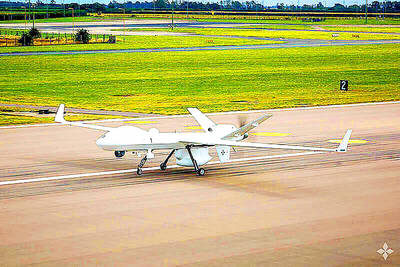
BOOST: By operating the same advanced systems as the US military, Taiwan would be better positioned to share and integrate intelligence with partners, an expert said The first batch of MQ-9B SkyGuardian drones has arrived in Taiwan, and is being assembled and tested by drone manufacturer General Atomics and the military ahead of flight trials as part of the air force’s acquisition to bolster its aerial surveillance capabilities, a source said yesterday. The air force allocated a budget of NT$21.7 billion (US$687 million) from 2022 to 2029 to procure four MQ-9B uncrewed aerial vehicles (UAVs) manufactured by General Atomics along with associated equipment such as ground control stations. The US has agreed to deliver the four MQ-9Bs to Taiwan in two batches this year and next
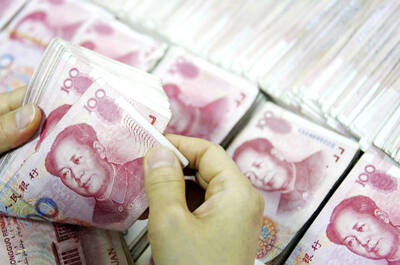
Taiwanese firms’ China investments have dwindled to less than 1 percent of their total foreign investments, putting China-based investments on track for a record low this year, Ministry of Economic Affairs data showed. Taiwan’s investments abroad in the first five months of this year reached US$35.92 billion, Department of Investment Review data showed. Investments outside China totaled US$35.61 billion, up 133.94 percent year-on-year, while investments in China totaled US$310.3 million, down 32.3 percent and about 0.86 percent of the total, data showed. Major overseas projects included Taiwan Semiconductor Manufacturing Co’s (TSMC, 台積電) US$30 billion capital injection into an overseas subsidiary,


 RSS
RSS