


The Walt Disney Co said that it is buying longtime partner Pixar Animation Studios Inc for US$7.4 billion in stock in a deal that could restore Disney's clout in animation while vaulting Pixar CEO Steve Jobs into a powerful role at the media conglomerate.
Disney's purchase of the maker of the blockbuster films Toy Story and Finding Nemo would make Jobs Disney's largest shareholder, with about a 7 percent stake. Jobs, who owns more than half of Pixar's shares and also heads Apple Computer Inc, will also join Disney's board.
"With this transaction, we welcome and embrace Pixar's unique culture, which for two decades has fostered some of the most innovative and successful films in history," Disney chief executive Robert Iger said in a statement on Tuesday.
Disney has co-financed and distributed Pixar's animated films for the past 12 years, splitting the profits. That deal expires in June after Pixar delivers Cars, and it had once appeared the companies would not renew it amid friction between Jobs and former Disney CEO Michael Eisner.
But the talks revived under Iger, who became Disney CEO last October. Disney, the theme park owner that also owns the ABC and ESPN TV networks, and Pixar had talked for months about a new relationship.
Pixar executive vice president John Lasseter will become chief creative officer of the animation studios and principal creative adviser at Walt Disney Imagineering, which designs and builds the company's theme parks.
Lasseter began his career as a Disney animator and is the creative force behind Pixar's films. He will report directly to Iger.
Pixar president Ed Catmull will serve as president of the new combined Pixar and Disney animation studios, reporting to Iger and Dick Cook, chairman of The Walt Disney Studios.
The two companies will remain separate, with Pixar staying in Emeryville and retaining its brand name. Maintaining Pixar's unique creative character was a priority in the talks, executives said.
"Most of the time that Bob and I have spent talking about this hasn't been about economics, it's been about preserving the Pixar culture because we all know that that's the thing that is going to determine the success here in the long run," Jobs said on a conference call with analysts.
Under the deal, Disney said it will issue 2.3 shares for each share of Pixar stock. At Tuesday's closing price of US$25.99 for Disney, Pixar shareholders would get stock worth US$59.78, a 4 percent premium over Pixar's closing price of US$57.57. The deal, which is subject to regulatory and Pixar shareholder approvals, was announced after the markets closed for the day.
With Pixar, Disney gains a company that has produced a long-running string of animated blockbusters. Iger wants to strengthen Disney's animated features, the hallmark of the company since its founding and a steady source of characters for Disney's theme parks and other units.
Pixar films have been a financial windfall for Disney, which receives 60 percent of the profits. By contrast, Disney's own animation unit has struggled.
With Jobs, Disney also tightens its link with Apple Computer, the innovative technology company behind music and video iPods.
Jobs could help Iger push his plans to marry films, TV shows, video games and other content to computers, iPods, handheld game consoles and even cellphones.

Taiwan Semiconductor Manufacturing Co (TSMC, 台積電), the world’s largest foundry service provider, yesterday said that global semiconductor revenue is projected to hit US$1.5 trillion in 2030, after the figure exceeds US$1 trillion this year, as artificial intelligence (AI) demand boosts consumption of token and compute power. “We are still at the beginning of the AI revolution, but we already see a significant impact across the whole semiconductor ecosystem,” TSMC deputy cochief operating officer Kevin Zhang (張曉強) said at the company’s annual technology symposium in Hsinchu City. “It is fair to say that in the past decade, smartphones and other mobile devices were
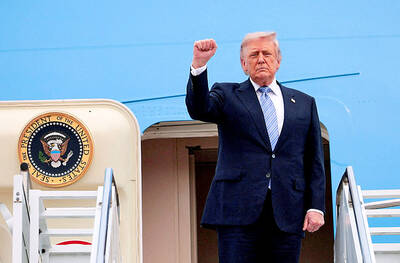
US-CHINA SUMMIT: MOFA welcomed US reassurance of no change in its Taiwan policy; Trump said he did not comment when Xi talked of opposing independence US President Donald Trump yesterday said he has not made a decision on whether to move forward with a major arms package for Taiwan after hearing concerns about it from Chinese President Xi Jinping (習近平). Trump’s comments on Taiwan came as he flew back to Washington after wrapping up critical talks in which both leaders said important progress was made in stabilizing US-China relations even as deep differences persist between the world’s two biggest powers on Iran and Taiwan. “I will make a determination,” Trump said, adding: “I’ll be making decisions. But, you know, I think the last thing we need right

TAIWAN ISSUE: US treasury secretary Scott Bessent said on the first day of meetings that ‘it wouldn’t be a US-China summit without the Taiwan issue coming up’ There were no surprises on the first day of the summit between US President Donald Trump and Chinese President Xi Jinping (習近平), the Mainland Affairs Council (MAC) said yesterday, as the government reiterated that cross-strait stability is crucial to the Asia-Pacific region, as well as the world. As the two presidents met for a highly anticipated summit yesterday, Chinese state media reported that Xi warned Trump that missteps regarding Taiwan could push their two countries into “conflict.” Trump arrived in China with accolades for his host, calling Xi a “great leader” and “friend,” and extending an invitation to visit the White House
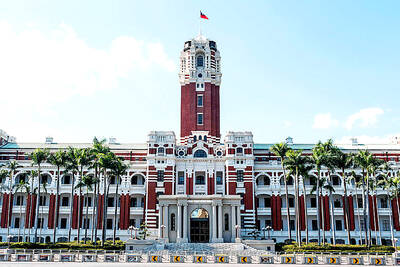
SECURITY: Taipei presses the US for arms supplies, saying the arms sales are not only a reflection of the US security commitment to Taiwan but also serve as a mutual deterrent against regional threats Taiwan is committed to preserving the cross-strait “status quo” and contributing to regional peace and stability, the Presidential Office said yesterday. “It is an undeniable fact that the Republic of China is a sovereign and independent democratic nation,” Presidential Office spokeswoman Karen Kuo (郭雅慧) reiterated, adding that Beijing has no right to claim sovereignty over Taiwan. The statements came after US President Donald Trump warned against Taiwanese independence. Trump wrapped up a state visit to Beijing on Friday, during which Chinese President Xi Jinping (習近平) had pressed him not to support Taiwan. Taiwan depends heavily on US security backing to deter China from carrying


 RSS
RSS