


Japan's Konica Minolta, one of the world's leading photographic equipment makers, said yesterday it would stop making all cameras because the market had become too competitive.
The company plans to slash 3,700 jobs or about 11 percent of its global workforce by next year under a restructuring package that will also see part of its business making high-end digital cameras sold off to Sony.
Konica Minolta will also gradually stop making camera film by next year to focus on its more profitable optics and medical imaging activities.
"In today's era of digital cameras ... it became difficult to provide timely competitive products even with our top optical, mechanical and electronics technologies," the company said in a statement on its Web site.
"For color film and color paper, while considering our customer needs, we will step-by-step reduce product lineup and cease our film production and color paper by the end of fiscal year ending March 31, 2007," it added.
The announcement comes less than a week after Nikon announced plans to stop selling most of its film cameras to focus on hot-selling digital models.
Konica Minolta struggled to adapt to the rapidly changing shift to digital photography and away from traditional film.
It slumped into the red in the first half of the current financial year and forecast a large full-year loss due to falling sales of conventional photo film and intense competition in digital cameras.
The group, formed through the 2003 merger of Konika and Minolta, made a net loss of ¥3.48 billion (US$30.2 million) in the first half to September, reversing a net profit of ¥8.20 billion a year earlier.
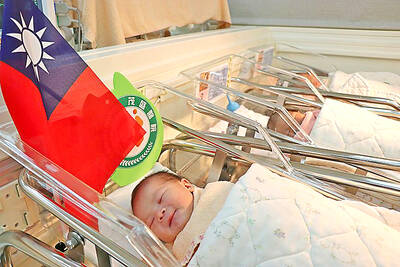
AGING: As of last month, people aged 65 or older accounted for 20.06 percent of the total population and the number of couples who got married fell by 18,685 from 2024 Taiwan has surpassed South Korea as the country least willing to have children, with an annual crude birthrate of 4.62 per 1,000 people, Ministry of the Interior data showed yesterday. The nation was previously ranked the second-lowest country in terms of total fertility rate, or the average number of children a woman has in her lifetime. However, South Korea’s fertility rate began to recover from 2023, with total fertility rate rising from 0.72 and estimated to reach 0.82 to 0.85 by last year, and the crude birthrate projected at 6.7 per 1,000 people. Japan’s crude birthrate was projected to fall below six,
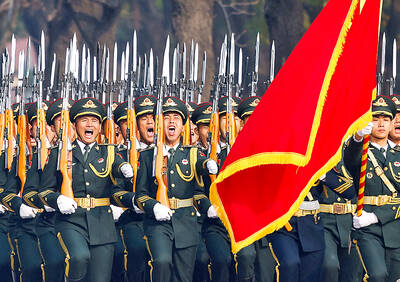
Conflict with Taiwan could leave China with “massive economic disruption, catastrophic military losses, significant social unrest, and devastating sanctions,” a US think tank said in a report released on Monday. The German Marshall Fund released a report titled If China Attacks Taiwan: The Consequences for China of “Minor Conflict” and “Major War” Scenarios. The report details the “massive” economic, military, social and international costs to China in the event of a minor conflict or major war with Taiwan, estimating that the Chinese People’s Liberation Army (PLA) could sustain losses of more than half of its active-duty ground forces, including 100,000 troops. Understanding Chinese
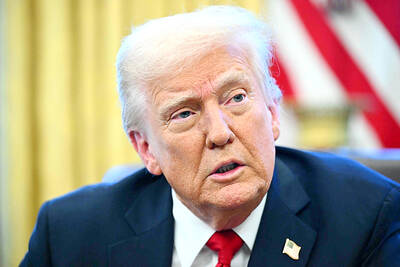
US President Donald Trump in an interview with the New York Times published on Thursday said that “it’s up to” Chinese President Xi Jinping (習近平) what China does on Taiwan, but that he would be “very unhappy” with a change in the “status quo.” “He [Xi] considers it to be a part of China, and that’s up to him what he’s going to be doing, but I’ve expressed to him that I would be very unhappy if he did that, and I don’t think he’ll do that. I hope he doesn’t do that,” Trump said. Trump made the comments in the context
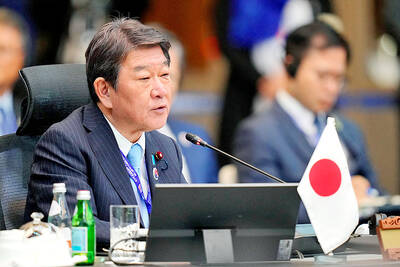
SELF-DEFENSE: Tokyo has accelerated its spending goal and its defense minister said the nation needs to discuss whether it should develop nuclear-powered submarines China is ramping up objections to what it sees as Japan’s desire to acquire nuclear weapons, despite Tokyo’s longstanding renunciation of such arms, deepening another fissure in the two neighbors’ increasingly tense ties. In what appears to be a concerted effort, China’s foreign and defense ministries issued statements on Thursday condemning alleged remilitarism efforts by Tokyo. The remarks came as two of the country’s top think tanks jointly issued a 29-page report framing actions by “right-wing forces” in Japan as posing a “serious threat” to world peace. While that report did not define “right-wing forces,” the Chinese Ministry of Foreign Affairs was


 RSS
RSS