

Fuji Television Network Inc, Japan's biggest broadcaster, agreed to pay rival Livedoor Co about ¥147.4 billion (US$1.4 billion) and form an alliance, ending a two-month hostile takeover bid for its radio affiliate.
Increased holdings
Tokyo-based Fuji TV will initially raise its stake in radio network Nippon Broadcasting System Inc to 68.87 percent and will buy remaining shares on Sept. 1. Internet portal Livedoor will keep 17.6 percent of the company for now, reducing its 50 percent holding, Fuji TV and Livedoor said today in statements to the Tokyo Stock Exchange.
Livedoor, owned by 32-year-old Takafumi Horie, began a hostile bid for Nippon Broadcasting in February in a quest to form a company spanning the Internet and broadcast media.
Livedoor's control of Nippon Broadcasting then forced Fuji TV to take steps to prevent itself from becoming a takeover target because of cross-shareholdings with the radio company.
"Horie gained fame and popularity, which led Livedoor to get more hits" on its Web sites, said Yoshio Shima, a partner at Ottoman Capital, a Tokyo-based hedge fund. "For Fuji TV's part, they could have controlled Nippon Broadcasting at a cheaper cost if not for Livedoor."
Fuji to buy shares
As part of the agreement, Fuji TV will also spend ¥44 billion to buy 133.74 million new shares in Livedoor at Friday's closing share price of ¥329, giving it a 12.75 percent stake in the Tokyo-based company.
Fuji TV will pay ¥6,300 for each of the Nippon Broadcasting shares held by Livedoor, close to what Livedoor paid.
Nippon Broadcasting and Fuji TV are part of the Fujisankei Communications Group, the largest media organization in Japan.
Acquisitions
Livedoor, which has a market value of about ¥226 billion, acquired 17 companies last year as it expanded its Internet services.
Livedoor shares rose 6.4 percent to ¥350 in Tokyo.
Nippon Broadcasting shares, currently 36.5 percent owned by Fuji TV, fell 1.2 percent to ¥5,880. Fuji TV's shares fell 3.5 percent to ¥222,000.
The companies released their announcements after equity markets closed in Japan.
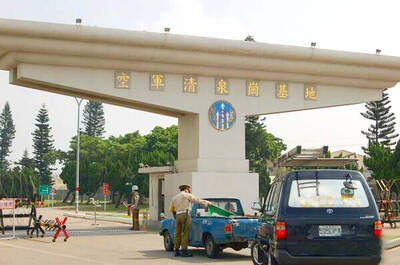
An unauthorized drone intrusion over Ching Chuan Kang Air Base (清泉崗基地) at Taichung International Airport on Tuesday night forced the temporary closure of the base, diverting eight fighter jets and delaying a commercial flight, authorities said. Air Force Command Headquarters said that clear weather had allowed for scheduled night training exercises, but after a drone was spotted entering the airspace, the control tower declared an emergency closure of the airport, forcing eight Indigenous Defense Fighter jets in the air to divert and land at Hsinchu Air Base (新竹基地). Taichung airport director Chang Jui-shu (張瑞澍) said the airspace intrusion lasted from 7:37pm to
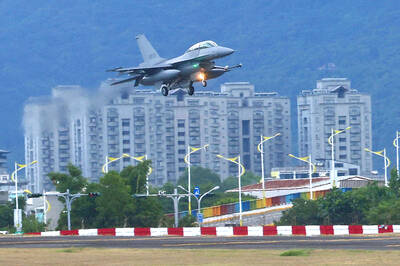
The air force plans to build 26 more hardened aircraft shelters as the number of F-16Vs stationed along Taiwan’s east coast is expected to reach 120 when the final shipment of 66 jets procured from the US arrives. The incoming jets would be stationed at Chihhang Air Base in Taitung County, augmenting the F-16V Block 20s operated by the 5th Tactical Fighter Wing in Hualien County, officials said yesterday. The air force plans to allocate more than NT$6.88 billion (US$218.1 million) from next year to 2031 to build the shelters in Hualien and Taitung as part of the implementation of a “one

Indonesian rescuers searched for eight people who went missing at sea while heading to a volcanic island to report on an eruption there, officials said yesterday. Anak Krakatau initially erupted for about 25 hours over the weekend, and it has since continued to erupt intermittently with explosions ejecting lava, ash and incandescent volcanic material from the crater, the Indonesian Geology Agency said in a statement. A speedboat carrying five photojournalists, two crew members and a route guide lost contact after leaving Carita, a coastal town in Banten Province, for the volcanic island, Banten Province Search and Rescue Office Chief Al Amrad said. He

NO LIMITS: More legislation expanding Beijing’s control over the movement of people, money and information raises risks for Taiwanese travelers and businesses, officials said China is set to implement several laws in the coming months that expand the definition of national security, creating greater risks for Taiwanese traveling to or doing business in China, Taiwanese officials said yesterday. Beijing’s Ethnic Unity and Progress Promotion Law took effect on July 1, while a draft “Internet Information Service Management Measures” finished its public consultation on Aug. 2, but has yet to be adopted. China’s Regulations of the State Council on Exit and Entry Administration are to take effect on Tuesday next week, while amendments to its National Defense Mobilization Law and the Ministry of Public Security’s Measures


 RSS
RSS