


L. Paul Bremer, the chief US administrator in Iraq, vowed on Sunday to dismantle that country's state-run economy by selling off government-owned companies and writing new laws to encourage foreign investment.
Recognizing that a rapid shift would cause pain to many in the short term, Bremer also raised the possibility of distributing part of Iraq's oil revenues as "dividends" to citizens or creating a national trust fund that would help finance a "social safety net."
"Every individual Iraqi would come to understand his or her stake in the country's economic success," he told business and political leaders gathered here for a meeting of the World Economic Forum.
Taken together, Bremer's comments amounted to a blueprint for turning Iraq into a Middle East model of free trade and deregulation.
He made it clear that he wants to start privatizing more than 40 government-owned companies that make products ranging from packaged foods to steel. Many of those companies, he acknowledged, would not be able to survive in the face of real competition.
"A fundamental component of this process will be to force state-owned enterprises to face hard budget constraints by reducing subsidies and special deals," he said. "Iraq will no doubt find that opening its borders to trade and investment will increase competitive pressure on its domestic firms and thereby raise productivity."
Senior officials in the US-led Coalition Provisional Authority, which Bremer leads, have said they hope to agree on a plan in the next few weeks to sell state-owned companies to private investors. But they are vague about how quickly the process should proceed, acknowledging that new owners would almost certainly slash the work forces at many companies and that some companies would not survive.
Many foreign investors, especially in neighboring Kuwait, Jordan and Turkey, said they were eager to enter the Iraqi market. But they also said the situation was too unstable and the laws too undefined to make any commitments yet.
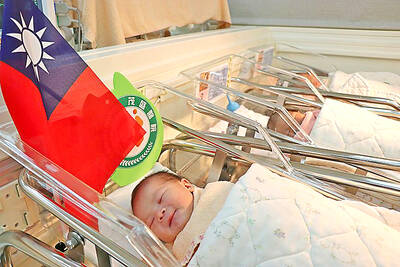
AGING: As of last month, people aged 65 or older accounted for 20.06 percent of the total population and the number of couples who got married fell by 18,685 from 2024 Taiwan has surpassed South Korea as the country least willing to have children, with an annual crude birthrate of 4.62 per 1,000 people, Ministry of the Interior data showed yesterday. The nation was previously ranked the second-lowest country in terms of total fertility rate, or the average number of children a woman has in her lifetime. However, South Korea’s fertility rate began to recover from 2023, with total fertility rate rising from 0.72 and estimated to reach 0.82 to 0.85 by last year, and the crude birthrate projected at 6.7 per 1,000 people. Japan’s crude birthrate was projected to fall below six,
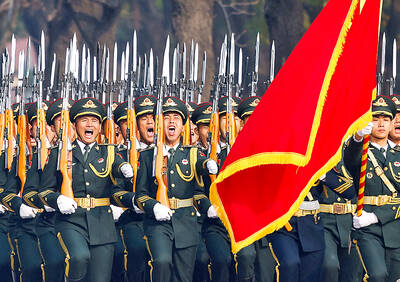
Conflict with Taiwan could leave China with “massive economic disruption, catastrophic military losses, significant social unrest, and devastating sanctions,” a US think tank said in a report released on Monday. The German Marshall Fund released a report titled If China Attacks Taiwan: The Consequences for China of “Minor Conflict” and “Major War” Scenarios. The report details the “massive” economic, military, social and international costs to China in the event of a minor conflict or major war with Taiwan, estimating that the Chinese People’s Liberation Army (PLA) could sustain losses of more than half of its active-duty ground forces, including 100,000 troops. Understanding Chinese
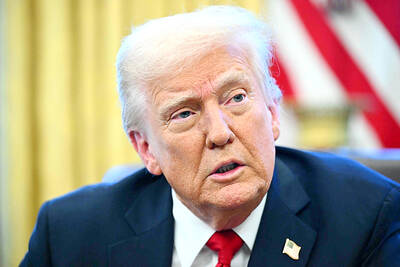
US President Donald Trump in an interview with the New York Times published on Thursday said that “it’s up to” Chinese President Xi Jinping (習近平) what China does on Taiwan, but that he would be “very unhappy” with a change in the “status quo.” “He [Xi] considers it to be a part of China, and that’s up to him what he’s going to be doing, but I’ve expressed to him that I would be very unhappy if he did that, and I don’t think he’ll do that. I hope he doesn’t do that,” Trump said. Trump made the comments in the context
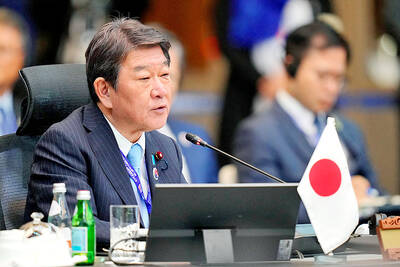
SELF-DEFENSE: Tokyo has accelerated its spending goal and its defense minister said the nation needs to discuss whether it should develop nuclear-powered submarines China is ramping up objections to what it sees as Japan’s desire to acquire nuclear weapons, despite Tokyo’s longstanding renunciation of such arms, deepening another fissure in the two neighbors’ increasingly tense ties. In what appears to be a concerted effort, China’s foreign and defense ministries issued statements on Thursday condemning alleged remilitarism efforts by Tokyo. The remarks came as two of the country’s top think tanks jointly issued a 29-page report framing actions by “right-wing forces” in Japan as posing a “serious threat” to world peace. While that report did not define “right-wing forces,” the Chinese Ministry of Foreign Affairs was


 RSS
RSS