


UN Secretary-General Antonio Guterres has called it the defining issue of our time: Climate change is moving to the center stage at the UN, three years after the Paris agreement went into force.
A major UN push for progress on climate change is to start this week, when Guterres travels to New Zealand and several Pacific islands, where rising sea levels are threatening the very existence of those small countries.
The stepped-up diplomacy would culminate with a climate action summit at the UN in September, an event billed as a last chance to prevent irreversible climate change.
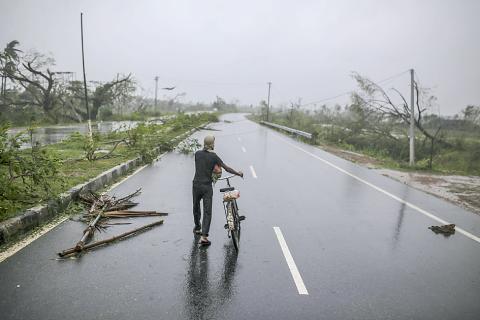
Photo: Bloomberg
“We are still losing the battle,” Guterres told reporters last week. “Climate change is still running faster than we are and if we don’t reverse this trend, it will be a tragedy for the whole world.”
In Fiji, Tuvalu and Vanuatu, Guterres is to meet with families whose lives have been upended by cyclones, flooding and other extreme weather events.
Pacific island countries face an especially dire risk from climate change because of sea level rise. In some cases, low-lying countries could disappear completely.
Fiji is working to build a coalition of more than 90 countries from the Caribbean, Africa and Asia facing climate crisis.
“We hope that the secretary-general will draw far more inspiration from his first visit to go further, faster and deeper with the climate summit,” Fijian Ambassador to the UN Satyendra Prasad told reporters. “We are very hopeful that the climate summit will mark a turning point.”
The UN push on climate change is shaping up amid geopolitical shifts: The US under US President Donald Trump has decided to pull out of the Paris agreement to combat global warming, giving China more space to assert its views.
“The Trump administration’s disdain for climate diplomacy has left China looking like the main guarantor of the Paris agreement,” said Richard Gowan, UN director for the International Crisis Group.
“While China is increasingly active across the UN, other states are suspicious of its stances on human rights and development, but it is the indispensable power in climate talks now,” he said.
Trump announced in 2017 that the US would exit the Paris agreement, but under the terms of the deal the withdrawal would only become effective next year.
The US administration is not taking part in summit preparations, but has not said it would skip the event, UN officials said.
Guterres’ mission might also be further complicated by Trump’s nomination of Kelly Knight Craft as UN ambassador.
Craft, who is married to a major coal magnate, raised eyebrows for declaring that she believed “both sides” of climate science, indicating that she might well be out of sync with the UN on the issue.
Guterres has told leaders to bring plans, not speeches, to the summit to be held in New York on Sept. 23 during the annual gathering of world leaders at the UN.
The summit is seen as critical because of US resistance to discuss climate change at other forums, including the G7 and G20, and again last week at a meeting of the Arctic Council in Finland.
“What people are looking for is countries to commit to major ambition increases in 2025 and 2030 at the summit or in 2020,” said Nick Mabey, head of the E3G climate think tank.
This should include legally binding targets for countries to phase out coal, become climate neutral and invest in climate resilience, especially for the poorest countries, he added.
A string of apocalyptic reports on the state of the planet is bringing home the need for concrete steps.
One million species are on the brink of extinction as carbon dioxide emissions continue to rise, pushing targets from the Paris accord further out of reach.
UN climate envoy Luis Alfonso de Alba told reporters on Friday that he was optimistic about prospects for a breakthrough on climate, saying that the dire predictions were having a galvanizing effect.
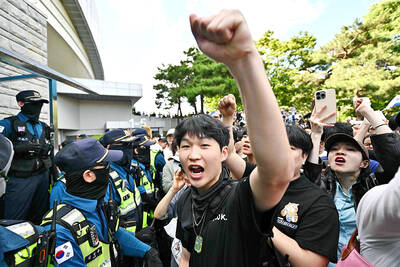
‘ABSURD MISTAKE’: The election commission said that there had been a failure to anticipate turnout after 14 polling stations ran short of ballot papers South Korean riot police yesterday cleared protesters from a Seoul polling station after a 35-hour blockade sparked by a shortage of ballot papers during local elections earlier this week. Wednesday’s election was the first nationwide vote since South Korean President Lee Jae-myung took office following the ouster of Yoon Suk-yeol over his short-lived martial law declaration. Lee’s ruling Democratic Party swept most races, but failed to flip the crucial Seoul mayoral seat. The South Korean National Election Commission apologized, blaming a failure to anticipate turnout after 14 polling stations in Seoul ran short of ballot papers. Some polling stations stayed open until 10pm to

France experienced its hottest spring on record, the French weather service said on Tuesday, after an exceptional early heat wave that also broke highs for the season in England and Wales. Meteo-France said the average nationwide temperature over March to May was 13.8°C — about 1.7°C above the norm, and surpassing records set in 2011 and 2020. “The warmest spring since records began in 1900,” it said in a bulletin. All three months were warmer than average, but the onset of an “unprecedented heatwave” late last month pushed the mercury to highs typically seen at the height of the summer. “Our country had never

A Sherpa guide was found crawling to base camp on Mount Everest a week after he went missing and was reunited with his family, who had given up hope he would return. Dawa Sherpa was last seen on Friday last week descending the mountain, but he did not reach base camp even though his client did. The pair were among the last climbers on the mountain as the climbing season came to an end and the route was dismantled. Dawa was located by a cleaning crew on Thursday morning as he was crawling down the snowy slopes around the Khumbu Icefall, just above
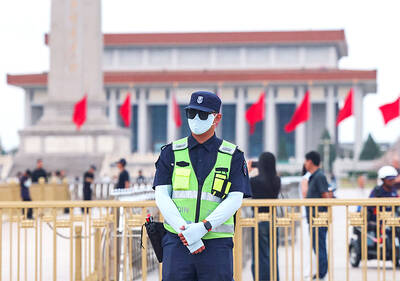
Chinese authorities are snuffing out any remembrance of the deadly 1989 military crackdown on student-led pro-democracy protests in Tiananmen Square, which happened 37 years ago yesterday, in a further tightening of a years-long campaign to erase what happened from public memory. Police told relatives of the victims they would not be allowed to visit a cemetery in Beijing on the anniversary of the crackdown, a person with knowledge of the matter said. Relatives of the victims visited the cemetery on the anniversary for more than 30 years to read memorial statements with police keeping watch, Amnesty International said. Hundreds of people,


 RSS
RSS