


Yuki Tatsumi was waiting tables at an izakaya pub in Japan’s Kyoto when something on the table caught his eye — a chopstick wrapper folded and fiddled into an abstract shape.
It was the catalyst for a collection that now includes about 15,000 pieces of found “origami art” made by customers folding the paper sleeves that cover chopsticks at Japanese restaurants.
“The very first one I found just looked like a bit of junk,” Tatsumi, 27, said, but it made him think.
“What if this is a message for me from customers?” he said. “Cleaning tables suddenly became something fun, just by thinking about it that way.”
Tipping at restaurants is not standard in Japan, but Tatsumi came to see the little folded paper pieces left behind by customers as a “Japanese tip” and started watching out for different types of them.
He soon found there was a huge variety in the pieces left behind by customers, perhaps no surprise in a country where origami is a popular hobby and taught at schools.
“I discovered many of them were folded in shapes of traditional good luck items in Japan, like a fan, a crane and a turtle,” he said. “I also once found a table decorated like a fish tank, with paper folded like fish and seaweed.”
Enchanted by his discoveries, he decided to branch out and ask other restaurants to donate the pieces left by their customers to his collection.
In April 2016, he set off on a year-long road trip, asking hundreds of eateries from sushi restaurants to noodle stands to share their transformed paper sleeves with him.
He encountered some curiosity, and even reluctance, from restaurateurs bewildered about why he would want something usually headed straight for the garbage.
Yet, eventually, 185 places from northern Hokkaido to southern Okinawa promised to keep whatever they found and send it to him.
“Many of the restaurant owners that helped me told me afterward that they now find it more rewarding than a real tip in cash,” Tatsumi said.
“It may sound hard to believe, especially for those outside Japan, but this way of showing appreciation that is unique to each person is something very pleasing,” he said.
Now working as a researcher at an art museum in Kameoka near Kyoto, Tatsumi has about 15,000 pieces, each stored in its own small wooden box, like a piece of precious jewelry.
Many are simple, with diners just forming a makeshift chopstick rest out of the sleeve, while others are elaborate, like a black-and-white patterned piece formed into a dress, or a blue wrapper twisted into a snake, with the folds following the patterns on the paper.
Tatsumi has already exhibited his collection in Japan, and plans to take it to art events in Paris and South Korea later this year.
He wants the collection to remind people to show appreciation and consideration for what they have.
“Japan is a very wealthy country, where you can find something to eat anywhere, at any time, but I think people are becoming less appreciative of what they have or who makes the food,” he said. “Cash isn’t the only way to show your warm feelings.”
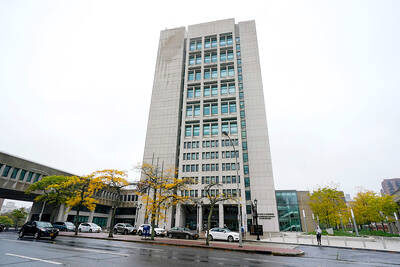
A coalition of civil rights groups on Tuesday asked a New York State judge to order one of its largest suburban counties to stop its deployment of nearly 600 license plate readers, calling it a warrantless and “indiscriminate surveillance system” that violates the state constitution. The class action lawsuit also alleged that Westchester County never got proper authorization to launch the program, which has amassed a database of 1.6 billion plate scans that has been shared with more than 50 outside law enforcement agencies. The complaint said the network “records the long-term travel patterns, daily habits, and intimate information of millions of
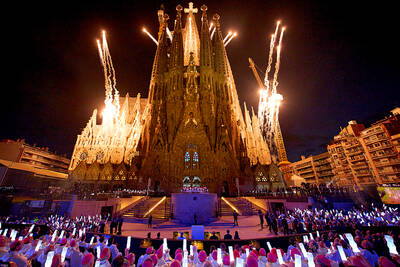
Pope Leo XIV on Wednesday blessed a giant new tower at Barcelona’s famed Sagrada Familia Basilica after celebrating mass inside what is now the world’s tallest church. A fireworks and light show illuminated the exterior of the temple at the end of the ceremony, bathing the unfinished basilica in shifting colours that highlighted its towering spires. A choir of 600 singers performed at the service which lasted around 90 minutes and was attended by Spanish Prime Minister Pedro Sanchez as well as King Felipe VI and Queen Letizia. The stained-glass windows in various colours shone brightly in between the tree-like

Voters in Switzerland yesterday cast their ballots on an initiative championed by the top right-wing party to cap the Alpine country’s population at 10 million. As of press time last night, early results showed that Swiss voters were leaning against it. The populist Swiss People’s Party, which has the most seats in parliament, has stirred up and fostered anti-migration sentiment over the years, notably about an influx of workers from the neighboring EU. Critics called the bid a self-inflicted wound, saying the boom in migration over the past generation has brought foreign labor and skills to sectors such as healthcare, finance, pharmaceuticals
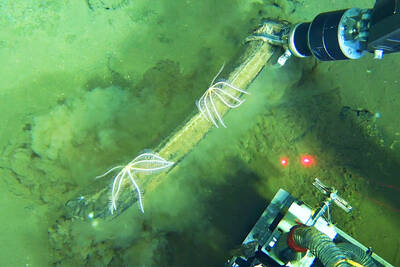
Scientists have discovered communities of marine life — including jellyfish, tubeworms and brittle stars — thriving on a whale graveyard. The graveyards form when whale carcasses fall to the sea floor, becoming a sustaining snack for nearby critters. This one, which is up to 7km below the surface of the southeastern Indian Ocean, spans the largest area, and is so far the deepest found. A whale’s sheer size and the unique chemistry of its bones are the keys to forming these unique underwater neighborhoods, said Song Xikun (宋希坤), a biologist with the Chinese Academy of Sciences’ Institute of Deep-sea Science and Engineering


 RSS
RSS