


Tunisians yesterday voted in their first local elections since the 2011 Arab Spring revolution, a crucial step toward consolidating the country’s exceptional democracy.
The North African nation’s 5.3 million voters had more than 2,000 candidate lists to choose from in the vote for city and town councils across the country.
The councils are being given greater powers in an effort to decentralize decisionmaking and boost long-marginalized inland regions.
The elections are breaking new ground on multiple levels.
Women make up 49 percent of the candidates, in part thanks to legal measures passed in the past few years to encourage equality.
One of the leading candidates is pharmacist Souad Abderrahim, running to become the first female mayor of the capital, Tunis.
In the Mediterranean resort town of Monastir, Jewish sewing machine repairman Simon Slama is running with the Muslim party Ennahda.
Meanwhile, nearly half of the candidates are independents and many are totally new to politics.
“These elections are a historic step ... they will bring participatory democracy to a local level, where daily problems are managed and where citizens can really make their voices heard,” said the head of the EU’s observer mission, Fabio Massimo Castaldo.
Observers said the independent candidates could perform well, riding on disillusionment that the leading parties have not fulfilled the promises of the 2011 revolution, when Tunisian protesters overthrew their long-time strongman and unleashed uprisings around the Arab world.
Ennahda, considered the best-organized party, was running lists in every constituency and expected to come out with the most winners.
It was followed by the secular Nida Tounes party of Tunisian President Beji Caid Essebsi, which runs the central government in a coalition with Ennahda.
A big question was turnout. Apathy is widespread, despite anger at the country’s 15 percent unemployment and 7 percent inflation.
It is an especially big problem for Tunisia’s youth, who drove the 2011 uprising, but have not seen their opportunities improve in the years since.
The president issued a last-minute appeal to Tunisians to take advantage of their freedom to vote — exceptional in a region marked by authoritarian leaders or Libya’s violent, lawless chaos.
“We must send the world a message, to say that our choice for democracy is the best,” he said.

A ship that appears to be taking on the identity of a scrapped gas carrier exited the Strait of Hormuz on Friday, showing how strategies to get through the waterway are evolving as the Middle East war progresses. The vessel identifying as liquefied natural gas (LNG) carrier Jamal left the Strait on Friday morning, ship-tracking data show. However, the same tanker was also recorded as having beached at an Indian demolition yard in October last year, where it is being broken up, according to market participants and port agent’s reports. The ship claiming to be Jamal is likely a zombie vessel that

Cannabis-based medicines have shown little evidence of effectiveness for treating most mental health and substance-use disorders, according to a large review of past studies published in a major medical journal on Monday. Medical use of cannabinoids has been expanding, including in the US, Canada and Australia, where many patients report using cannabis products to manage conditions such as anxiety, post-traumatic stress disorder and sleep problems. Researchers reviewed data from 54 randomized clinical trials conducted between 1980 and May last year involving 2,477 participants for their analysis published in The Lancet. The studies assessed cannabinoids as a primary treatment for mental disorders or substance-use
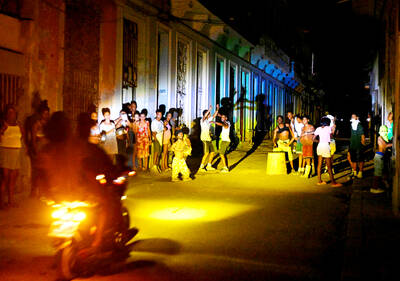
NATIONWIDE BLACKOUT: US President Donald Trump cut off Venezuelan oil shipments to Cuba, strangling the Caribbean island’s already antiquated grid Cuba’s national electric grid collapsed on Monday, the nation’s grid operator said, leaving about 10 million people without power amid a US-imposed oil blockade that has crippled the already obsolete generation system. Grid operator UNE on social media said that it is investigating the causes of the blackout, the latest in a series of widespread outages that last for hours or days and that this weekend sparked a rare violent protest in the communist-run nation. Officials ruled out a major power plant failure, but had still not pinpointed the root cause of the grid collapse, suggesting a problem with transmission. Officials said that
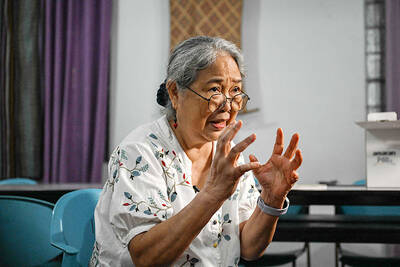
‘HEALTH ISSUE’: More than 250 women are hospitalized every day due to complications from unsafe abortions, and about three die, a study showed Jane had been bleeding heavily for days before finally seeking help, not from a hospital, but from the man who sold her the pills meant to end her six-week pregnancy. Abortions are strictly outlawed in the mainly Catholic Philippines, forcing women to turn to a patchwork of providers operating in the online shadows. While rare in practice, Philippine law allows for prison terms of up to six years for abortion patients and providers, leaving thousands of Filipinas to search for solutions in online forums where unlicensed sellers promote abortifacients. “It was very painful, as if my abdomen was being twisted,” said Jane, whose


 RSS
RSS