


Terrorists and extremists are creating growing numbers of safe havens on the “dark net” to plot future attacks, raise funds and recruit new followers, new research reveals.
Terrorist organizations and individuals are evading security services and intelligence agencies by “hiding in the shadows” of the darknet, using encrypted messaging services, to communicate and anonymous cryptocurrencies such as bitcoin to generate funds.
Researchers for the Henry Jackson Society, a foreign policy think tank in London, said in Terror in The Dark: How Terrorists Use Encryption, the Darknet and Cryptocurrencies that groups have also been able to create a reservoir of extremist propaganda, saving it from deletion by the security services or tech companies.
Following the five terror attacks last year on British soil, the UK government has dedicated more time and funds to tackling online extremism, yet the report argues that more attention should be paid to the dark net because extremists are still able to operate unchallenged on the anarchic platform.
Researchers said that the current encrypted communication app of choice is Telegram, which the Islamic State group has encouraged members to use, with messages including explanations on how to access new dark net sites linked to the group.
In November last year, an al-Qaeda-linked organization called al-Sadaqah used a public channel on Telegram to campaign for bitcoin funding.
The report’s author, Nikita Malik, director of the Centre for the Response to Radicalisation and Terrorism at the Henry Jackson Society, said: “We have denied Islamic State territory in the real world, but it has a whole new safe haven in cyberspace which we need first to understand and then to close down.”
“The authorities must move urgently to increase their knowledge of terrorists’ activities in cyberspace and their use of technologies such as bitcoin. Regulation in this area has to move carefully if we are to balance liberties with guarding against threats to our security — but the time has come to deny extremists the space they need online to plan fresh atrocities,” she said.
Malik identified numerous sites on the dark net that explain how to make TATP — triacetone triperoxide — which can be made from household chemicals and was used in the militant attacks in Paris in November 2015, Brussels in March 2016, Manchester in May last year and Parsons Green, London, in September last year.
One study last year found that of 811 arms-related listings on 24 darknet cryptomarkets, 208 were e-books with instructions for the manufacture of explosives or firearms at home.
A preliminary search on the dark net on Jan. 18 by Malik found 1,101 results for instructional material related to “security,” including guides on drugs, fraud, hacking and firearms.
The Anarchist Cookbook, which contains bombmaking instructions, was available for sale for 0.0003 bitcoin — about £1.45 (US$2.04).
Other focal points for discussion on darknet forums included “how to make bombs, plan lone-actor terrorist attacks … how to use vehicles as weapons, where to stab people for maximum effect, and how to create a fake suicide vest or mask their activity, with the aim of convincing potential recruits to undertake their own attacks.”
“While the first decade of the century was defined by the battle against jihadist ‘safe havens’ — physically located in Afghanistan, northwest Pakistan, Yemen and so on — this report draws attention to the possible rise of ‘virtual safe havens’: encrypted communication channels, hidden portions of the internet, cryptocurrency accounts that are not registered with any banks and more,” said Lord Trimble, a member of Parliament’s Joint Committee on the National Security Strategy and a former first minister of Northern Ireland.
Labour’s shadow spokesperson for digital, culture, media and sport, Lord Griffiths of Burry Port, said: “This is a deeply disturbing report, illustrating how extremist content and instructional terrorist material, as well as funding campaigns to raise money for terrorist groups, can be found on the Internet — with varying degrees of accessibility.”
The report’s recommendations include a newIinternet regulatory body with the role of scrutinizing tech companies’ efforts to remove extremist content, along with extra resources for the Joint Terrorism Analysis Centre to accrue darknet intelligence.
It also advocates that social media firms should ensure extremist material is not lost when it is deleted, but is archived to help develop a better understanding of extremists’ online behavior.
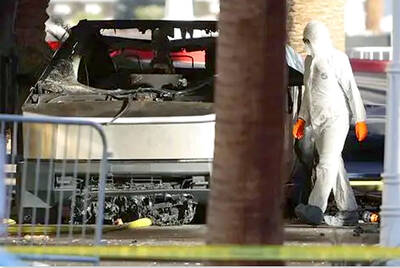
ACTIONABLE ADVICE: The majority of chatbots tested provided guidance on weapons, tactics and target selections, with Perplexity and Meta AI deemed to be the least safe From school shootings to synagogue bombings, leading artificial intelligence (AI) chatbots helped researchers plot violent attacks, according to a study published on Wednesday that highlighted the technology’s potential for real-world harm. Researchers from the nonprofit watchdog Center for Countering Digital Hate and CNN posed as 13-year-old boys in the US and Ireland to test 10 chatbots, including ChatGPT, Google Gemini, Perplexity, Deepseek and Meta AI. Eight of the chatbots assisted the make-believe attackers in more than half the responses, providing advice on “locations to target” and “weapons to use” in an attack, the study said. The chatbots had become a “powerful accelerant for

Australians were downloading virtual private networks (VPNs) in droves, while one of the world’s largest porn distributors said it was blocking users from its platforms as the country yesterday rolled out sweeping online age restriction. Australia in December became the first country to impose a nationwide ban on teenagers using social media. A separate law now requires artificial intelligence (AI)-powered chatbot services to keep certain content — including pornography, extreme violence and self-harm and eating disorder material — from minors or face fines of up to A$49.5 million (US$34.6 million). The country also joined Britain, France and dozens of US states requiring
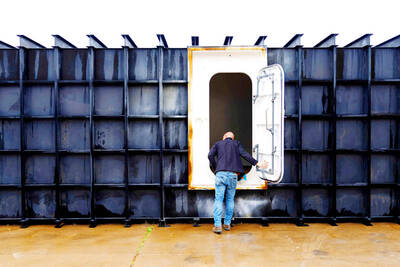
Since the war in the Middle East began nearly two weeks ago, the telephone at Ron Hubbard’s bomb shelter company in Texas has not stopped ringing. Foreign and US clients are rushing to buy his bunkers, seeking refuge in case of air raids, nuclear fallout or apocalypse. With the US and Israel pounding Iran, and Tehran retaliating with strikes across the region, Hubbard has seen demand for his product soar, mostly from Gulf nation customers in Bahrain, Qatar, Kuwait and the United Arab Emirates. “You can imagine how many people are thinking: ‘I wish I had a bomb shelter,’” Hubbard, 63, said in
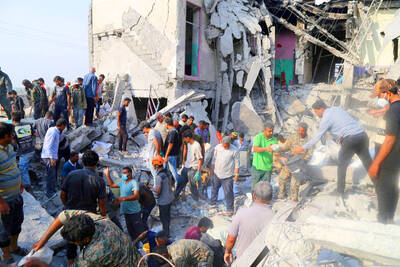
STILL IN POWER: US intelligence reports showed that the Iranian regime is not in danger of collapse and retains control of the public, casting doubt on Trump’s exit Nearly every US Senate Democrat on Wednesday signed a letter sent to US Secretary of Defense Pete Hegseth requesting a “swift investigation” of airstrikes on a girls’ school in Iran that killed scores of children and any other potential US military actions causing civilian harm. Reuters reported on Thursday last week that US military investigators believe it is likely that US forces were responsible for the Feb. 28 strike on the school, as US and Israeli forces launched attacks on Iran. “The results of this school attack are horrific. The majority of those killed in the strikes were girls between the ages


 RSS
RSS