


Austria on Tuesday arrested one of Ukraine’s richest men, a fresh twist for the one-time ally of former Ukrainian president Viktor Yanukovych.
Gas magnate Dmytro Firtash was taken into custody over alleged links to organized crime in Spain, moments after a Vienna court ruled that he could be extradited to the US on corruption charges.
Firtash, 51, made money through connections with Russian gas giant Gazprom.
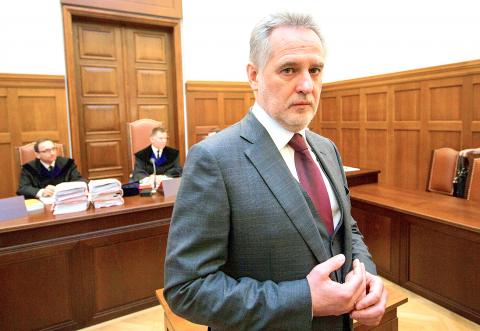
Photo: AFP
He is wanted in the US over charges that he and five others paid US$18.5 million in bribes to officials in India to secure titanium mining licenses in 2006.
The US says it has jurisdiction, because the conspiracy involved using US financial institutions, travel to and from the US, and use of US-based communications — computers, telephones, and the Internet.
RECORD BAIL
Firtash was arrested in Vienna in March 2014, but released on a record bail of 125 million euros (US$130 million at the current exchange rate).
He has denied all charges and maintained he was the target of a smear campaign.
His legal team said that he was caught up in a larger battle over the future of Ukraine, where the government has been engaged in bloody fighting with Russian-backed separatists since 2014.
Authorities in Barcelona issued a European arrest warrant in November last year, with media reports saying Firtash was accused of belonging to a criminal organization that had laundered 10 million euros in Spain.
However, when the warrant was issued, the tycoon was already under house arrest in Austria over the US allegations.
A lower court in Vienna sided with the tycoon in April 2015 and rejected the US request.
However, the appeals court on Tuesday said that the US had provided “sufficient” proof that Firtash “may have committed the crimes he is accused of.”
The prosecutor’s office refused to comment on the Spanish case or how Firtash’s arrest would affect the extradition ruling.
Austrian Minister of Justice Wolfgang Brandstetter told broadcaster ORF that the extradition would not be implemented until a court had reviewed the Spanish case.
Firtash owns Group DF, a business empire involved in energy, chemicals, media, banking and property in Ukraine and other countries including Germany, Italy and Austria.
He made his fortune importing gas to Ukraine from Russia and central Asia via his group Rosukrenergo, since disbanded, in collaboration with Russian gas giant Gazprom.
Having backed the 2010 election campaign of Yanukovych, Firtash was able to expand his business interests, acquiring chemicals and fertilizer factories, as well as television channel Inter.
The Russian-backed Yanukovych was ousted in protests in February 2014.
Firtash was arrested in Austria soon afterward.
PUTIN ALLY
Observers say US authorities want to detain Firtash because he holds information on close allies of Russian President Vladimir Putin.
“The case against Firtash in the United States will not be limited only to the bribery allegations in India,” said Ukrainian member of parliament Sergiy Leshchenko, a former journalist who has investigated Firtash’s case. “He is very valuable not only as a defendant, but as witness too.”
Although Tuesday’s ruling cannot be appealed, the final extradition decision lies with the justice minister.
Firtash’s lawyer criticized the extradition ruling, saying “appropriate steps” would be taken to overturn it.
“Mr Firtash categorically rejects all allegations and maintains that this all relates to US political persecution,” Dieter Bohmdorfer said in a statement. “We remain confident that Mr Firtash’s innocence will be proven.”
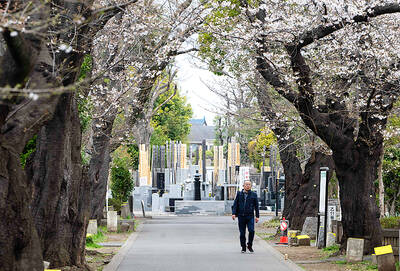
ROCKY RELATIONS: The figures on residents come as Chinese tourist numbers drop following Beijing’s warnings to avoid traveling to Japan The number of Chinese residents in Japan has continued to rise, even as ties between the two countries have become increasingly fractious, data released on Friday showed. As of the end of December last year, the number of Chinese residents had increased by 6.5 percent from the previous year to 930,428. Chinese people accounted for 22.6 percent of all foreign residents in Japan, making them by far the largest group, Japanese Ministry of Justice data showed. Beijing has criticized Tokyo in increasingly strident terms since Japanese Prime Minister Sanae Takaichi last year suggested that a military conflict around Taiwan could
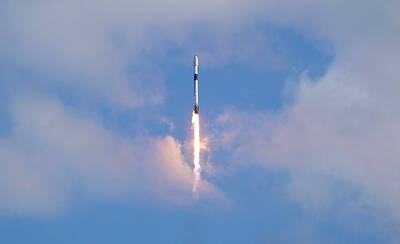
A retired US colonel behind a privately financed rocket launch site in the Dominican Republic sees the project as a response to China’s dominance of the space race in Latin America. Florida-based Launch on Demand is slated to begin building a US$600 million facility in a remote region near the border with Haiti late this year. The project is designed to meet surging demand for the heavy-lift rockets needed to put clusters of satellites into orbit. It is also an answer to China’s growing presence in the region, said CEO Burton Catledge, a former commander of the US Air Force’s 45th Operations

Germany is considering Australia’s Ghost Bat robot fighter as it looks to select a combat drone to modernize its air force, German Minister of Defense Boris Pistorius said yesterday. Germany has said it wants to field hundreds of uncrewed fighter jets by 2029, and would make a decision soon as it considers a range of German, European and US projects developing so-called “collaborative combat aircraft.” Australia has said it will integrate the Ghost Bat, jointly developed by Boeing Australia and the Royal Australian Air Force, into its military after a successful weapons test last year. After inspecting the Ghost Bat in Queensland yesterday,
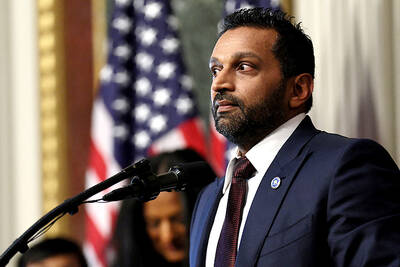
A pro-Iran hacking group claimed to breach FBI Director Kash Patel’s personal e-mail inbox and posted some of the contents online. The e-mails provided by the hacking group include travel details, correspondence with leasing agents in Washington and global entry, and loyalty account numbers. The e-mail address the hackers claim to have compromised has been previously tied to Patel’s personal details, and the leaked e-mails contain photos of Patel and others, in addition to correspondence with family members and colleagues. “The FBI is aware of malicious actors targeting Director Patel’s personal email information,” the agency said in a statement on


 RSS
RSS