


Most of the people infected with Ebola in the West Africa epidemic that began in 2014 got sick through contact with a small number of “superspreaders” with the disease, researchers said on Monday.
The study in the Proceedings of the National Academy of Sciences shows such “superspreaders” can be extremely dangerous when it comes to infectious disease outbreaks.
The West African Ebola epidemic was the largest in history and killed more than 11,300 people, with many of the cases involving people infected while caring for a sick person or burying a body.
“We now see the role of superspreaders as larger than initially suspected,” said coauthor Benjamin Dalziel, an assistant professor of population biology in the College of Science at Oregon State University. “It was the cases you didn’t see that really drove the epidemic, particularly people who died at home, without making it to a care center.”
At the time, researchers counted cases according to those seen in medical centers, but they later realized these were a small fraction of the total.
“There wasn’t a lot of transmission once people reached hospitals and care centers,” Dalziel said.
“In our analysis we were able to see a web of transmission that would often track back to a community-based superspreader,” he said.
Researchers said 61 percent of those infected with the disease caught it from people accounting for just 3 percent of those who got sick.
The study included researchers from Princeton University, Oregon State University, the London School of Hygiene and Tropical Medicine, the International Federation of Red Cross and Red Crescent Societies, the Imperial College London and the US National Institutes of Health.
If superspreading had been completely under control about two-thirds of Ebola cases could have been avoided, the report said.
Superspreaders have also played a role in the epidemic of severe acute respiratory syndrome, or SARS, in 2003 and Middle East respiratory syndrome in 2012.
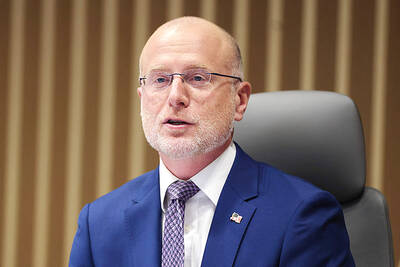
FAKE NEWS? ‘When the government demands the press become a state mouthpiece under the threat of punishment, something has gone very wrong,’ a civic group said The top US broadcast regulator on Saturday threatened media outlets over negative coverage of the Middle East war, after US President Donald Trump slammed critical headlines from the “Fake News Media.” The US president since his first term has derided mainstream media as “fake news” and has sued major outlets over what he sees as unfair coverage. Brendan Carr, head of the US Federal Communications Commission — which oversees the nation’s radio, television and Internet media — said broadcasters risked losing their licenses over news coverage. “The law is clear. Broadcasters must operate in the public interest, and they will
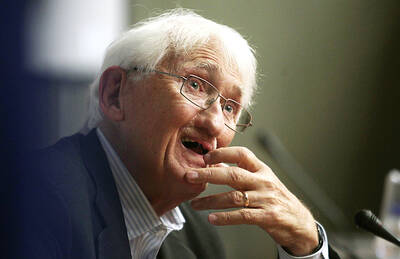
INFLUTENTIAL THEORIST: Habermas was particularly critical of the ‘limited interest’ shown by German politicians in ‘shaping a politically effective Europe Jurgen Habermas, whose work on communication, rationality and sociology made him one of the world’s most influential philosophers and a key intellectual figure in his native Germany, has died. He was 96. Habermas’ publisher, Suhrkamp, said he died on Saturday in Starnberg, near Munich. Habermas frequently weighed in on political matters over several decades. His extensive writing crossed the boundaries of academic and philosophical disciplines, providing a vision of modern society and social interaction. His best-known works included the two-volume Theory of Communicative Action. Habermas, who was 15 at the time of Nazi Germany’s defeat, later recalled the dawn of

The Chinese public maintains relatively warm sentiments toward Taiwan and strongly prefers non-military paths to improving cross-strait relations, a recent survey conducted by the Atlanta, Georgia-based Carter Center and Emory University showed. The “China Pulse” research project, which polled 2,506 adults between Oct. 27 last year and Jan. 1 this year, found that 86 percent of respondents support strengthening cultural ties, while 81 percent favor deepening economic interaction. The report, co-authored by political scientists at Emory University and advisors at the Carter Center, indicates that the Chinese public views Taiwan’s importance through a lens of shared history and culture rather than geopolitical

Cannabis-based medicines have shown little evidence of effectiveness for treating most mental health and substance-use disorders, according to a large review of past studies published in a major medical journal on Monday. Medical use of cannabinoids has been expanding, including in the US, Canada and Australia, where many patients report using cannabis products to manage conditions such as anxiety, post-traumatic stress disorder and sleep problems. Researchers reviewed data from 54 randomized clinical trials conducted between 1980 and May last year involving 2,477 participants for their analysis published in The Lancet. The studies assessed cannabinoids as a primary treatment for mental disorders or substance-use


 RSS
RSS