


The so-called “Ferguson effect” — officers backing off of policing out of fear that their actions will be questioned after the fact — has been talked about, but never really quantified. A new study suggests the effect is a reality, with three-quarters of officers surveyed saying they are hesitant to use force, even when appropriate, and are less willing to stop and question suspicious people.
The nonpartisan Pew Research Center questioned at least 8,000 officers from police departments with at least 100 officers between May 19 and Aug. 14 last year — most of it ahead of the fatal shootings of five officers in Dallas and three officers in Baton Rouge, Louisiana.
What it found was a significant fear among police about their safety and about carrying out some of the everyday acts of policing.
It also shows a stark difference in how white and black officers view the protests that have taken place after some of the high-profile shootings of black suspects in the past several years, with black officers believing the protests are genuine acts of civil disobedience designed to hold police accountable, while white officers are more skeptical of the protesters’ motives.
“White officers and black officers have very different views about where we are as a country in terms of achieving equal rights,” said Kim Parker, director of social trends research for the center.
Some of the key findings included: 86 percent of officers said that fatal encounters between blacks and police have made policing more difficult; 93 percent said they were more concerned about safety; 76 percent said they were more reluctant to use force when appropriate; 75 percent said interactions between police and blacks have become more tense; and 72 percent said they or their colleagues are more reluctant to stop and question people who seem suspicious.
In 2014, a white officer in Ferguson, Missouri, shot and killed black teen Michael Brown, setting off a movement drawing greater scrutiny of police use of force, particularly against black citizens. In the years since, other fatal encounters with police in cities such as Baltimore, Baton Rouge, Chicago, New York and Milwaukee have put officers under the microscope, especially as video has captured more of these events.
There has been a concern, largely shared in anecdotes, of officers holding back on stopping suspicious people or other policing out of concern that they would be cast as racist.
However, the Pew survey provides the first national evidence that those concerns might be having a real impact on how officers do their jobs.
“Officers are concerned about being the next viral video and so that influences what they do and how they do it, and how they think about it,” said Darrel Stephens, executive director of the Major Cities Chiefs Association.
He added that he does not believe it is rampant or that officers are turning a blind eye, “but I still have to believe it may be in a marginal call situation where there’s a reasonable suspicion on the bubble ... that those are the ones they pass up.”
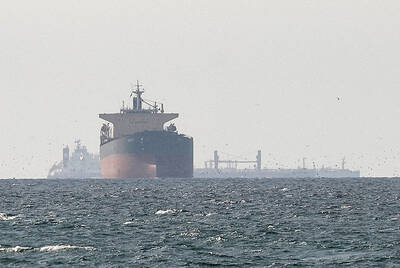
A ship that appears to be taking on the identity of a scrapped gas carrier exited the Strait of Hormuz on Friday, showing how strategies to get through the waterway are evolving as the Middle East war progresses. The vessel identifying as liquefied natural gas (LNG) carrier Jamal left the Strait on Friday morning, ship-tracking data show. However, the same tanker was also recorded as having beached at an Indian demolition yard in October last year, where it is being broken up, according to market participants and port agent’s reports. The ship claiming to be Jamal is likely a zombie vessel that
Japan is to downgrade its description of ties with China from “one of its most important” in an annual diplomatic report, according to a draft reviewed by Reuters, as relations with Beijing worsen. This year’s Diplomatic Bluebook, which Japanese Prime Minister Sanae Takaichi’s government is expected to approve next month, would instead describe China as an important neighbor and the relationship as “strategic” and “mutually beneficial.” The draft cites a series of confrontations with Beijing over the past year, including export controls on rare earths, radar lock-ons targeting Japanese military aircraft and increased pressure around Taiwan. The shift in tone underscores a deterioration

LAW CONSTRAINTS: The US has been pressing allies to send warships to open the Strait, but Tokyo’s military actions are limited under its postwar pacifist constitution Japan could consider deploying its military for minesweeping in the Strait of Hormuz if a ceasefire is reached in the war on Iran, Japanese Minister of Foreign Affairs Toshimitsu Motegi said yesterday. “If there were to be a complete ceasefire, hypothetically speaking, then things like minesweeping could come up,” Motegi said. “This is purely hypothetical, but if a ceasefire were established and naval mines were creating an obstacle, then I think that would be something to consider.” Japan’s military actions are limited under its postwar pacifist constitution, but 2015 security legislation allows Tokyo to use its Self-Defense Forces overseas if an attack,

German Chancellor Friedrich Merz’s conservative Christian Democratic Union (CDU) yesterday faced a regional election battle in Rhineland-Palatinate, now held by the center-left Social Democratic Party (SPD). Merz’s CDU has enjoyed a narrow poll lead over the SPD — their coalition partners at the national level — who have ruled the mid-sized state for 35 years. Polling third is the far-right Alternative for Germany (AfD), which spells a greater threat to the two centrist parties in several state elections in September in the country’s ex-communist east. The picturesque state of Rhineland-Palatinate, bordering France, Belgium and Luxembourg and with a population of about 4 million,


 RSS
RSS