


In an unexpected reversal, US President Barack Obama declined to sign a renewal of sanctions against Iran, but let it become law anyway, in an apparent bid to alleviate Tehran’s concerns that the US is backsliding on the nuclear deal.
Although the White House had said that Obama was expected to sign the 10-year-renewal, the midnight deadline came and went yesterday with no approval from the US president. White House press secretary Josh Earnest said Obama had decided to let it become law without his signature.
“The administration has, and continues to use, all of the necessary authorities to waive the relevant sanctions” lifted as part of the nuclear deal, Earnest said in a statement.
Under the US constitution, the president has 10 days after Congress passes a bill to sign it, veto it or let it become law with no signature if Congress is still in session. Although lawmakers have returned home for the holidays, Congress technically has not adjourned and is holding “pro-forma” sessions this week.
Though Obama’s move does not prevent the sanctions renewal from entering force, it marked a symbolic attempt by the president to demonstrate disapproval for lawmakers’ actions. The White House has argued that the renewal is unnecessary because the administration retains other authorities to punish Iran, if necessary, and has expressed concern that the renewal may undermine the nuclear deal.
Iranian President Hassan Rouhani had vowed to respond if the sanctions were renewed, arguing they violate the nuclear deal between Iran and world powers, which eased sanctions in exchange for curbs on Iran’s nuclear program. On Tuesday, Rouhani ordered up plans to build nuclear-powered ships and to formally accuse the US of violating the terms of the deal.
The Obama administration said that Iran would be unaffected by the renewal, as long as it continues honoring the nuclear deal.
US Secretary of State John Kerry said he had told his Iranian counterpart that “to ensure maximum clarity,” he would issued new, redundant waivers exempting Iran from sanctions lifted under the deal.
“Extension of the Iran Sanctions Act does not affect in any way the scope of the sanctions relief Iran is receiving under the deal or the ability of companies to do business in Iran consistent with the JCPOA,” Kerry said, using an acronym for the nuclear deal.
US president-elect Donald Trump has been sharply critical of the nuclear deal and has threatened to try to renegotiate it, but has been vague about whether he would pull the US out of it.
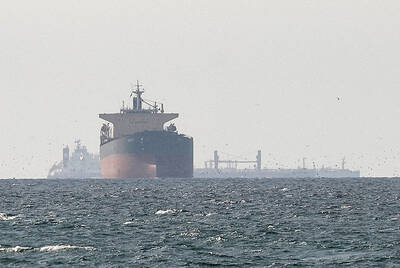
A ship that appears to be taking on the identity of a scrapped gas carrier exited the Strait of Hormuz on Friday, showing how strategies to get through the waterway are evolving as the Middle East war progresses. The vessel identifying as liquefied natural gas (LNG) carrier Jamal left the Strait on Friday morning, ship-tracking data show. However, the same tanker was also recorded as having beached at an Indian demolition yard in October last year, where it is being broken up, according to market participants and port agent’s reports. The ship claiming to be Jamal is likely a zombie vessel that
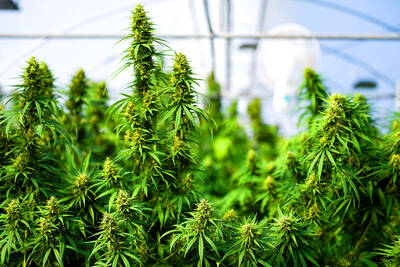
Cannabis-based medicines have shown little evidence of effectiveness for treating most mental health and substance-use disorders, according to a large review of past studies published in a major medical journal on Monday. Medical use of cannabinoids has been expanding, including in the US, Canada and Australia, where many patients report using cannabis products to manage conditions such as anxiety, post-traumatic stress disorder and sleep problems. Researchers reviewed data from 54 randomized clinical trials conducted between 1980 and May last year involving 2,477 participants for their analysis published in The Lancet. The studies assessed cannabinoids as a primary treatment for mental disorders or substance-use
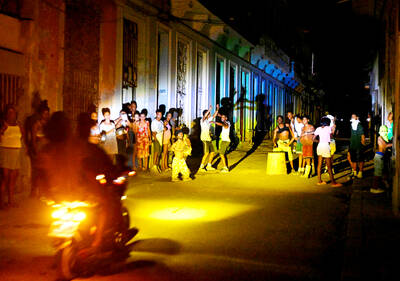
NATIONWIDE BLACKOUT: US President Donald Trump cut off Venezuelan oil shipments to Cuba, strangling the Caribbean island’s already antiquated grid Cuba’s national electric grid collapsed on Monday, the nation’s grid operator said, leaving about 10 million people without power amid a US-imposed oil blockade that has crippled the already obsolete generation system. Grid operator UNE on social media said that it is investigating the causes of the blackout, the latest in a series of widespread outages that last for hours or days and that this weekend sparked a rare violent protest in the communist-run nation. Officials ruled out a major power plant failure, but had still not pinpointed the root cause of the grid collapse, suggesting a problem with transmission. Officials said that
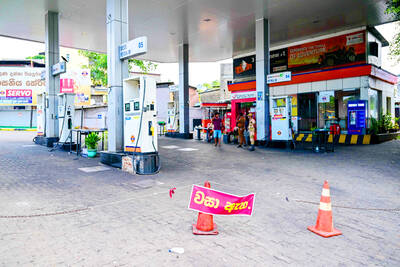
CONSERVING FUEL: State institutions are to operate only four days a week starting tomorrow, with the measures also applying to schools and universities Sri Lanka on Monday announced a shorter working week to conserve its scarce fuel reserves as it prepares for a prolonged war in the Middle East. The Strait of Hormuz, a key waterway through which about 20 percent of global exports pass in peacetime, has been effectively closed by Iran in retaliation over the US and Israeli war against it, now in its third week. Sri Lankan Commissioner-General of Essential Services Prabath Chandrakeerthi said state institutions would operate only four days a week starting tomorrow. The new austerity measures would also apply to schools and universities, and would remain in place indefinitely. “We are


 RSS
RSS