


Philippine President Rodrigo Duterte, who has led a bloody war on drug suspects, yesterday named more than 30 politicians, officials and judges whom he linked to narcotics and warned them to surrender.
Police and shadowy vigilantes have been blamed for killing more than 800 drug suspects since Duterte’s election on May 9.
“Due process has nothing to do with my mouth. There are no proceedings here, no lawyers,” Duterte said in a pre-dawn speech just before he began naming the suspects.
He listed seven judges and more than 25 current or former members of the Philippine Congress, mayors and other local officials whom he alleged were involved in illegal drugs.
Duterte ordered their security escorts withdrawn and canceled their firearms permits, adding that they would face sanctions.
“If you show the slightest violence in the resistance, I will tell the police: ‘Shoot them,’” he told reporters and soldiers in the southern city of Davao.
Duterte, who has gained widespread domestic popularity for his outspokenness, conceded “I might be wrong” about the guilt of those he named.
He said the military and police had compiled the list, which he insisted was not colored by politics or personal links, adding that some of those named were even his friends.
Duterte’s spokesman, Martin Andanar, later said that criminal cases would be filed against those named.
“The president is encouraging all of the persons of interest, the alleged drug lords and drug coddlers to come out in the open, to surrender themselves and submit themselves to thorough investigation,” he told reporters.
Some of those named have since come out on radio and TV and denied their guilt.
Duterte won election by vowing to wage a war on illegal drugs and other crime that would claim tens of thousands of lives.
He has ordered police not to hesitate to kill and even urged ordinary citizens and communist guerrillas to join in the bloodshed.
The country’s largest broadcaster, ABS-CBN, has listed 852 drug suspects killed since Duterte’s election.
In his speech, Duterte scoffed at human rights groups opposed to the killings, saying they were free to protest.
“I do not care,” he said.
However, the head of the influential Catholic Bishops’ Conference of the Philippines made an emotional appeal to the public to denounce the wave of drug killings.
“I am a human being. That is all it takes for me to stand up and say: ‘Enough,’” Archbishop Socrates Villegas said in a message read at all Catholic Masses in his archdiocese, 160km north of Manila.
He said the largely Catholic Philippines was becoming a “killing fields nation” for tolerating the violence.
Despite criticism from foreign and local human rights organizations, as well as UN Secretary-General Ban Ki-moon, surveys have shown Duterte enjoys wide public support.
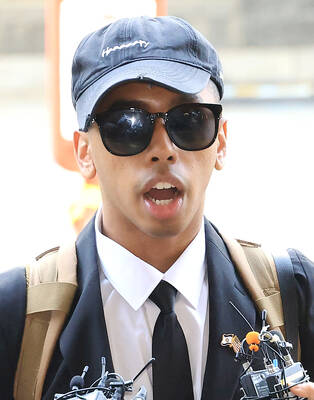
A US YouTuber who caused outrage for filming himself kissing a statue commemorating Korean wartime sex slaves has been sentenced to six months in prison, a court in Seoul said yesterday. Johnny Somali, 25, gained notoriety several years ago for recording himself doing a series of provocative stunts in South Korea and Japan, and streaming them on platforms such as YouTube and Twitch. South Korean authorities indicted Somali — whose real name is Ramsey Khalid Ismael — in 2024 on public order violations and obstruction of business, and banned him from leaving the country. “The court has sentenced him to six months in
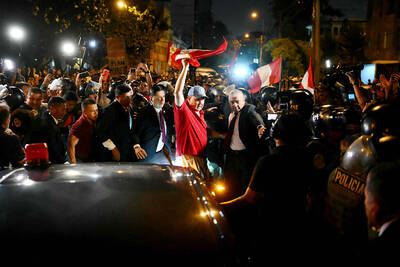
Former Lima mayor Rafael Lopez Aliaga, a Peruvian presidential hopeful, gathered hundreds of supporters in Lima on Tuesday and gave authorities 24 hours to annul the first round of the country’s election over allegations of fraud. Lopez Aliaga is locked in a tight three-way race with two other candidates for second place in Sunday’s vote. The election runner-up wins a ticket to June’s presidential run-off against front-runner Keiko Fujimori. “I am giving them 24 hours to declare this electoral fraud null and void,” said Lopez Aliaga, surrounded by a crowd of several hundred supporters. “If it is not declared null and void tomorrow,
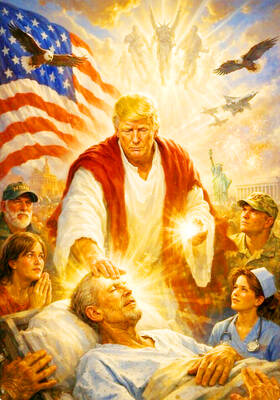
PAPAL RETORT: Pope Leo told reporters that he has ‘no fear, neither of the Trump administration nor speaking out loudly about the message of the Gospel’ US President Donald Trump has feuded with Pope Leo XIV over the Iran conflict — setting off an unholy row that could have serious political implications for the Republican leader back in the US. Trump has drawn barbs even from some allies over the attacks on the US-born pontiff, who has criticized the Trump administration over its immigration crackdown, the intervention in Venezuela and the Iran war. The president risks alienating the religious right in November’s crucial US midterm elections. So far the unprecedented clash between the leader of the most powerful military on Earth and the head of the world’s 1.4 billion

A 16-year-old boy has been charged with murder and aggravated sexual abuse in Florida in the death of his 18-year-old stepsister on a Carnival Cruise ship, the US Department of Justice said on Monday. Timothy Hudson was initially charged in February and subsequently indicted on March 10, but the breadth of the case was not known until a seal was lifted on Friday last week, weeks after US District Judge Beth Bloom in Miami said that he would be prosecuted as an adult at the request of the government. Anna Kepner had been traveling on the Carnival Horizon ship in November last


 RSS
RSS