


Lying in hospital with bloodied bandages over the deep gashes in his legs, Senegalese fisherman Ali Fall recalls the moment a hippopotamus tried to kill him as he hauled in nets in a local river.
“I came with another fisherman to pick up the nets I had left when the hippopotamus upended our boat. My friend got away but it bit into my left leg, then my right,” the 25-year-old said.
The waters of Gouloumbou in eastern Senegal, a tributary of the Gambia River and the village where Fall lives, have often run red with the blood of his peers.

Photo: AFP
In the past decade, 25 fishermen have been mauled to death in the giant jaws of these easy to provoke mammals and many more injured, village officials said.
“It’s the second time I’ve been attacked, after their first attempt in 2014. I’ve cheated death twice,” said Fall from his hospital bed in the nearby city of Tambacounda.
In Gouloumbou, which is 500km east of the Dakar, village chief Abdoulaye Barro Watt looks out of the windows of his office, next to the river where locals continue to risk death with few other options for a livelihood in this rural area.
“They were all fisherman hoping to make a living for their families,” he said. “These men are struggling to survive due to these attacks. I have written so many letters to the authorities, even the fisheries minister, to make them aware of the problem.”
Gouloumbou villagers and the hippopotamuses once lived together in relative safety, the chief said.
“We used to play with them in the river. They were harmless,” he said.
That has all changed, said fisherman Abdoulaye Sarr, sitting with a friend, Moussa Bocar Gueye.
“They are evil monsters who attack us night and day. Because of them, we haven’t been fishing.” Both men are from the Thiouballo ethnic group which has long made its living from fishing but neither will be launching their pirogue, or traditional wooden boat, onto the river today.
“It’s three weeks since we last went fishing,” Gueye said. “There aren’t any more fish at the market.”
Hippopotamuses, vegetarians that live in or near swamps and rivers, can weigh up to 1,500kg and spend long hours in water to protect their skin from the sun.
Easily irritated and with terrifying strength, the mammals kill more humans each year than almost any other animal in Africa because of their volatile nature, according to wildlife experts.
Senegal lists the hippopotamus as a protected species, so culling them is illegal. Their current number is unknown, but a survey is underway to track their presence in the country.
Different explanations are given for the attacks. Fishing officials say hippopotamuses are especially aggressive at this time of year when the females are giving birth.
However, Sarr said a decline in superstition is responsible.
“Practicing magic protected people from the river, but now they don’t treat it properly, washing their clothes and dishes,” he said.
He said that a Malian fisherman was to blame, after cursing the village following an argument over pricing in 2007.
Whatever the cause, Fall will take no more chances.
“After I get better, I’m changing profession,” he said.

When a hiker fell from a 55m waterfall in wild New Zealand bush, rescuers were forced to evacuate the badly hurt woman without her dog, which could not be found. After strangers raised thousands of dollars for a search, border collie Molly was flown to safety by a helicopter pilot who was determined to reunite the pet and the owner. A week earlier, an emergency rescue helicopter found the woman with bruises and lacerations after a fall at a rocky spot at the waterfall on the South Island’s West Coast. She was airlifted on March 24, but they were forced to
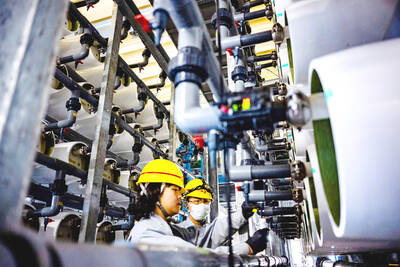
HIGH HOPES: The power source is expected to have a future, as it is not dependent on the weather or light, and could be useful for places with large desalination facilities A Japanese water plant is harnessing the natural process of osmosis to generate renewable energy that could one day become a common power source. The possibility of generating power from osmosis — when water molecules pass from a less salty solution to a more salty one — has long been known. However, actually generating energy from that has proved more complicated, in part due the difficulty of designing the membrane through which the molecules pass. Engineers in Fukuoka, Japan, and their private partners think they might have cracked it, and have opened what is only the world’s second osmotic power plant. It generates

Hundreds of Filipinos and tourists flocked to a sun-bleached field north of Manila yesterday, on Good Friday, to witness one of the country’s most blood-soaked displays of religious fervor, undeterred by rising fuel prices. Scores of bare-chested flagellants with covered faces walked barefoot through the dusty streets of Pampanga Province’s San Fernando as they flogged their backs with bamboo whips in the scorching heat. Agence France-Presse (AFP) journalists said they saw devotees deliberately puncturing their skin with glass shards attached to a small wooden paddle to ensure their bleeding during the ritual, a way to atone for sins and seek miracles from

Chinese dissident artist Gao Zhen (高兟), famous for making provocative satirical sculptures of former Chinese leader Mao Zedong (毛澤東), was tried on Monday over accusations of “defaming national heroes and martyrs,” his wife and a rights group said. Gao, 69, who was detained in 2024 during a visit from the US, faces a maximum three-year prison sentence, said his wife, Zhao Yaliang (趙雅良), and Shane Yi, a researcher at the Chinese Human Rights Defenders group which operates outside the nation. The closed-door, one-day trial took place at Sanhe City People’s Court in Hebei Province neighboring the capital, Beijing, and ended without a


 RSS
RSS