


The central US state of Oklahoma has gone from registering two earthquakes a year to nearly two a day and scientists point to a controversial culprit: wastewater injection wells used in fracking.
Located in the middle of the country, far from any major fault lines, Oklahoma experienced 585 earthquakes of magnitude 3.0 or more last year. That is more than three times as many as the 180 which hit California last year.
“It’s completely unprecedented,” US Geological Survey seismologist George Choy said.
As of last month, Oklahoma has already experienced more than 600 earthquakes strong enough to rattle windows and rock cars. The biggest was a magnitude 4.5 earthquake that hit the small town of Crescent.
Sandra Voskuhl, 76, grew up in the rural oil boomtown and said she has never felt the earth shake like it did on July 27.
First came a thunderous boom. Then the red earth shook hard, Voskuhl said.
“You heard it coming,” she said. “Everything shook.” She recalled screaming as framed pictures toppled over in her home.
Then, when things got quiet, she drove over to the town’s Frontier Historical Museum to help clean up antique dishes that had crashed to the ground and shattered.
“We need the oil for our workers and our economy,” she said.
“But these earthquakes are a little scary,” Voskuhl said.
Hydraulic fracturing — or fracking — is the process of shooting water mixed with sand and chemicals deep into the earth to crack rock formations and bring up oil and natural gas trapped inside.
The process has unlocked massive amounts of oil and gas in Oklahoma and other US states over the past decade.
However, along with the oil and gas comes plenty of that brackish water, which is disposed of by injecting it into separate wells that are dug just less than 2km deep.
The unnatural addition of the water can change pressure along fault lines, causing slips that make the earth shake, Choy said.
There is debate among scientists over how large of a fault could be awakened and how hard that fault might shake.
One camp believes Oklahoma is unlikely to see bigger than a magnitude 4.0 to 5.0 earthquake, which would be enough to break windows and knock things off shelves. Others believe a magnitude 7.0 earthquake could come about, which would be strong enough to topple buildings.
“What’s at risk is that when you put water into the ground, it’s never going to come back out. You’re putting it in places it has never been before,” Choy said.
“The bigger the volume, the greater the area will be affected. And we don’t know what the long-term effect will be,” he said.
The pace at which earthquake activity has increased has rattled many in Oklahoma, who are also worried about groundwater contamination brought on by fracking.
From 1975 to 2008, the state experienced anywhere from zero to three earthquakes a year which registered magnitude 3.0 or higher. Then the numbers jumped: there were 20 in 2009, 35 in 2010, 64 in 2011, 35 in 2012, 109 in 2013 and 585 last year.
“We are the only state where once this problem came up, we just kept going [with fracking],” environmental group Sierra Club Oklahoma chapter executive-director Johnson Bridgwater said.
“We want public safety to come first, rather than treating this state as a giant lab,” he said.
The danger is particularly acute given that Oklahoma has such an enormous oil and gas industry, and its pipelines, refineries and storage facilities were not built to withstand constant earthquakes, Bridgwater said.
US state regulators are now scrutinizing the operations of disposal wells in that area to ensure they do not go too deep or inject too much water.
“We are hopeful that the actions taken by state regulators will have a significant impact on seismicity, but the process is ongoing and we’ll continue to evaluate the results that we’re getting now and potential future actions,” Weintz said.
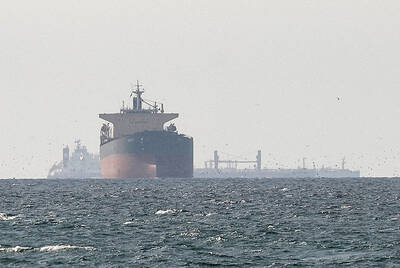
A ship that appears to be taking on the identity of a scrapped gas carrier exited the Strait of Hormuz on Friday, showing how strategies to get through the waterway are evolving as the Middle East war progresses. The vessel identifying as liquefied natural gas (LNG) carrier Jamal left the Strait on Friday morning, ship-tracking data show. However, the same tanker was also recorded as having beached at an Indian demolition yard in October last year, where it is being broken up, according to market participants and port agent’s reports. The ship claiming to be Jamal is likely a zombie vessel that

Cannabis-based medicines have shown little evidence of effectiveness for treating most mental health and substance-use disorders, according to a large review of past studies published in a major medical journal on Monday. Medical use of cannabinoids has been expanding, including in the US, Canada and Australia, where many patients report using cannabis products to manage conditions such as anxiety, post-traumatic stress disorder and sleep problems. Researchers reviewed data from 54 randomized clinical trials conducted between 1980 and May last year involving 2,477 participants for their analysis published in The Lancet. The studies assessed cannabinoids as a primary treatment for mental disorders or substance-use

NATIONWIDE BLACKOUT: US President Donald Trump cut off Venezuelan oil shipments to Cuba, strangling the Caribbean island’s already antiquated grid Cuba’s national electric grid collapsed on Monday, the nation’s grid operator said, leaving about 10 million people without power amid a US-imposed oil blockade that has crippled the already obsolete generation system. Grid operator UNE on social media said that it is investigating the causes of the blackout, the latest in a series of widespread outages that last for hours or days and that this weekend sparked a rare violent protest in the communist-run nation. Officials ruled out a major power plant failure, but had still not pinpointed the root cause of the grid collapse, suggesting a problem with transmission. Officials said that

‘HEALTH ISSUE’: More than 250 women are hospitalized every day due to complications from unsafe abortions, and about three die, a study showed Jane had been bleeding heavily for days before finally seeking help, not from a hospital, but from the man who sold her the pills meant to end her six-week pregnancy. Abortions are strictly outlawed in the mainly Catholic Philippines, forcing women to turn to a patchwork of providers operating in the online shadows. While rare in practice, Philippine law allows for prison terms of up to six years for abortion patients and providers, leaving thousands of Filipinas to search for solutions in online forums where unlicensed sellers promote abortifacients. “It was very painful, as if my abdomen was being twisted,” said Jane, whose


 RSS
RSS