


Larger-than-life Australian mining magnate turned lawmaker Clive Palmer was yesterday widely accused of threatening Australia’s relationship with its biggest trading partner through an extraordinary tirade against China.
The 60-year-old multimillionaire called the Chinese “bastards” and “mongrels” and accused Beijing of trying to take over Australia, during a nationally televised forum on public broadcaster the Australian Broadcasting Corp on Monday night.
The tirade began when Palmer, who was elected to the Australian Parliament in October last year, was questioned about a legal dispute between his mining company Mineralogy and its Chinese state-owned partner, Citic Pacific Mining.
Citic said in court that Palmer siphoned A$12 million (US$11 million) to fund his Palmer United Party’s election campaign.
Palmer, whose party forms a powerful voting bloc in the Australian Senate with the support of four senators, said his companies were owed “about A$500 million by the communist Chinese government that doesn’t want to pay.”
He said he was counter-suing.
“But it won’t stop the fact that the Chinese government wants to bring workers here to destroy our wage system; it won’t stop the fact that they want to take over our ports and get our resources for free,” Palmer said.
Palmer said Citic had shipped A$200 million in iron ore from Australia without paying royalties to the Western Australia State, a claim the state premier denied.
“I don’t mind standing up against the Chinese bastards and stopping them from doing it,” Palmer said.
Palmer said his companies already had three federal and supreme court judgements “against these Chinese mongrels.”
“I’m saying this because they’re communist, they shoot their own people, they haven’t got a justice system and they want to take over this country, and we’re not going to let them do it,” Palmer said.
Palmer said on his Twitter account yesterday that his comments were “not intended to refer to Chinese people, but to [a] Chinese company which is taking Australian resources & not paying.”
Australian Minister of Foreign Affairs Julie Bishop said yesterday that she would personally tell the Chinese embassy that “these views are not representative of the Australian parliament and I don’t believe representative of the Australian people.”
“Mr Palmer’s comments are offensive, they are unnecessary and it is unacceptable for a member of parliament to make such comments, particularly on a national television program,” Bishop told Melbourne Radio 3AW. “I think he’s using his position to demean the Chinese people because he’s in a legal dispute with a Chinese company.”
Australian Treasurer Joe Hockey described Palmer’s tirade as “hugely damaging.”
“He is in a very obvious legal dispute with his Chinese partners, but I’d say to Mr Palmer, please don’t bring down the rest of Australia because of your biases,” Hockey told reporters.
Australian Minister of Agriculture Barnaby Joyce described Palmer’s comments as Australia finalizes a free trade deal with China as “not helpful.”
Western Australia Premier Colin Barnett described Palmer’s comments as “offensive, abhorrent and damaging” to his iron ore-rich state and to Australia’s long-standing relationship with China.
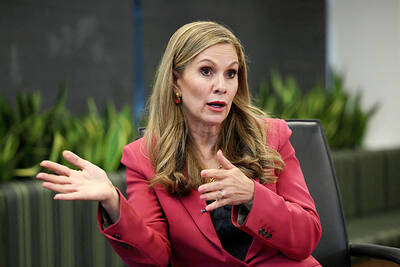
Australians were downloading virtual private networks (VPNs) in droves, while one of the world’s largest porn distributors said it was blocking users from its platforms as the country yesterday rolled out sweeping online age restriction. Australia in December became the first country to impose a nationwide ban on teenagers using social media. A separate law now requires artificial intelligence (AI)-powered chatbot services to keep certain content — including pornography, extreme violence and self-harm and eating disorder material — from minors or face fines of up to A$49.5 million (US$34.6 million). The country also joined Britain, France and dozens of US states requiring
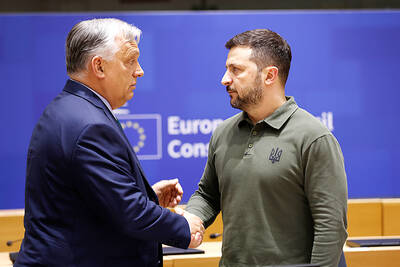
Hungarian authorities temporarily detained seven Ukrainian citizens and seized two armored cars carrying tens of millions of euros in cash across Hungary on suspicion of money laundering, officials said on Friday. The Ukrainians were released on Friday, following their detention on Thursday, but Hungarian officials held onto the cash, prompting Ukraine to accuse Hungary’s Russia-friendly government of illegally seizing the money. “We will not tolerate this state banditism,” Ukrainian Minister of Foreign Affairs Andrii Sybiha said. The seven detained Ukrainians were employees of the Ukrainian state-owned Oschadbank, who were traveling in the two armored cars that were carrying the money between Austria and
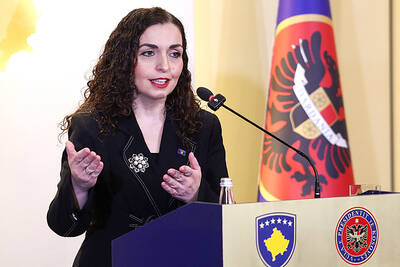
Kosovar President Vjosa Osmani on Friday after dissolving the Kosovar parliament said a snap election should be held as soon as possible to avoid another prolonged political crisis in the Balkan country at a time of global turmoil. Osmani said it is important for Kosovo to wrap up the upcoming election process and form functional institutions for political stability as the war rages in the Middle East. “Precisely because the geopolitical situation is that complex, it is important to finish this electoral process which is coming up,” she said. “It is very hard now to imagine what will happen next.” Kosovo, which declared

MORE BANS: Australia last year required sites to remove accounts held by under-16s, with a few countries pushing for similar action at an EU level and India considering its own ban Indonesia on Friday said it would ban social media access for children under 16, citing threats from online pornography, cyberbullying, online fraud and Internet addiction. “Accounts belonging to children under 16 on high-risk platforms will start to be deactivated, beginning with YouTube, TikTok, Facebook, Instagram, Threads, X, Bigo Live and Roblox,” Indonesian Minister of Communications and Digital Meutya Hafid said. “The government is stepping in so that parents no longer have to fight alone against the giants of the algorithm. Implementation will begin on March 28, 2026,” she said. The social media ban would be introduced in stages “until all platforms fulfill their


 RSS
RSS