


They are young, urban and well-educated, and for the past week they have been sleeping in an Istanbul park: meet the women on the front line of Turkey’s mass anti-government protests.
“We are the women Erdogan would like to see staying at home,” actress Sevi Algan, 37, said, referring to Turkish Prime Minister Recep Tayyip Erdogan, who protesters say is forcing his conservative, Islamic values on the mainly Muslim, but staunchly secular nation.
Many of the women happily admit they are accidental activists who never would have guessed two weeks ago that they would be pitching a tent in the epicenter of a nationwide civil unrest.
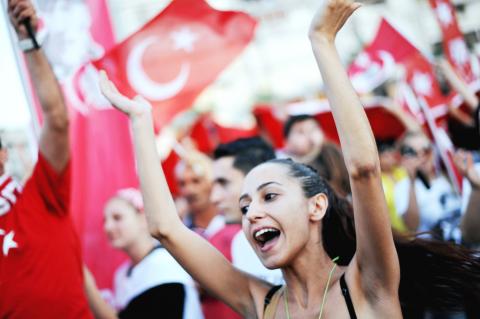
Photo: AFP
Yet now these young Turks, many of them students, lawyers, teachers and office workers, account for half of the thousands of demonstrators in Gezi Park and nearby Taksim Square — and they have taken to their new routine with gusto.
They spend hours under the park’s sycamore trees debating their cause, take part in all-night singing and dancing sessions and, when necessary, stand shoulder-to-shoulder with soccer fans on guard against police action outside the park’s police-free zone.
The protest began after a small campaign to save the park’s 600 trees from being razed sparked a police crackdown with tear gas and water cannon on May 31, quickly spiraling into widespread anger against the government. The unrest has injured more than 4,000 people and killed three across the country.
Many of the female protesters say the time has come to stand up for their rights in the face of creeping infringements on their freedoms by Erdogan’s Islamic-rooted Justice and Development Party (AKP).
Erdogan has won three successive elections, gaining almost 50 percent of the vote in 2011 after presiding over steady economic growth. However, critics accuse him of increasing authoritarianism and of polarizing the country.
“Women are on the front line because they are the first victims of Erdogan’s projects,” Sevi said.
Her list of grievances include Erdogan’s proposals to limit abortion rights, tighten the rules for the morning-after pill and ban the late-night sale of alcohol.
Erdogan has also sparked outrage for declaring that every woman in Turkey should have three children.
“Would he like more children like us?” Ozlem Altiok, an unemployed former flight attendant, said as she chatted with friends in Gezi Park.
Sevi said supporters of the ruling AKP consider the demonstrators “bad Muslims,” but she insists they are not against Islam.
“We like to drink, debate, but Erdogan and his people do not have a monopoly on Islam,” she said. “Look at the solidarity on Taksim Square. That’s what it means to be Muslim.”
In the park, where free food, yoga lessons and concerts are on offer, clusters of feminists and gay rights activists are camped out next to veil-wearing anti-capitalist Muslims, the site’s festive atmosphere and a sense of camaraderie outweigh any ideological differences.
While women in Turkey are underrepresented in politics, they figure prominently in universities and in companies, in large part thanks to emancipation reforms introduced by Mustafa Kemal Ataturk, the father of modern Turkey, after the Turkish republic was founded in 1923.
“It’s not about abandoning parts of our Islamic culture, but about preserving our existing rights,” philosophy student Esra, 21, said, adding that she was not trying to copy the model of “Western women.”
“A career, succeeding at all costs doesn’t seem to make Western women happy,” she said as she sat cross-legged on the grass.
“The system does not change overnight, we know that, but this is a historical step toward a social revolution,” said her 26-year-old friend, Dicle, a bank employee.
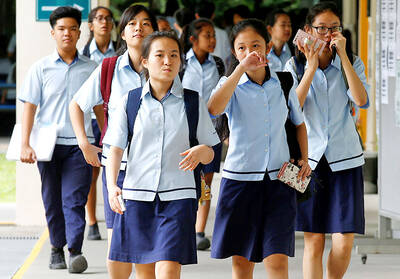
School bullies in Singapore are to face caning under new guidelines, but the education minister on Tuesday said it would be meted out only as a last resort with strict safeguards. Human rights groups regularly criticize Singapore for the use of corporal punishment, which remains part of the school and criminal justice systems, but authorities have defended it as a deterrent to crime and serious misconduct. Caning was discussed in the parliament after legislators asked how it would be used in relation to bullying in schools. The debate followed stricter guidelines on serious student misconduct, including bullying, unveiled by the Singaporean Ministry of
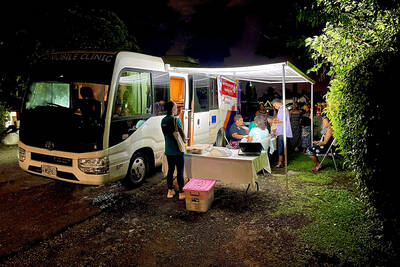
As evening falls in Fiji’s capital, a steady stream of people approaches a makeshift clinic that is a first line of defense against one of the world’s fastest-growing HIV epidemics. In the South Pacific nation — a popular tourist destination of just under a million people — more than 2,000 new HIV cases were recorded last year, a 26 percent increase from 2024. The government has declared an HIV outbreak and described it as a national crisis. “It’s spreading like wildfire,” said Siteri Dinawai, 46, who came to be tested. The Moonlight Clinic, a converted minibus parked in a suburban cul-de-sac in Suva, is
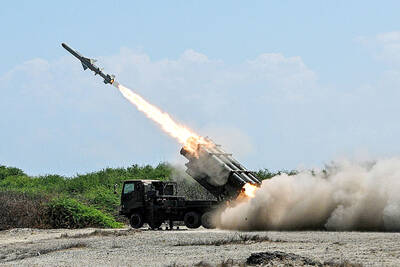
A MESSAGE: Japan’s participation in the Balikatan drills is a clear deterrence signal to China not to attack Taiwan while the US is busy in the Middle East, an analyst said The Japan Self-Defense Forces yesterday fired a Type 88 anti-ship missile during a joint maritime exercise with US, Australian and Philippine forces, hitting a decommissioned Philippine Navy ship in waters facing the disputed South China Sea, in drills that underscore Tokyo’s rising willingness to project military power on China’s doorstep. The drill took place as Manila and Tokyo began talks on a potential defense equipment transfer, made possible by Japan’s decision to scrap restrictions on military exports. The discussions include the possible early transfer of Abukuma-class destroyers and TC-90 aircraft to the Philippines, Japanese Minister of Defense Shinjiro Koizumi said. Philippine Secretary of
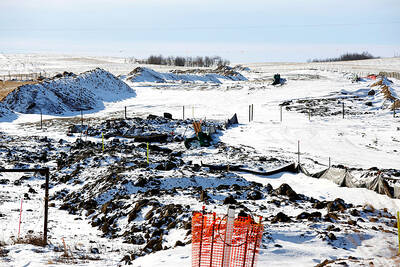
Separatists in Alberta are preparing to submit a petition tomorrow that they said has enough signatures to force a referendum on independence for the oil-rich Canadian province. Polls indicate the pro-independence camp remains a minority among Alberta’s 5 million people, but has hit a historic high of roughly 30 percent. Alberta separatists are also closer than ever to forcing a referendum, riding momentum fueled by intensifying grievances over Ottawa’s control of the provincial oil industry. They have also undeniably gotten a boost from the return to power of US President Donald Trump. After launching a petition in January, Stay Free Alberta, the group


 RSS
RSS